What Is a Celebration of Life? Meaning, Traditions, and What to Expect
A celebration of life is a gathering held to remember and honor someone who has died. It often focuses on the person’s character, relationships, interests, and influence rather than following a fixed ceremonial format.
The gathering may be quiet and reflective, warm and conversational, or a mixture of both. Although the word “celebration” suggests appreciation for the person’s life, it does not mean grief or sadness must be set aside. Guests may laugh at a familiar story one moment and become emotional the next.
What Is a Celebration of Life?
The purpose of a celebration of life is to bring people together in remembrance. Family members, friends, colleagues, neighbors, and others who knew the deceased can reflect on what the person meant to them and offer support to one another.
Unlike a ceremony governed by a required order of service, a celebration of life can be adapted to the family’s preferences. It may be religious or nonreligious, formal or casual, small or large. Some gatherings have an officiant and a carefully planned program, while others feel more like an open house or shared meal.
Personalization is usually an important part of the event. The gathering is shaped around the individual being remembered rather than around a standard template. However, the term does not have one universally accepted definition. Research from the National Funeral Directors Association found that families and funeral professionals may interpret terms such as “funeral,” “memorial service,” and “celebration of life” differently.
For that reason, the name alone may not reveal how formal the gathering will be or what it will include. An invitation or announcement will usually provide a better indication of what guests should expect.
Celebration of Life vs. Funeral or Memorial Service
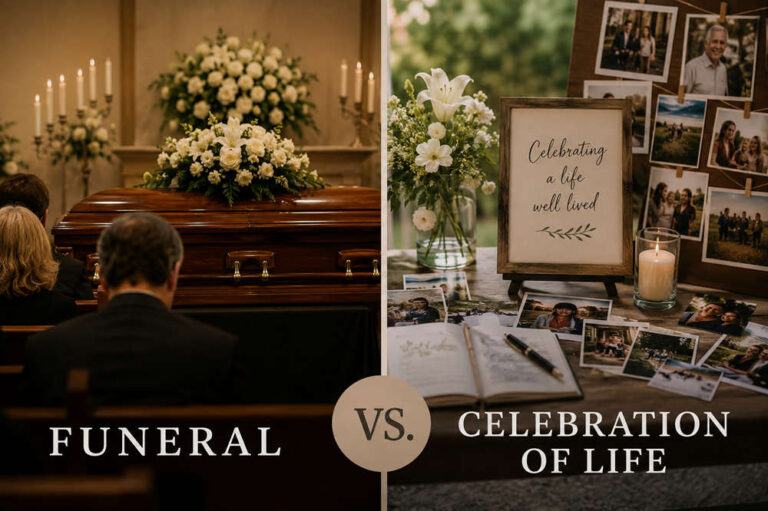
Funerals, memorial services, and celebrations of life all give people an opportunity to honor someone after death. The main differences usually involve timing, structure, and emphasis, although the boundaries are not strict.
A funeral is often held relatively soon after the death and may be connected to burial or cremation. It commonly follows a religious, cultural, or family tradition and may include the person’s body or cremated remains.
A memorial service is generally held without the body present. Because it is not necessarily tied to burial or cremation, it may take place weeks or months later.
A celebration of life usually places greater emphasis on personal memories and the individuality of the deceased. It may feel less formal than a traditional funeral, but it can still include prayers, readings, eulogies, or other ceremonial elements.
These descriptions can overlap. A funeral may be highly personalized, and a celebration of life may be formal and carefully structured. Some families hold a private funeral first and arrange a larger celebration of life later.
What Happens at a Celebration of Life?
There is no required program, but many celebrations of life combine planned tributes with time for guests to talk and share memories. A relative, friend, clergy member, funeral celebrant, or funeral director may guide the gathering.
The event might begin with welcoming remarks, followed by music, readings, or short speeches. Family members and friends may tell stories about the deceased, while photographs or videos show different periods of the person’s life.
Common elements include:
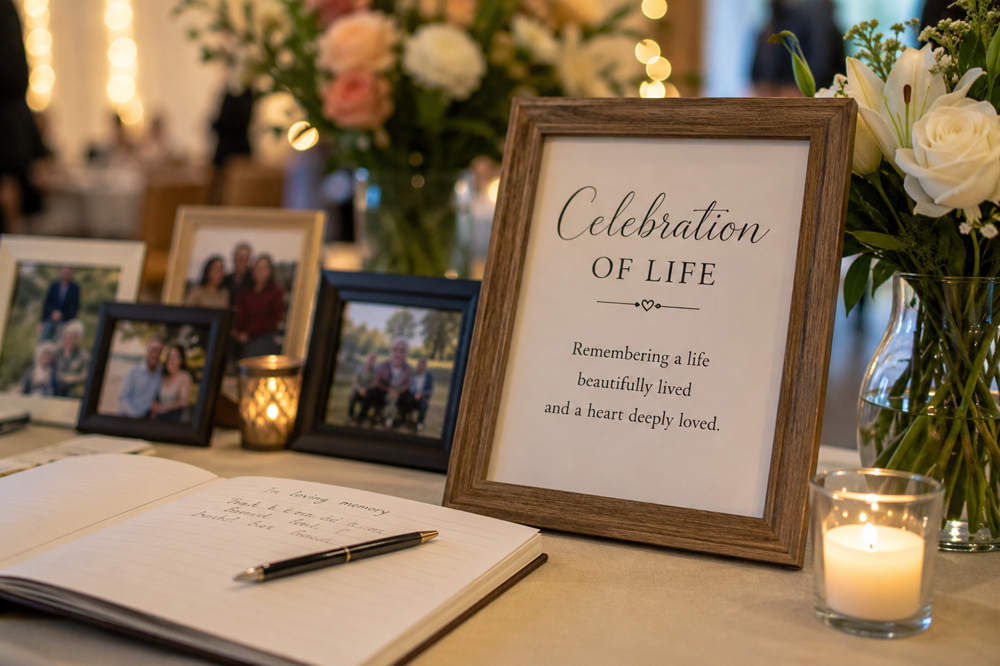
- Photographs, slideshows, or a memory table
- Favorite songs or live music
- Stories shared by relatives, friends, or colleagues
- Poetry, prayers, religious passages, or other readings
- Objects connected to the person’s work, interests, travels, or achievements
- A guest book or cards on which attendees can leave memories
- A symbolic activity, such as lighting candles or planting a tree
- Food and time for informal conversation
Not every gathering includes all these features. A small celebration may consist of a meal and a few stories, while a larger event may have scheduled speakers and a detailed program.
The tone may also change during the gathering. Humor can be appropriate when it reflects the person’s personality, just as tears and quiet reflection are natural responses to loss. Grief affects people differently, and there is no single emotional response guests are expected to display.
When and Where Is a Celebration of Life Held?
A celebration of life can be held shortly after the death or at a later date. Families sometimes wait until after burial or cremation, especially when relatives need time to travel or the organizers need time to prepare.
The Funeral Consumers Alliance explains that a commemorative gathering held without the body present can take place weeks or months later. This gives families greater flexibility when selecting a convenient date.
The gathering can be held wherever it is practical and meaningful. Possible locations include a family home, garden, community center, restaurant, place of worship, funeral home, park, beach, or private event space.
A location connected to the deceased may feel especially personal, but it is not essential. Accessibility, seating, privacy, weather, parking, and the expected number of guests may be more important than choosing a symbolic venue.
What to Know When Planning or Attending
For Families Planning the Gathering
Planning can begin with a simple question: What kind of gathering would reflect the person honestly? The answer can guide decisions about the tone, location, speakers, and level of formality.
A celebration of life does not need an elaborate program. A few carefully chosen tributes often feel more sincere than trying to represent every part of the person’s life. It is also helpful to tell guests whether the event will be formal, casual, religious, or open-house style.
The announcement should include the essential details and mention any specific requests. Families might invite guests to bring a written memory, wear a meaningful color, contribute to a charity, or avoid sending flowers. Clear instructions prevent uncertainty while allowing guests to participate in the intended way.
For Guests Attending the Gathering
Guests should follow any directions provided by the family. When no dress code is given, neat and respectful clothing suited to the venue is generally appropriate.
There is no need to prepare a long speech or find perfect words. A simple expression of sympathy or a brief, sincere memory can be meaningful. Guests can also show support by listening, participating in the planned activities, and respecting any religious or cultural customs included in the gathering.
Positive stories are often welcome, particularly when they capture the person’s kindness, humor, or everyday character. Stories that are private, embarrassing, divisive, or unsuitable for the audience should be saved for another setting.
A Meaningful Way to Remember Someone
A celebration of life offers family and friends a flexible way to honor someone who has died. It creates room for gratitude, sadness, affection, humor, and reflection without requiring everyone to grieve in the same way.
Whether the gathering is a formal ceremony or an informal afternoon together, its meaning comes from remembering the individual sincerely and supporting the people who continue to carry that person’s memory.