
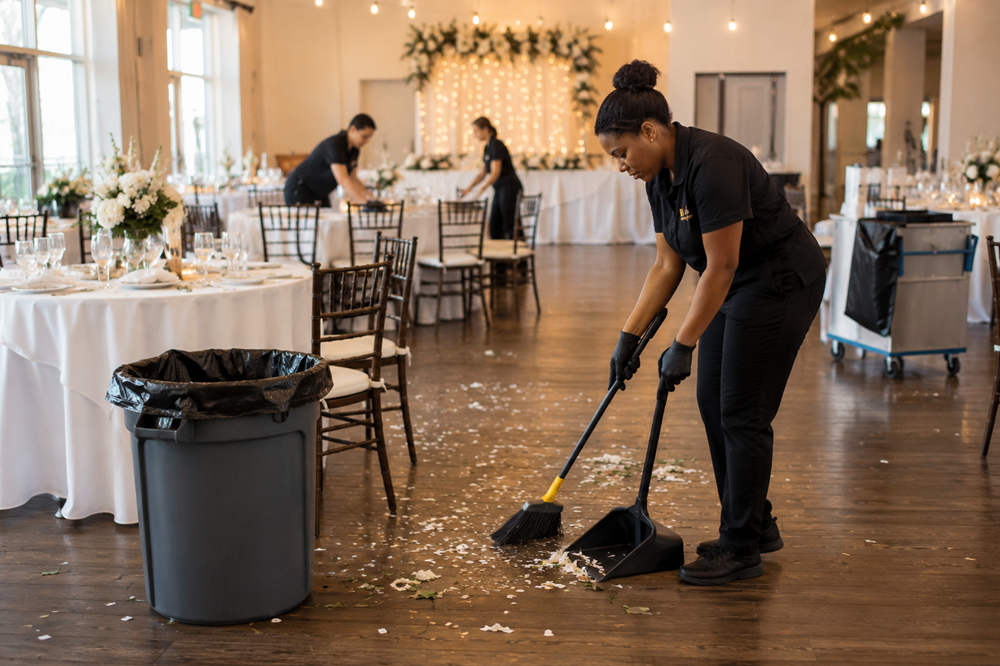
What Is an Event Cleaning Service? Services, Cost Factors, and Hiring Tips
After the last dance, toast, or birthday candle, someone still has to clear the tables, collect the waste, clean the restrooms, and return the venue in acceptable condition. When several vendors are involved, it is easy to assume that the caterer, rental company, or venue staff will take care of everything.
An event cleaning service removes that uncertainty. A professional crew can prepare the space before guests arrive, keep key areas clean during the celebration, and complete the final cleanup before the venue handover deadline.
What Is an Event Cleaning Service?
An event cleaning service is a professional cleaning crew hired for a wedding, party, reception, fundraiser, or other gathering. The service is organized around the event schedule rather than a routine weekly cleaning plan.
Cleaners may have only a short period between venue setup and guest arrival. After the celebration, they may need to restore the space before the rental period ends or another event begins. This makes timing, staffing, and clearly assigned responsibilities particularly important.
Some organizers hire a crew only for the final cleanup. Others arrange complete service covering the hours before, during, and after the event. The right arrangement depends on the venue, guest count, food and beverage service, event length, and requirements in the rental agreement.
What Does an Event Cleaning Service Include?
The precise scope varies by company and venue. Before signing a contract, organizers should confirm which rooms, surfaces, and tasks are included rather than assuming that every form of cleanup is covered.
Pre-Event Cleaning
Pre-event cleaning makes the venue presentable after decorators, caterers, rental teams, and other vendors have completed most of their setup. Even a venue that was cleaned earlier may need attention after chairs have been moved, flowers arranged, equipment delivered, and table settings unpacked.
Typical tasks include:
- Cleaning floors throughout the guest areas
- Wiping tables, counters, doors, and other visible surfaces
- Cleaning and stocking restrooms
- Polishing mirrors and glass entrance doors
- Emptying existing waste containers
- Preparing trash, recycling, or compost stations
- Checking preparation rooms and vendor work areas
The cleaning schedule should be coordinated with setup. A crew that arrives too early may have to repeat its work, while a crew that arrives too late can interfere with photographers, florists, musicians, or arriving guests.
Cleaning During the Event
For longer or larger celebrations, cleaners may remain on-site to maintain the venue without interrupting the occasion. They often work in the background, concentrating on restrooms, entrances, dining areas, and other heavily used spaces.
During-event service may include:
- Emptying full waste containers
- Restocking and checking restrooms
- Responding quickly to spills
- Clearing abandoned cups and plates
- Keeping entrances and walkways tidy
- Maintaining buffet, bar, or refreshment areas
Frequently touched surfaces and heavily used areas generally need more attention than quiet parts of the venue. Current CDC cleaning guidance recommends regular cleaning of high-touch surfaces and cleaning other surfaces when they are visibly dirty.
Routine cleaning is sufficient in many situations. Disinfection may be appropriate when someone has been ill or when a particular type of contamination requires it. The cleaning company and venue should agree in advance on any additional sanitation requirements.
Post-Event Cleaning
Post-event cleaning begins once guests have left and vendors have removed the items assigned to them. This is usually the most substantial part of the service, especially after a seated dinner, open bar, outdoor celebration, or heavily decorated reception.
A post-event crew may:
- Collect trash, recycling, and food waste
- Clear leftover cups, plates, napkins, and serving items
- Wipe tables, counters, bars, and food service areas
- Vacuum, sweep, and mop the floors
- Spot-clean minor spills and marks
- Clean and restock the restrooms
- Gather lost property for the organizer or venue
- Return furniture to the agreed layout
- Prepare the venue for its final inspection
Ordinary cleanup may not include removing floral installations, packing rented décor, dismantling arches, hauling bulky items, or cleaning catering equipment. The contract should identify who is responsible for those tasks.
How the Event Cleaning Process Works
Venue Walk-Through
The process usually begins with a walk-through or detailed discussion of the venue. The cleaning provider reviews the rooms being used, the expected number of guests, the event schedule, and any areas needing special attention.
This is also the time to clarify boundaries between the venue, caterer, rental team, decorator, and cleaning company. For example, a caterer may be expected to clean the kitchen and remove food-service equipment, while the cleaning crew handles guest areas, restrooms, and general waste.
Written Scope of Work
The provider should turn the agreed responsibilities into a written scope of work. It should identify the service areas, arrival and completion times, expected crew size, included supplies, waste-removal arrangements, and any exclusions.
A written scope makes quotations easier to compare and reduces the chance of discovering after the event that an important task was not included.
Staffing and Scheduling
The company then assigns the crew according to the amount of work and the time available. A small bridal shower may need two cleaners for a simple final reset. A large wedding reception may require restroom attendants during the event and a larger team afterward.
The timeline should include more than the time printed on the invitation. Vendor setup, catering breakdown, rental collection, entertainment load-out, guest departure, and the venue’s lock-up time can all affect when cleaners are able to work.
Final Venue Handover
Once the work is finished, the organizer or venue representative should inspect the space before the cleaners leave. The inspection should cover the rooms used by guests, restrooms, vendor areas, entrances, outdoor spaces, and waste collection points.
Any missed task can then be corrected while the crew and its equipment are still present. Photographs of the completed space may also be useful when a rental deposit is involved.
What Affects the Cost of Event Cleaning?
Event cleaning does not have one dependable standard price. Quotes vary because a short gathering in a small community room requires a very different level of work from a catered wedding spread across a ballroom, terrace, and preparation suite.
The most common cost factors are:
- Venue size: More rooms and floor space require additional labor.
- Guest count: More guests usually create greater restroom use and waste volume.
- Event length: Longer celebrations may require an on-site crew or multiple shifts.
- Food and drinks: Buffets, bars, and seated meals tend to produce more spills and discarded items.
- Indoor and outdoor areas: Patios, lawns, parking areas, and entrances may require separate attention.
- Condition after the event: Heavy decorations, confetti, wax, sticky floors, or outdoor debris can add time.
- Handover deadline: A short turnaround may require a larger crew working simultaneously.
- Specialized services: Carpet extraction, floor polishing, pressure washing, or unusual waste handling may cost extra.
A company may charge by the labor hour, quote one flat event rate, or price the pre-event, on-site, and post-event stages separately. Waste hauling, overnight work, consumable supplies, and additional hours may also appear as separate charges.
Request an itemized quote showing exactly what is included. The lowest total is not necessarily the best value when one quotation includes equipment and disposal while another covers labor alone.
What to Ask Before Hiring an Event Cleaning Service
This stage is about evaluating the company rather than planning the event itself. Useful questions include:
- Has the company cleaned events of a similar size and format?
- Is it appropriately insured?
- Who will supervise the crew on-site?
- Are cleaning supplies, equipment, and waste bags included?
- Which tasks are specifically excluded?
- Can the crew accommodate the venue’s access and handover times?
- How are overtime and unexpected tasks charged?
- What happens if the celebration or vendor breakdown runs late?
- Can the crew follow the venue’s recycling and composting rules?
- Who should be contacted if a problem arises during the event?
Ask how the company handles broken glass, bodily fluids, grease, or other materials that require more than ordinary cleaning. Staff should use suitable products and follow appropriate safety procedures for the work they have agreed to perform.
Cleaning chemicals should be used and stored according to their labels. OSHA guidance for cleaning workers also emphasizes proper training, ventilation, protective equipment when needed, and avoiding dangerous chemical combinations.
How to Prepare for the Cleaning Crew
Once a company has been selected, the organizer can help the crew work efficiently by providing practical event information in advance.
Share a final timeline showing guest arrival, meal service, speeches, entertainment, last call, guest departure, and vendor breakdown. Provide the names and phone numbers of the venue manager and the person who can authorize additional work.
A simple floor plan can identify:
- Guest rooms and dining spaces
- Restrooms
- Waste collection points
- Supply storage areas
- Staff entrances and loading areas
- Restricted rooms
- Surfaces requiring special care
Confirm how the crew will enter after hours, where they can park, and whether keys, passes, or security approval are required.
Vendors should also receive clear instructions about what they must take away. Florists may be responsible for installations and containers, rental companies for furniture and linens, and caterers for food-service equipment. The cleaning crew should not have to decide which items are rubbish and which are waiting for pickup.
Creating a More Sustainable Cleaning Plan
A more sustainable cleanup begins before the celebration. Reducing unnecessary disposable items and deciding how waste will be sorted are usually more effective than trying to separate everything after it has been mixed together.
The EPA’s special-event waste guidance emphasizes planning ahead and coordinating with venues, vendors, contractors, and waste haulers.
For a practical event plan:
- Confirm which materials the local waste provider accepts.
- Place trash, recycling, and compost containers together.
- Use signs showing the actual cups, plates, bottles, and napkins used at the event.
- Give the venue, caterer, and cleaning crew the same sorting instructions.
Waste stations should be checked during the celebration. A clearly labeled system can still fail when containers overflow or guests are unsure where an item belongs.
Is Professional Event Cleaning Worth Hiring?
Professional help is often worthwhile when the venue requires it, food and alcohol are being served, several rooms are in use, or the space must be cleared within a strict rental window.
Three questions can make the decision easier:
Does the Venue Require Professional Cleaning?
Some venues include basic cleaning in their rental fee, while others require the organizer to hire an approved company. Review the agreement carefully so that the same work is not purchased twice—or left uncovered entirely.
Can Your Helpers Finish Before the Deadline?
Friends and relatives may be willing to help, but they may also be tired, dressed for the occasion, or responsible for gifts, children, decorations, and personal belongings. Estimate the complete workload rather than assuming that a few volunteers can finish quickly.
Does the Cleanup Require Special Equipment?
A professional service becomes more valuable when the event involves several restrooms, carpeted spaces, heavy food waste, extensive décor, outdoor litter, or floors needing commercial equipment.
For a very small gathering, the organizer and venue staff may be able to handle the reset. For a larger celebration, professional cleaning can protect the rental deposit, reduce pressure on family and friends, and allow the host to leave without facing several more hours of work.
Final Thoughts
Event cleaning should be planned at the same time as catering, rentals, decorations, and venue access. The most important step is deciding who is responsible for each part of the cleanup before the celebration begins.
A clear scope of work, realistic schedule, and final inspection help prevent missed tasks and unexpected charges. With those details settled, the organizer can focus on the occasion rather than worrying about what will happen after the last guest leaves.