17 Meaningful Celebration of Life Table Ideas for a Personal Tribute
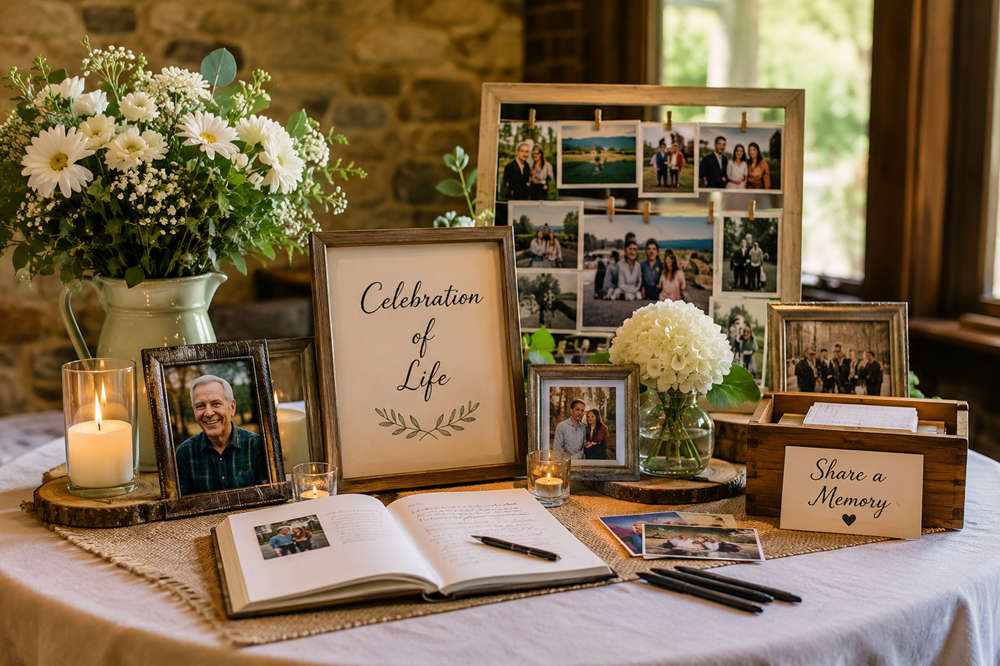
A celebration of life table can help guests see the person behind the photographs and dates. It may hold treasured belongings, tell a life story, invite guests to share memories, or simply create a thoughtful focal point for the gathering.
The table does not have to be elaborate. A few carefully chosen details can feel more personal than a crowded display, especially when each item reflects a genuine memory, interest, relationship, or part of the person’s everyday life.
What Is a Celebration of Life Table?
A celebration of life table is a display created to honor the person being remembered. It is sometimes called a memory table, remembrance table, memorial table, or tribute table.
Some families create one central display near the entrance or gathering area. Others use several smaller tables, with each one serving a different purpose. For example, one table might hold photographs and keepsakes, another might invite guests to write memories, and a third might offer remembrance cards or small favors.
If an urn is present, it may be placed on the central table with a portrait, flowers, and a few personal objects. However, the table can be equally meaningful without an urn. Its purpose is to reflect the person’s life in a way that feels familiar and sincere.
Photo and Life Story Table Ideas
1. Create a Framed Photo Timeline
A photo timeline shows the different stages of a person’s life in a simple, understandable order. Begin with childhood photographs, then move through school years, early adulthood, family life, career moments, travels, and later years.
The photographs can be arranged from left to right or placed on several levels using small boxes hidden beneath the tablecloth. Add short captions with years, places, or names when they help guests understand the story.
A timeline works especially well when guests come from different periods of the person’s life and may not know the full story.
2. Display Favorite Moments Instead of Every Photograph
You do not need to represent every year. Choose a smaller collection of photographs that capture the person’s warmth, humor, relationships, and personality.
Look for images showing familiar expressions and ordinary moments: laughing at a family dinner, relaxing in the garden, holding a grandchild, cooking a favorite meal, or spending time with friends.
This approach creates an intimate display without overwhelming the table. It can also be easier for families who have limited time to sort through photographs.
3. Make a Family and Friends Table
A relationship-focused table celebrates the connections that shaped the person’s life. Display wedding photographs, family portraits, holiday snapshots, pictures with close friends, and images from reunions or shared traditions.
Small handwritten captions can add meaning. Instead of identifying only the people in a photograph, mention what was happening: “Sunday dinners at Grandma’s house” or “The annual lake trip.”
You might also include a family tree, old letters, children’s drawings, or cards saved from important occasions.
4. Highlight Milestones and Achievements
This table can recognize important accomplishments without making the display feel like a formal résumé. Include graduation photographs, awards, certificates, published work, military honors, volunteer recognition, or objects connected to a meaningful career.
Balance official achievements with personal milestones, such as completing a marathon, restoring a house, learning an instrument, raising a family, or contributing to a local organization.
Choose the accomplishments that mattered to the person rather than displaying every certificate or award they received.
5. Use a Digital Slideshow or Photo Frame
A digital display allows you to share many photographs without covering the entire table in frames. Place a digital photo frame, tablet, or small screen beside a printed portrait and a few physical keepsakes.
Keep the slideshow slow enough for guests to view each image comfortably. Simple transitions usually work better than dramatic effects, and the screen should be positioned where it will not create glare or block other items.
Test the device, power connection palette, sketchbooks, and finished artwork.
Other themes might include baking, fishing, knitting, woodworking, photography, sports, birdwatching, or collecting.
8. Create a Travel Memory Table
Use maps, postcards, photographs, guidebooks, souvenirs, luggage tags, or small objects from favorite destinations. A map can be marked with places the person lived, visited, or hoped to see.
This table does not have to document every trip. It can focus on one especially meaningful place, such as a hometown, annual vacation destination, or country connected to family heritage.
9. Recognize a Career or Life of Service
For someone whose work formed an important part of their identity, display objects connected to their profession. These might include a uniform, name badge, tools, notebooks, photographs with colleagues, or an item from a workplace.
Volunteer roles can be honored in the same way. Include materials from a charity, faith community, school, club, neighborhood group, or organization they supported.
10. Celebrate Favorite Music, Books, or Words
Display favorite books, records, sheet music, concert photographs, poems, or song titles. A musician’s instrument can serve as the main object, while smaller items provide context around it.
You might also print a short passage or quotation that the person loved. Keep the wording large enough to read without asking guests to handle the display.
Interactive Tables That Invite Guests to Participate
An interactive table allows guests to contribute something to the tribute. It can also preserve stories the immediate family may never have heard.
Keep the instructions simple and provide enough pens, cards, and writing can explain why a location mattered, whether it was a childhood hometown, honeymoon destination, favorite camping spot, or place the family returned to every summer.
This table can also inspire guests to share stories about trips they took with the person.
9. Honor a Career, Calling, or Life of Service
For some people, their work or service was closely connected to their identity. A tribute table might include a uniform, name badge, tools, professional photographs, teaching materials, notebooks, medals, or volunteer items.
Focus on what the work meant rather than simply listing job titles. A teacher’s table might include notes from former students. A nurse’s display could feature photographs with colleagues and recognition from patients. A volunteer’s table might share information about the community they served.
Be careful with objectsLeave the book open to the first blank page and test the pens beforehand. A simple setup makes guests more likely to stop and write.
13. Make a Collaborative Scrapbook
Set out a scrapbook with a few completed pages and several blank ones. Guests can add notes, photographs, drawings, or small paper mementos.
Prepare adhesive photo corners, tape, pens, and decorative paper in advance. Avoid complicated craft supplies that require guests to spend a long time assembling a page. The family can finish arranging the contributions after the gathering.
14. Fill a Memory Jar
A memory jar is suitable for brief messages. Provide small slips of paper and invite guests to write a favorite quality, lesson, phrase, or moment.
Use a wide container so folded notes can be added easily. The messages can later be read privately, shared at a family gathering, or placed in a memory box.
15. Set Up a Legacy or Kindness Table
Invite guests to continue something the person valued. They might write down an act of kindness they plan to perform, select a small card suggesting a good deed, or learn about a charitable cause connected to the person’s life.
If donations are being collected, clearly identify the organization and explain the connection in one or two sentences. Keep financial contributions optional and separate from the main memory display.
Centerpiece Ideas for Guest Tables
Guest-table decorations can extend the tribute throughout the room without repeating the full memorial display. Keep centerpieces low enough that people can speak comfortably across the table.
16. Pair Photographs With Simple Flowers or Greenery
Place one framed photograph on each guest table with a small vase of flowers, leaves, or branches. Each table can feature a different period, relationship, or part of the person’s life.
Choose flowers that have a personal connection when possible. They might come from the person’s garden, reflect a favorite season, or simply use colors they loved.
17. Use Candles, Plants, or Meaningful Objects
Flameless candles can create a soft atmosphere when venue rules or safety concerns make open flames unsuitable. Small potted plants, books, shells, stones, lanterns, or handmade objects can also serve as understated centerpieces.
Use only objects that can be replaced or safely supervised. Valuable heirlooms and fragile keepsakes are better placed on a protected central table.
Food and Favor Tables With a Personal Connection
Food can tell its own part of a person’s story. A reception table might include a favorite dessert, a familiar family recipe, a candy they always kept at home, or a dish associated with their heritage.
Add a small label explaining the connection. A simple note such as “Grandma made this cake for every birthday” gives the food more meaning without requiring an elaborate display.
Take-home favors are optional. Suitable ideas include:
- Printed copies of a favorite recipe
- Bookmarks with a short quotation
- Packets of flower or herb seeds
- Small remembrance cards
- Wrapped pieces of a favorite candy
- Copies of a meaningful photograph
Choose something useful or personally relevant rather than ordering favors simply because they are expected. Guests will remember the gathering without receiving a gift.
How to Arrange a Celebration of Life Table
Once you have chosen the contents, a few practical decisions can make the table easier to view.
Choose One Main Focal Point
Begin with the most important item, such as a portrait, urn, large photograph, flower arrangement, instrument, or meaningful belonging. Place supporting objects around it rather than giving every item equal visual weight.
Create Different Heights
Use sturdy boxes, book stacks, stands, or small risers beneath the table covering. Varying the height prevents photographs and keepsakes from hiding behind one another.
Make sure every raised item is stable, especially in a busy room where guests may brush against the table.
Add Labels Only Where They Help
Some belongings will be immediately recognizable. Others may need a short explanation. A small label can identify where an object came from, who made it, or why it mattered.
Keep labels brief. Longer stories are better placed in a scrapbook, program, or separate framed note.
Leave Some Open Space
A table does not need to be filled from edge to edge. Open space makes each item easier to notice and gives guests room to place memory cards or sign a book.
If you have many photographs and belongings, divide them between two themed tables rather than crowding everything into one display.
Use Color With Restraint
Choose one or two colors drawn from a favorite flower, photograph, season, or personal style. Repeat them through the tablecloth, frames, flowers, cards, or small decorative details.
The table does not need to look perfectly coordinated. Familiar belongings and family photographs should remain the focus.
Protect Important Items
Keep irreplaceable objects away from drinks, candles, unstable stands, and the edge of the table. Jewelry, delicate letters, medals, and valuable collectibles may be safer in a shadow box or closed display case.
Assign someone to collect personal belongings after the gathering so nothing is accidentally left behind.
Choosing Ideas That Feel Right
You do not need a separate table for every part of someone’s life. One thoughtful display may be enough. A framed photograph, a few flowers, and one familiar belonging can feel more personal than a large arrangement filled with generic decorations.
Start by asking what guests would immediately recognize. Think about the person’s routines, relationships, interests, values, and favorite places. Choose the details that tell those stories most naturally.
The purpose of a celebration of life table is not to create a perfect display. It is to give family and friends a place to pause, remember, and feel connected to the life being honored.