End-of-Life Planner: What to Include and How to Create One
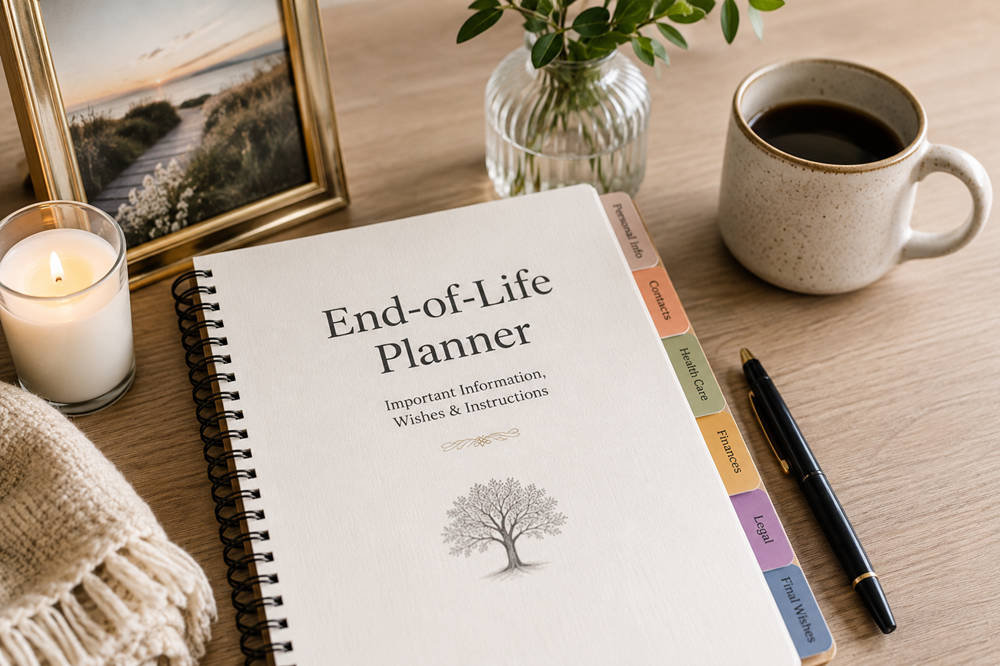
An end-of-life planner brings important information, documents, contacts, and personal wishes together in one place so the people you trust are not left searching for answers during a difficult time. It can be a paper binder, a secure digital record, or a combination of both.
You do not need to complete everything at once. Starting with the information that would be hardest for someone else to find can make the process much easier.
What Is an End-of-Life Planner?
An end-of-life planner is an organized record of information that may be useful if you become unable to manage your affairs or after your death. It can help a spouse, family member, executor, caregiver, or another trusted person understand what documents exist, where important information is stored, and which personal wishes you have already considered.
The planner is not the same thing as a will, trust, power of attorney, advance directive, or other formal document. Those documents may have specific legal requirements and purposes. A planner works alongside them by helping the right people find what they need.
The National Institute on Aging’s guidance on getting your affairs in order similarly encourages people to organize important legal, financial, health, and personal information before it is urgently needed.
There is no required format. What matters is that the planner is understandable, reasonably current, appropriately protected, and accessible to the people who may eventually need it.
What to Include in an End-of-Life Planner
Your planner should reflect your own life rather than a generic checklist. Someone with pets, several properties, online businesses, or complex finances will naturally need different information from someone with simpler arrangements.
1. Personal Information and Important Contacts
Start with the basic information another person might need when contacting family members, professionals, financial institutions, or service providers.
You may want to include:
- Your full legal name and preferred name
- Date and place of birth
- Current address
- Immediate family and other important contacts
- Close friends who should be notified
- Primary doctor and other important health-care providers
- Attorney
- Accountant or tax professional
- Financial adviser, if applicable
- Insurance contacts
- Employer information when relevant
Add enough context to make each name useful. A list of unfamiliar phone numbers is less helpful than a note explaining who the person is and why someone might need to contact them.
2. Legal Documents and Where to Find Them
Your planner can serve as a map to important documents without necessarily holding all of the originals itself.
Depending on your circumstances, record the location of documents such as:
- A will
- Trust documents
- A financial power of attorney
- A health-care proxy, health-care power of attorney, or similar document used where you live
- An advance directive or living will
- Property deeds
- Vehicle titles
- Marriage, divorce, or domestic partnership records
- Other estate-planning documents
If you have old versions, drafts, or revoked documents, keep them clearly separated from anything that is currently in effect. Recording the date of the latest version can also help prevent confusion.
Because document names and legal requirements vary by jurisdiction, the planner should identify what you have rather than attempt to create legal documents informally.
3. Health-Care Wishes and Advance Planning
An end-of-life planner can make health-care information easier to locate, but medical wishes that need formal recognition should be handled through the appropriate documents for your circumstances and location.
Advance care planning involves considering future medical decisions in case you become seriously ill or unable to communicate your wishes. Advance directives are legal documents used for this purpose, and a person may also choose a health-care proxy or other authorized decision-maker.
In your planner, consider recording:
- The name and contact information of your chosen health-care decision-maker, if you have one
- Where your current advance directive is stored
- Your primary physician
- Health insurance information
- Where an up-to-date medication list can be found
- Any other medical records someone may need to locate quickly
Health information can change frequently, so this portion of the planner deserves regular review.
4. Financial Accounts, Insurance, and Regular Expenses
A useful financial section does not need to contain every statement you have ever received. Its job is to show another person which accounts and obligations exist and where more detailed records can be found.
Consider listing:
- Banks and credit unions
- Investment and brokerage accounts
- Retirement accounts
- Life insurance policies
- Homeowners, renters, auto, and other insurance
- Mortgages and other loans
- Credit cards
- Utilities
- Property taxes or homeowners association fees
- Recurring subscriptions and memberships
- Safe-deposit boxes
- Tax records and your tax professional’s contact information
The Consumer Financial Protection Bureau’s guidance on organizing important financial documents also emphasizes keeping essential information in a safe place and ensuring that an appropriate trusted person knows how to find it.
Protect passwords, PINs, recovery codes, and similar credentials carefully. Rather than writing sensitive login information throughout an ordinary binder, you can note where securely stored access instructions can be found.
5. Funeral, Burial, Cremation, and Memorial Wishes
Funeral and memorial decisions often have to be made quickly. Recording the preferences that matter most to you can give family members a clearer starting point without requiring you to plan every detail.
You might record:
- Whether you prefer burial, cremation, or another arrangement
- Whether you would like a funeral, memorial service, celebration of life, or private gathering
- Religious, spiritual, cultural, or secular traditions that are important to you
- A preferred cemetery, funeral home, place of worship, or ceremony location
- Any arrangements you have already purchased or prepaid
- People you would like notified
- Meaningful music, readings, poems, prayers, or other ceremony elements
- Preferences concerning flowers or charitable donations
- Details you would like included in an obituary or memorial notice
If you have made arrangements with a funeral provider, include the provider’s contact information and the location of contracts, receipts, or other relevant paperwork.
Make sure someone knows where your funeral preferences are kept. The Federal Trade Commission’s funeral-planning guidance cautions against leaving the only record of your wishes in a will, since the will may not be found or read until after arrangements have been made. It also advises against placing the only copy in a safe-deposit box that family members may have difficulty accessing promptly.
Written preferences in a personal planner should not automatically be treated as legally binding instructions. If a particular arrangement needs formal protection, check the requirements that apply where you live.
6. Digital Accounts and Online Life
Email, photographs, documents, subscriptions, websites, and other parts of a person’s life increasingly exist online. A digital inventory can help loved ones identify what matters without requiring you to leave passwords in an unsecured file.
Consider recording the existence of:
- Primary email accounts
- Social-media profiles
- Cloud storage
- Digital photo and video libraries
- Websites and domain names
- Online businesses or creator accounts
- Paid digital subscriptions
- Important files stored only online
For major accounts, check whether the provider offers a way to plan ahead. Apple, for example, allows users to designate a Legacy Contact who can request access to certain account data after the user’s death. Google offers Inactive Account Manager, which can be used to decide whether selected people should receive certain account information after a period of inactivity or whether the account should eventually be deleted.
Other platforms may have their own procedures, and those policies can change. Record the arrangements you have actually made rather than assuming that knowing your password will be enough.
7. Home, Pets, and Dependents
Everyday responsibilities can become important very quickly when someone else suddenly has to manage them. Include enough information for a trusted person to understand what needs attention at home.
Depending on your household, that might include:
- Pet routines, veterinarian details, medications, and preferred caregivers
- Important information concerning children or other dependents
- Home access instructions
- Alarm or security-system information
- Vehicles and the location of keys and titles
- Storage units or other properties
- Regular household services that may need to continue or be canceled
Practical instructions are useful, but they do not replace formal arrangements when legal authority is required for the care of a child, dependent person, property, or other significant responsibility.
8. Personal Wishes, Messages, and Meaningful Details
Some of the most meaningful information in an end-of-life planner may have nothing to do with accounts or legal paperwork.
You might leave:
- Letters or personal messages for loved ones
- Notes explaining old family photographs
- Stories connected to heirlooms or keepsakes
- Favorite family recipes
- Information about traditions you hope will continue
- Names and relationships that may be useful when preparing an obituary
- Notes about organizations or causes that mattered to you
This part of the planner can preserve context that would otherwise be difficult to recover later.
If you intend for a particular person to legally receive property or an asset, however, do not rely on an informal note alone. Use the appropriate estate-planning documents for that purpose.
How to Organize an End-of-Life Planner
The best format is one that another person can understand without needing you there to explain your filing system.
A physical planner might use a binder with clearly labeled sections for contacts, documents, finances, health information, funeral wishes, household details, and personal notes. Original documents that need special protection can be stored elsewhere, with the planner explaining exactly where they are.
A digital planner can be easier to update and search, but sensitive files need appropriate security. Consider how the information is protected, whether it is backed up, and how the person you trust would gain access when necessary.
A combination of the two can also work well. For example, a paper folder could contain essential contacts and directions to securely stored digital records.
Whatever system you choose, put the date of your most recent review somewhere easy to see. That gives anyone using the planner an immediate sense of how current the information is.
Who Should Know About Your Planner?
You do not need to distribute copies of sensitive information widely. Instead, identify one or two people you trust and make sure they understand that the planner exists.
Depending on your circumstances, this might be a spouse or partner, adult child, other relative, close friend, executor, or someone formally appointed to act for you.
They should know where the planner is stored, how it can be accessed when appropriate, and whom they should contact if they need professional help. If original legal documents, financial records, or digital credentials are stored separately, make that clear as well.
This conversation can be simple. A planner is most useful when the right person knows where to start, without giving more people access to private information than necessary.
When to Review and Update Your Planner
Set a regular time to look through your planner and remove information that is no longer correct. An annual review is a practical starting point, with additional updates after significant changes.
Revisit it after events such as:
- Marriage or divorce
- The birth or adoption of a child
- The death of someone named in your plans
- Moving
- Retirement
- A significant change in health
- Opening or closing major financial accounts
- Buying or selling property
- Changing insurance coverage
- Changing an executor, agent, health-care proxy, or other trusted person
You may not need to rewrite the entire planner. Often the most important task is simply updating contact details, account information, document locations, and the names of people who have responsibilities in your plans.
What an End-of-Life Planner Does Not Replace
An end-of-life planner is an organizational tool. It should not be treated as a substitute for documents that carry legal or medical authority.
Depending on your needs and where you live, formal planning may involve a will, trust, financial power of attorney, advance directive, health-care proxy or health-care power of attorney, or other documents with specific signing and witnessing requirements.
A planner also does not replace individualized advice from a qualified attorney, financial or tax professional, or health-care provider when those issues require professional guidance.
Its value is different: it connects the pieces. It can tell people what documents exist, where important records are stored, whom to contact, what practical responsibilities need attention, and which personal wishes you hope they will understand.
Start With What Would Be Hardest to Find
You do not need a perfectly completed binder before an end-of-life planner becomes useful. Begin with the information another person would have difficulty discovering on their own: important contacts, document locations, financial institutions, insurance details, and any funeral or memorial preferences that matter strongly to you.
From there, add household information, digital arrangements, and personal messages as you have time. A clear, current plan that your trusted people know how to find is more useful than an elaborate one that never gets finished.