How Long Does It Take to Plan a Wedding? A Realistic Timeline
About 12 months is a comfortable planning period for many weddings, but it is not a requirement. A small celebration may come together in a few weeks, while a large, highly customized, or destination wedding may benefit from 18 months or more.
The right timeline depends on the size of the celebration, the availability of venues and vendors, the amount of custom work involved, and how flexible you are willing to be.
How Long Does It Usually Take to Plan a Wedding?
For a local ceremony and reception with a moderate or large guest list and several hired vendors, planning for approximately one year usually allows decisions to be made at a steady pace.
That period gives couples time to establish a budget, compare venues, hire vendors, order attire, communicate with guests, and coordinate the final details without handling every task at once. A current wedding planning checklist may begin 12 months or more before the date, but the same tasks can be adjusted for a shorter schedule.
A practical planning range is:
- 12 to 18 months: Comfortable for larger weddings, popular dates, destination celebrations, or extensive custom details.
- Six to 12 months: Enough time for many local weddings when couples make decisions promptly.
- Three to six months: Workable with a manageable guest list and flexibility about available options.
- Less than three months: Most realistic for intimate weddings, elopements, civil ceremonies, or simple receptions.
Engagement length and active planning time are not always the same. The average U.S. engagement is about 15 months, but some couples spend the early part of that period saving money, considering possible dates, or simply enjoying being engaged before formal planning begins. The average engagement length should be treated as context rather than a deadline.
What Determines How Much Planning Time You Need?
The number of months available matters less than the number of people, decisions, and arrangements that must come together.
Wedding Size and Number of Events
A larger guest list affects almost every part of the wedding. Couples must find a venue with enough capacity, estimate catering quantities, manage more invitations and responses, arrange seating, and account for accessibility and transportation needs.
The schedule also becomes more involved when the wedding extends beyond a ceremony and reception. A rehearsal dinner, welcome party, cultural ceremony, after-party, or farewell brunch may need its own venue, menu, rentals, and guest communication.
By contrast, a small wedding held in one location may require fewer arrangements even when the setting and details are carefully considered.
Date and Venue Flexibility
A specific venue on a popular Saturday may need to be reserved well in advance. Once that venue is booked, it often shapes the final guest capacity, catering options, rental requirements, and visual direction of the wedding.
Couples planning within a shorter period usually have more success when they consider several possible dates or locations. Fridays, Sundays, weekdays, and quieter seasons may offer more availability than peak-season Saturdays.
An event-ready restaurant, hotel, or all-inclusive venue can also reduce the number of separate services that need to be found and coordinated.
Vendor Preferences
A wedding may involve a planner, photographer, caterer, florist, officiant, musicians, rental company, transportation provider, baker, and beauty team. Each additional vendor adds contracts, meetings, payments, and scheduling considerations.
Planning earlier is especially helpful when a couple is committed to a particular photographer, band, florist, or other professional. A couple who is open to comparing qualified vendors with availability can usually work within a shorter timeframe.
Attire and Custom-Made Details
Made-to-order clothing is one of the harder parts of a wedding schedule to compress. A gown may need to be produced, shipped, fitted, and altered before it is ready to wear. Current wedding dress shopping guidance suggests beginning the search 12 to 18 months ahead when possible and making the final purchase at least nine months before the wedding.
Couples with less time can look for off-the-rack gowns, sample dresses, ready-to-wear suits, rentals, or designers that offer expedited production.
Bespoke invitations, embroidered accessories, personalized favors, handmade décor, and large floral installations may also require extra design and production time. These details should be considered early so they do not delay more essential arrangements.
Guest Travel
A local wedding requires less advance coordination for most guests. A destination wedding may involve flights, passports, accommodations, ground transportation, time away from work, and unfamiliar legal requirements.
When many guests must travel, the most important consideration is not only how long the wedding takes to organize but how much notice guests need. Early communication allows them to compare fares, request leave, and decide whether attending is practical.
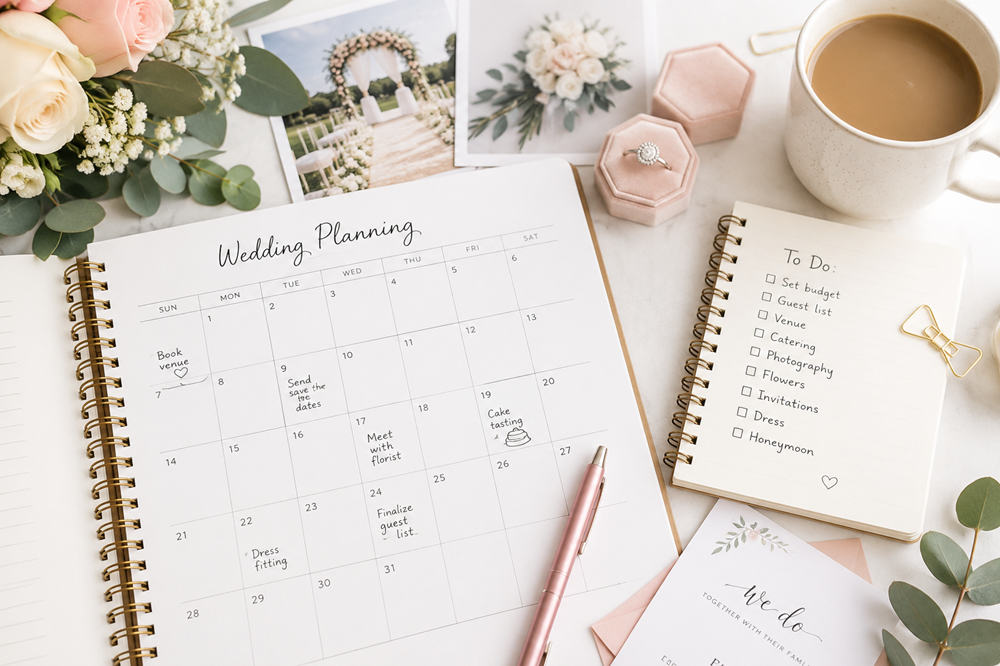
A Realistic 12-Month Wedding Planning Timeline
A one-year timeline works best when each stage has a clear purpose. The early months establish the structure, the middle months develop the experience, and the final months confirm attendance and logistics.
12 to 9 Months Before: Establish the Foundation
- Set an overall budget and clarify who will contribute.
- Draft a preliminary guest list.
- Choose the general location, season, and level of formality.
- Tour venues and secure the wedding date.
- Hire a planner if one will be involved.
- Book the vendors that are most important to you.
- Begin shopping for wedding attire.
- Create a wedding website if guests will need ongoing information.
The budget and approximate guest count should come first because they determine which venues and services are realistic. Once the date and location are confirmed, the rest of the planning process has a reliable framework.
8 to 6 Months Before: Arrange the Guest Experience
- Complete the core vendor team.
- Reserve hotel room blocks or transportation when needed.
- Discuss the structure of the ceremony.
- Select attire for the wedding party.
- Develop the color palette and overall design direction.
- Send save-the-dates if they are part of the stationery plan.
- Choose the invitation design and collect accurate addresses.
Save-the-dates are especially useful for destination weddings, holiday weekends, and celebrations involving substantial travel. Their purpose is to give guests early notice; detailed schedules and final responses can be handled later.
5 to 3 Months Before: Confirm the Details
- Finalize the menu, drinks, cake, flowers, and rentals.
- Prepare and order the invitation suite.
- Schedule attire fittings and beauty trials.
- Select ceremony readings and music.
- Review floor plans and reception layouts.
- Plan programs, menus, place cards, and signs.
- Discuss the wedding-day schedule with the planner or venue.
Standard wedding invitations are generally mailed six to eight weeks before the event. The mailing date may need to move earlier when guests are traveling internationally or when the venue requires a particularly early final count. This wedding invitation timeline can help couples work backward from their RSVP deadline.
The Final Two Months: Complete the Logistics
- Track responses and follow up with guests who have not replied.
- Confirm the final guest count with the venue and caterer.
- Create the seating plan.
- Complete final attire fittings.
- Review vendor arrival and setup times.
- Prepare a detailed wedding-day schedule.
- Check final balances and payment deadlines.
- Organize vows, rings, stationery, and personal items.
This is the time to finish decisions already in progress, not introduce a new design concept. A stable plan makes it easier for vendors and family members to understand what is expected on the day.
Can You Plan a Wedding in Six Months?
Six months can be enough time to plan a polished wedding. The main difference is that the budget, guest list, venue, date, and priority vendors must be settled during the first few weeks.
A shorter schedule works best when couples:
- Consider more than one date or day of the week.
- Choose a venue that already provides essential furniture and services.
- Keep the guest list manageable.
- Respond to quotes and contracts promptly.
- Hire skilled vendors who are available rather than waiting for one particular team.
- Select ready-to-wear or expedited attire.
- Adapt an existing invitation design instead of commissioning a fully bespoke suite.
- Limit DIY projects that require repeated testing or large-scale assembly.
The first month may feel busy because several early planning stages happen together. After the venue and main vendors are confirmed, the remaining months can focus on the ceremony, guest communication, attire, and final coordination.
Can You Plan a Wedding in Three Months or Less?
A wedding can be planned in three months or less when its format is chosen specifically for the available time. Trying to reproduce a complex, multiday celebration on a last-minute schedule is likely to create unnecessary pressure.
Formats that work particularly well include:
- A courthouse ceremony followed by lunch or dinner.
- A private dining room at a restaurant.
- An elopement with an officiant and photographer.
- A small backyard wedding.
- A ceremony at a permitted garden or public space.
- An intimate wedding at an all-inclusive venue.
Confirm the date and location first, then contact guests immediately. A simple digital announcement may be useful while printed invitations are being prepared.
Some compromises may be necessary. Certain vendors may already be booked, made-to-order attire may not arrive in time, and guests who need to travel may be unable to attend. Ready-to-use venues, in-season flowers, streamlined stationery, and a small vendor team can keep the process manageable.
What to Do If You Have More Than a Year
A long engagement does not mean every detail must be decided immediately. Use the additional time for choices that genuinely benefit from an early start.
During the first stage, focus on:
- Building a realistic budget and savings plan.
- Comparing possible dates and venues.
- Booking the professionals whose availability matters most.
- Researching travel and accommodation requirements.
- Beginning attire shopping when made-to-order clothing is planned.
Leave quantity-based and seasonal decisions until the information is reliable. Final stationery counts, seating assignments, menu quantities, floral varieties, and weather-sensitive arrangements should not be fixed too early.
Extra time can also lead to endless comparison. Once a suitable venue or vendor has been chosen and the contract is clear, continuing to search often creates doubt rather than improving the wedding.
Choosing a Timeline That Fits Your Wedding
Start earlier when several parts of the wedding are fixed, such as one date, one venue, a large guest list, extensive travel, or custom production. A shorter schedule is more realistic when you can remain flexible about the location, vendor team, attire, and decorative details.
It also helps to consider how much time you can comfortably devote to planning. A couple balancing demanding jobs, caregiving, school, or a move may prefer a longer schedule even for a relatively simple wedding.
The goal is not to use the greatest possible number of months. It is to allow enough time to secure what matters without letting wedding decisions take over everyday life.