How to Preserve a Wedding Bouquet at Home or Professionally
A wedding bouquet may last only a few days in its fresh form, but the flowers can be preserved as a meaningful keepsake. The right method depends on whetherl artwork, or place selected blooms inside resin.
Starting promptly matters. Flowers that are already badly wilted, bruised, or browning will carry those changes into the finished piece.
How Soon Should You Preserve a Wedding Bouquet?
Begin preparing the bouquet for preservation as soon as possible after the wedding. Before the event, ask a trusted friend, relative, or wedding-party member to look after it once the reception ends. This prevents the flowers from being forgotten in a warm venue or left in a car overnight.
Until you are ready to begin, place the stems in clean water and keep the bouquet in a cool room away from direct sunlight, heaters, and air vents. Remove flowers that are crushed or beginning to decay so they do not affect nearby blooms.
Take several clear photographs before dismantling the arrangement. Capture the front, sides, flower placement, ribbon, and overall shape. These images will be useful if you later rebuild the bouquet or send it to a preservation artist.
Professional services often need to receive flowers shortly after the wedding. Some also provide specific packing or delivery instructions, so book the service in advance rather than waiting until the bouquet has started to deteriorate.
Choose the Result You Want Before Selecting a Method
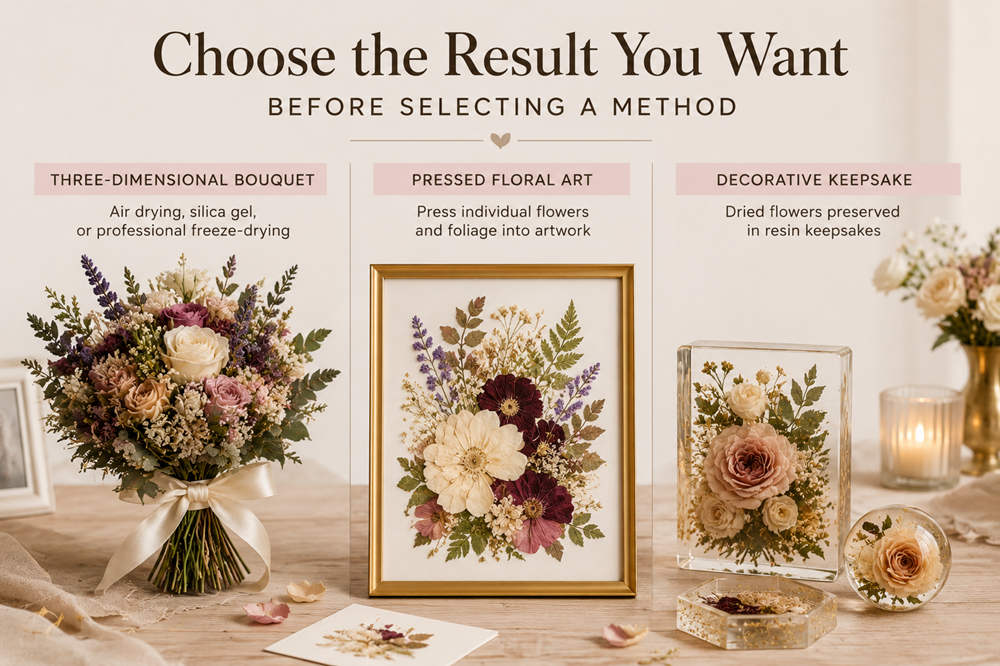
Each preservation technique creates a different kind of keepsake. Think about where the finished flowers will go and how closely you want them to resemble the original bouquet.
Keep the Flowers Three-Dimensional
Air drying, silica gel, and professional freeze-drying retain some or most of the flowers’ three-dimensional form.
Air drying gives flowers a soft, naturally aged appearance. Silica gel offers more support around individual petals and can retain fuller flower shapes. Professional freeze-drying is better suited to someone who wants a reconstructed bouquet with a more natural-looking form.
Create Flat Floral Artwork
Pressing turns individual flowers, leaves, and petals into flat botanical pieces. They can be arranged beneath glass or combined with a wedding invitation, photograph, vow excerpt, or other paper detail.
The finished work will not look like a standing bouquet. Instead, the original flowers become materials for a new framed composition.
Turn the Flowers Into a Decorative Object
Dried flowers can be enclosed in resin to create ring holders, ornaments, paperweights, jewelry, bookends, or decorative blocks. These projects usually use selected blooms rather than the entire arrangement.
Resin requires careful preparation because the flowers must be completely dry before they are enclosed.
- Air drying: Best for an affordable, naturally dried bouquet.
- Silica gel: Best for retaining more of an individual flower’s shape.
- Pressing: Best for frames, albums, and paper-based keepsakes.
- Resin: Best for small decorative or functional objects.
- Professional preservation: Best for polished artwork or a bouquet that would be difficult to replace.
How to Air-Dry a Wedding Bouquet
Air drying is one of the simplest ways to preserve flowers at home. It requires little equipment, although the bouquet will develop the muted colors and delicate texture associated with dried flowers.
The University of Missouri Extension’s flower-drying guidance recommends using flowers in good condition and drying them where air can circulate. A space with low light also helps limit unnecessary fading.
- Remove damaged material. Trim bruised petals, broken stems, and unwanted foliage.
- Take the stems out of water. Pat away visible surface moisture with a clean towel.
- Separate a dense bouquet. Divide a tightly packed arrangement into smaller bunches so air can move between the flowers.
- Secure the stems. Tie each bundle with string or a rubber band. Rubber bands remain snug as stems shrink.
- Hang the flowers upside down. Suspend the bunches without allowing the flower heads to rest against a wall or one another.
- Use a dark, dry location. A ventilated closet or spare room is generally more suitable than a bathroom, kitchen, or damp basement.
- Check the flowers periodically. Look for mold or moisture trapped between closely grouped blooms. Remove affected flowers and improve the airflow if necessary.
Most flowers need approximately two to three weeks to air-dry, although dense blooms and humid conditions can extend the process. The bouquet is ready when the stems feel dry and the flower heads no longer contain soft or cool areas.
Once every section is dry, bring the smaller bunches together and reattach the original ribbon if desired. Work gently because the petals and stems will be more brittle than they were when fresh.
How to Preserve Bouquet Flowers With Silica Gel
Silica gel draws moisture from flowers while supporting their petals. It is particularly useful for individual flower heads that would lose too much shape if they were hung upside down.
Flower-drying silica usually looks like fine crystals rather than a liquid gel. The Royal Horticultural Society’s drying guide advises surrounding the flower heads carefully and checking them regularly while the silica absorbs moisture.
- Dismantle the bouquet. Silica drying is normally done one bloom at a time rather than with a complete tied arrangement.
- Choose healthy flowers. Set aside blooms with severe bruising, decay, or extensive wilting.
- Trim the stems. Leave a short stem if it will make the flower easier to handle later.
- Prepare a container. Choose a deep, airtight container that allows the flower heads to sit without touching one another.
- Add a layer of silica. Cover the bottom of the container with an even layer.
- Position the blooms. Set each flower on the silica in the direction you want it to dry.
- Cover them gradually. Spoon the crystals around the outer petals before filling the spaces closer to the center. Do not pour heavily enough to flatten the flower.
- Seal and check the container. Follow the silica manufacturer’s instructions and inspect the flowers every couple of days.
- Remove the blooms gently. Once dry, lift them out and clear remaining crystals with a soft artist’s brush.
Small and delicate flowers may dry sooner than dense blooms, so avoid assuming that every piece will be ready at the same time. Flowers left in the material for too long can become especially brittle.
Dry blooms can be attached to artificial stems or arranged inside a protected case. Use the photographs taken before preservation if you want to echo the bouquet’s original composition.
How to Press Flowers From a Wedding Bouquet
Pressing works well when the intended keepsake is framed artwork, an album page, or another flat design. Smaller blooms, individual petals, foliage, and delicate filler flowers are usually easier to press than thick flower heads.
Illinois Extension describes flower pressing as placing flowers and foliage between absorbent layers before applying steady weight.
- Select the pieces. Choose a balanced mix of flowers, leaves, petals, and filler stems rather than trying to press every part of the bouquet.
- Remove surface moisture. The flowers should be clean and dry before they are placed in the press.
- Reduce bulky areas. Separate thick flowers into petals or thinner sections to help moisture escape.
- Arrange the material. Place each piece between clean sheets of absorbent paper. Position the petals carefully because they will dry in that shape.
- Apply even pressure. Put the paper inside a flower press or a heavy book and add weight on top.
- Store it somewhere dry. Keep the press away from humid rooms and direct sunlight.
- Replace damp paper when needed. Lift the flowers carefully so their positions are not disturbed.
Many flowers dry within one or two weeks, although thicker pieces may take longer. They should feel stiff and completely dry before being removed. Any remaining moisture can damage the flowers after they are framed or attached to paper.
Use clean tweezers or dry fingertips when lifting pressed flowers. The edges can tear easily, particularly on thin petals and small leaves.
Can You Preserve a Wedding Bouquet in Resin?
Resin can protect dried flowers inside a clear, solid object, but fresh wedding flowers should not be placed directly into it. Moisture trapped inside the petals can cause discoloration, cloudiness, bubbles, or deterioration.
Dry the flowers first by pressing them or using silica gel. Pressed flowers are suitable for thin designs, while silica-dried blooms retain more dimension for deeper molds.
Common resin keepsakes include:
- Ring holders
- Ornaments
- Paperweights
- Small trays
- Jewelry
- Decorative blocks
Practice with ordinary dried flowers before working with the wedding bouquet. A test piece can reveal how the resin cures, whether the flowers change color, and how easily bubbles form around the petals.
Uncured resin requires careful handling. Follow the product label and safety data sheet, work with suitable ventilation, avoid bare-skin contact, and wear the gloves recommended by the manufacturer. Use safety glasses or goggles when splashing is possible. The National Institute for Occupational Safety and Health provides additional guidance on reducing exposure to epoxies and resins.
Large blocks and complicated arrangements may require multiple pours, controlled placement, and finishing equipment. A professional resin artist may be the safer choice when the flowers are irreplaceable or the intended project is beyond your previous experience.
When to Use a Professional Bouquet Preservation Service
Professional preservation is worth considering when you want a highly finished piece, have a large or intricate bouquet, or would be deeply disappointed by an unsuccessful DIY attempt.
A preservation artist can assess the flowers, choose the strongest blooms, dry them with appropriate equipment, and design the final arrangement. Contacting the artist before the wedding also gives you time to understand the cost, delivery process, and likely result.
Freeze-Dried Bouquet Preservation
Freeze-drying removes moisture in specialized equipment and tends to create a more natural-looking result than basic home drying. The University of Florida Extension notes that the equipment is costly and that the technique is generally best handled by professionals.
The bouquet may be dismantled before treatment and reconstructed afterward. The finished arrangement can resemble the original form, although some color and texture changes should still be expected.
Professionally Pressed Floral Art
A floral artist presses individual pieces and arranges them inside a frame. The design may recreate the bouquet’s outline or use a looser composition based on its colors and flower varieties.
This option is especially suitable when you want wall art rather than a bouquet that occupies a shelf or display case.
Custom Resin Preservation
A resin artist dries and arranges selected flowers inside molds. Depending on the bouquet and the size of the molds, the flowers may be divided among several keepsakes.
Review previous work carefully. Pay attention to the clarity of the resin, flower placement, finishing around the edges, and examples showing how completed pieces age.
Questions to Ask Before Booking
- How soon after the wedding must the bouquet arrive?
- How should it be stored, packed, and transported?
- Which preservation method is most suitable for these flowers?
- Will every bloom be used, or will the artist select the best pieces?
- What changes in color, shape, and texture should be expected?
- What is included in the total price?
- How will the finished keepsake be protected and shipped?
Ask whether framing, additional molds, return shipping, reconstruction, or design changes cost extra. A complete quote is more useful than a starting price that excludes important finishing work.
How to Care for Preserved Wedding Flowers
Preserved flowers remain delicate natural materials. Thoughtful placement can slow fading and help prevent broken petals or moisture damage.
Keep dried or pressed flowers away from direct sunlight. Avoid humid spaces such as bathrooms and damp basements, as well as areas exposed to cooking steam, heaters, or strong air-conditioning vents.
Handle exposed flowers as little as possible. When dust collects, use a soft artist’s brush or a gentle camera blower rather than wiping the petals. Hold the arrangement by its base or container instead of touching the stems and flower heads.
Frames, shadow boxes, and glass covers provide physical protection, but the interior must remain dry. Condensation, damp backing, spreading discoloration, or a musty smell may indicate that moisture has entered the display.
Keep resin pieces away from prolonged sunlight and high heat. Clean the surface with a soft cloth and avoid abrasive products that could scratch the finish.
Preservation cannot keep wedding flowers completely unchanged. Colors may soften and natural materials may become more fragile over time, but careful storage can help the keepsake age gracefully.
A Lasting Reminder of the Wedding Day
The best time to choose a preservation method is before the bouquet begins to wilt. Air drying offers a simple home project, silica gel protects the shape of individual blooms, pressing creates flat floral artwork, and resin turns selected flowers into a decorative object.
Whichever form you choose, the finished flowers do not need to look freshly cut to remain meaningful. Their softened colors and delicate texture can become part of the keepsake’s character and a lasting reminder of the celebration.