Which Finger Does a Wedding Ring Go On—and on Which Hand?
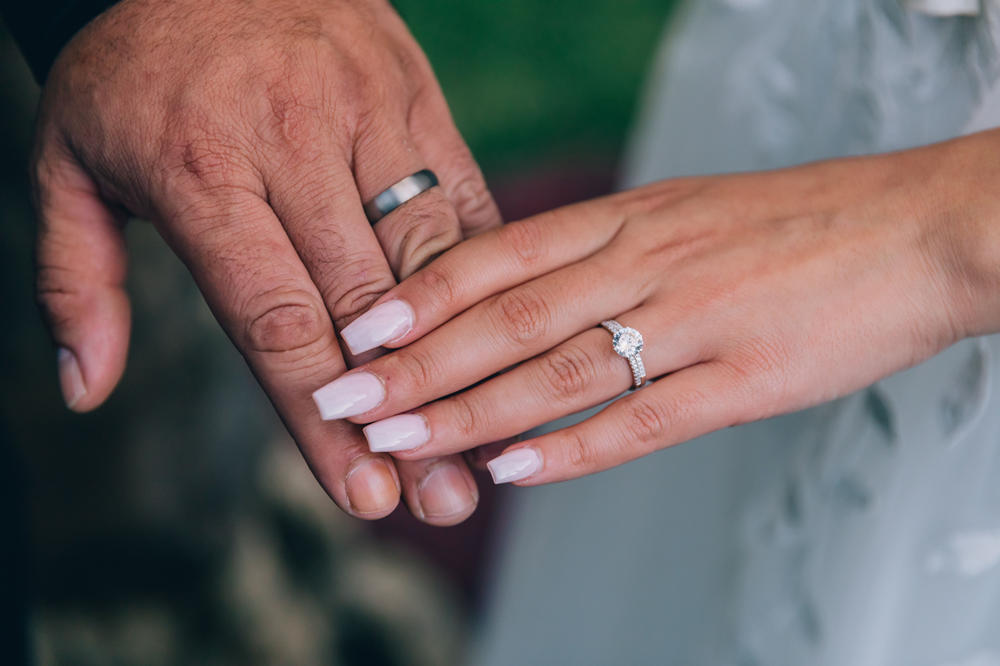
In the United States, a wedding ring traditionally goes on the fourth finger of the left hand—the finger between the middle finger and pinky. This is commonly called the ring finger.
That placement is familiar in many Western cultures, but it is not universal. Some cultural and religious traditions use the right hand, and personal comfort may also influence where someone wears the ring.
Which Finger Is the Wedding Ring Finger?
The traditional wedding ring finger is the fourth finger when counting from the thumb. In the United States, wedding bands are generally worn on this finger of the left hand.
The custom is the same regardless of gender. Brides, grooms, and other married partners may all wear a wedding band on the left ring finger.
There is no legal rule requiring a wedding ring to be placed on a particular finger. Its position is a matter of tradition rather than a condition of marriage, so couples can follow their culture, family customs, or personal preferences.
Why Is the Wedding Ring Worn on the Fourth Finger?
The fourth finger became associated with marriage because of an old belief that a special vein connected it directly to the heart. This supposed vein later became known as the vena amoris, or “vein of love.”
The idea created a romantic link between the ring and the heart. According to the Gemological Institute of America’s history of engagement rings, the fifth-century Roman writer Macrobius recorded the belief that a vein ran from the fourth finger of the left hand to the heart.
Modern anatomy does not support the existence of a unique vein connecting that finger directly to the heart. The story remains part of wedding tradition because of its symbolism rather than its medical accuracy.
Does a Wedding Ring Go on the Left or Right Hand?
A wedding ring may be worn on either hand. The customary choice depends on a person’s cultural background, religious tradition, and family practices.
The Left-Hand Tradition
In the United States, the wedding band usually goes on the fourth finger of the left hand. Engagement rings are commonly worn on the same finger, allowing both rings to be arranged together after the wedding.
The left-hand custom is also followed in the United Kingdom and in many other places influenced by Western European wedding traditions. Because it is so familiar, a band on the left ring finger is widely recognized as a sign of marriage.
Right-Hand Wedding Ring Traditions
Other traditions place the wedding band on the fourth finger of the right hand. This does not change the ring’s meaning; it simply reflects a different custom.
For example, the Greek Orthodox Archdiocese of America explains that Orthodox wedding rings are traditionally worn on the ring finger of the right hand.
Customs can also vary within the same country or faith. Some couples wear their rings on different hands because of family tradition, while others move a ring from one hand to the other after the ceremony.
Ring Placement During the Ceremony
The finger used during a wedding ceremony is not always where the ring will remain afterward. A ring may be placed on a particular finger for religious or ceremonial reasons and moved later.
In a traditional Jewish wedding ceremony, for example, the wedding band may be placed on the bride’s right index finger. Chabad’s explanation of the betrothal ceremony describes this placement as part of the formal exchange beneath the chuppah.
Couples having a religious ceremony can ask their officiant how the rings will be exchanged and whether they should be moved before or after the service.
How Do You Wear a Wedding Band With an Engagement Ring?
When both rings are worn on the left ring finger, the traditional order places the wedding band first, with the engagement ring above it. The wedding band therefore sits closer to the base of the finger.
Before the ceremony, some people move their engagement ring to the right hand. This leaves the left ring finger open so the wedding band can be placed on it. The engagement ring can then be returned and positioned above the band after the ceremony.
Traditional stacking is not required. Other practical arrangements include:
- Wearing one ring on each hand
- Wearing only the wedding band for everyday activities
- Reversing the order when the rings fit more comfortably that way
The shape of the rings may determine which arrangement works best. A straight wedding band might leave a gap beside an engagement ring with a wide or low setting, while a curved or contoured band may fit around it more closely.
Neither ring should pinch, rub painfully, or leave a deep mark. If the rings frequently turn or scrape against each other, adjusting their order or having the fit checked may make them more comfortable.
Can You Wear a Wedding Ring on Another Finger?
A wedding ring can be worn on another finger without losing its significance. The traditional ring finger makes the meaning easy for others to recognize, but it is not the only acceptable placement.
Someone might choose another finger because of an injury, arthritis, changes in finger size, cultural tradition, or simple comfort. A left-handed person may prefer the right hand, while someone whose work involves frequent hand use may remove the ring during certain tasks.
People working around machinery, tools, or heavy equipment may need to remove their rings for safety. A ring that becomes caught and is pulled with force can cause a serious injury known as ring avulsion.
When wearing a metal ring is uncomfortable or unsafe, alternatives include placing it on the other hand, wearing it on a necklace, or storing it securely during work and physical activities.
The traditional American placement is the fourth finger of the left hand, but a wedding ring may also be worn on the right hand or in another practical position. Culture can guide the choice, while comfort and daily life determine what works best for the person wearing it.