Essential Questions to Ask a Wedding Venue Before Booking
A wedding venue can look perfect during a tour while still hiding practical limitatinderstand not only how the venue looks, but also how the wedding will work there.
Bring the same checklist to every tour and write down the answers. Comparing clear details about cost, capacity, services, and contract terms is much easier than trying to remember which venue made the strongest first impression.
Confirm Availability, Capacity, and Event Access
Begin with the basic details that determine whether the venue is a realistic option. There is little reason to discuss décor or menus before confirming that the property can accommodate your date, guest count, and schedule.
- Is our preferred wedding date available?
- Are nearby dates available if our first choice is booked?
- Do rental prices change by season or day of the week?
- How many guests can the venue seat comfortably with our preferred layout?
- Can the venue accommodate the ceremony, cocktail hour, and reception?
- Will another wedding or private event take place on the property that day?
- Does the booking provide exclusive use of the venue?
- How many hours of event time are included?
Ask to see a floor plan for a wedding close to your expected guest count. A room’s legal maximum may not reflect how many people can dine, move between tables, and dance comfortably.
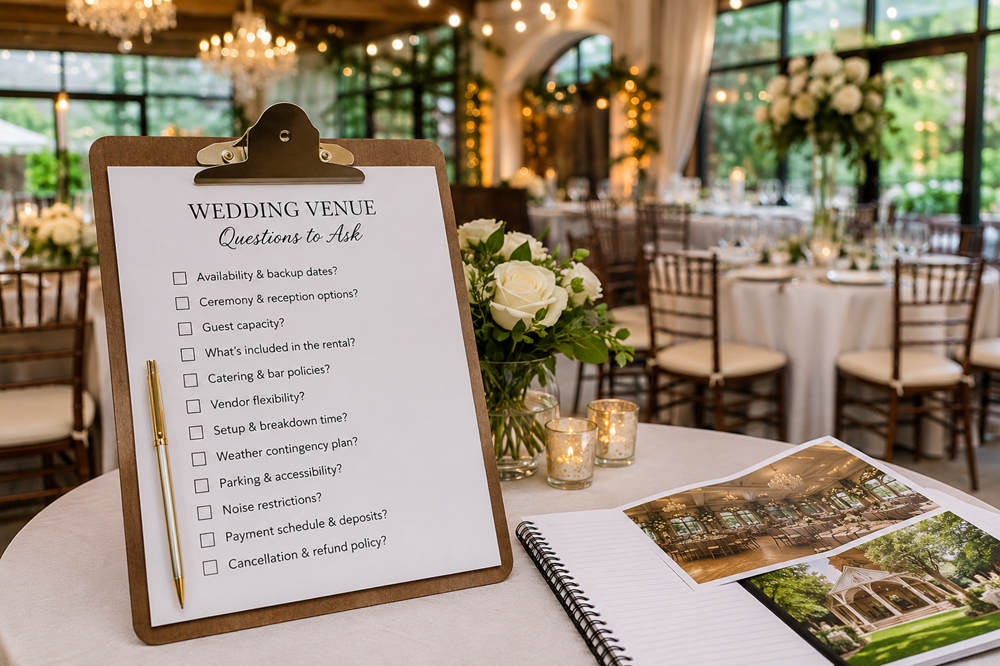
A detailed wedding venue tour checklist can also help you compare each property using the same criteria.
Find Out What the Venue Will Really Cost
The rental price is only one part of the venue budget. Request a written, itemized estimate based on your date, expected guest count, and approximate event length.
- What is the venue rental fee?
- Which rooms, furnishings, equipment, and services are included?
- Are taxes, service charges, administrative fees, or gratuities added?
- Is there a food-and-beverage minimum?
- Is there an additional fee for holding the ceremony on-site?
- Are parking attendants, security personnel, or other staff required?
- Are cleaning and waste-removal fees included?
- What is the hourly overtime rate?
- What deposit is required to reserve the date?
- When are the remaining payments due?
Ask what circumstances could change the estimate. A larger guest count, longer reception, extra staff, or upgraded furnishings may increase the final balance.
When comparing venues, focus on the projected total rather than the starting price. A higher rental fee may be reasonable if it includes items that would otherwise need to be rented separately.
Review the Contract Before Committing
Request a sample contract once a venue becomes a serious contender. Read it away from the excitement of the tour and confirm that it reflects everything you were told.
- What is the cancellation policy?
- Which payments are refundable or nonrefundable?
- What happens if we need to postpone the wedding?
- Can payments be transferred to another available date?
- What happens if the venue is unable to host the event?
- How does the contract address emergencies or events outside either party’s control?
- Can the venue substitute a room, service, menu item, or included feature?
- What insurance does the venue carry, and what coverage must we or our vendors provide?
- When is the final guest count due?
- How must changes to the agreement be approved?
The agreement should clearly describe the booked spaces, event hours, included services, payment schedule, responsibilities, and cancellation terms. Guidance on reviewing wedding contracts also emphasizes understanding postponement, substitution, and contingency clauses before signing.
Ask for any special arrangement to be added in writing. A conversation during a tour should not replace clear contract language.
Walk Through the Ceremony and Reception Plans
Ask the venue representative to guide you through the wedding in the order it will happen. This can reveal awkward transitions, long walking distances, or spaces that must serve several purposes.
- Which area will be used for the ceremony?
- Where will guests gather for cocktail hour?
- Which room will hold the reception?
- How will guests move between each part of the event?
- Will any space need to be rearranged during the wedding?
- Where can the wedding party wait before the ceremony?
- Are private getting-ready rooms available?
- How early can the couple and wedding party arrive?
Pay attention to hallways, stairs, entrances, and walking surfaces as well as the main rooms. A venue should function as one connected event space rather than a collection of attractive but inconvenient areas.
Ask to See the Weather Backup Space
For any outdoor portion of the wedding, inspect the actual alternative location instead of accepting a general assurance that the event can move indoors.
- Where will each outdoor activity move if the weather changes?
- Can the backup space hold the full guest count comfortably?
- Will the indoor layout still allow room for dining and dancing?
- Is the alternative space included in the rental?
- Are tents, flooring, heaters, fans, or generators available?
- Who decides whether the event must move indoors?
- When is the weather decision normally made?
- What is the plan for extreme heat, wind, smoke, or cold?
The backup option should feel like a workable version of the wedding, not a crowded emergency arrangement.
Clarify Catering and Bar Policies
Food and beverage rules can significantly affect both the budget and the vendors you are able to hire.
Questions About Catering
- Does the venue provide in-house catering?
- Must we choose from an approved caterer list?
- Can we hire an outside caterer?
- What kitchen or preparation space is available?
- Are menu tastings included?
- Can the kitchen accommodate allergies and dietary restrictions?
- Are children’s meals and vendor meals available?
- Can we bring our own wedding cake or desserts?
- Is there a cake-cutting or dessert-service charge?
- Are dinnerware, glassware, serving staff, and cleanup included?
Questions About the Bar
- Does the venue provide bar service?
- What beverage packages are available?
- Can we supply our own alcohol?
- Are bartenders, mixers, garnishes, ice, and glassware included?
- Can the venue accommodate signature cocktails or specialty beverages?
- What time must alcohol service end?
Request sample menus and bar packages before making a cost comparison. A per-person price may not include staffing, rentals, service charges, or nonalcoholic beverages.
Understand Vendor, Rental, and Setup Rules
Venue policies can limit which professionals you hire and determine how much work must be completed within a short setup window.
Vendor Requirements
- Are we required to use specific vendors?
- Can we hire professionals who are not on the preferred list?
- Must vendors carry a particular level of insurance?
- Do vendors need to submit documents or receive approval in advance?
Included and Required Rentals
- Are tables and chairs included?
- What styles and quantities are available?
- Are linens, dinnerware, flatware, and glassware provided?
- Is a dance floor included?
- What items will we need to rent separately?
Setup and Breakdown
- What time may vendors begin loading in?
- Is there a loading entrance, service elevator, or delivery area?
- Can rentals or decorations be delivered before the wedding day?
- Who sets up venue-owned furniture?
- When must breakdown begin?
- When must all personal items and rentals be removed?
- Can anything be collected the following morning?
Confirm whether setup and breakdown time is separate from the event rental. A six-hour booking does not necessarily mean vendors can access the property several hours beforehand.
Consider Guest Comfort and Accessibility
A venue should be easy for guests to reach, enter, and move through. Consider the experience of older relatives, young children, guests with disabilities, and anyone unfamiliar with the area.
- How much on-site parking is available?
- Is parking free, paid, or valet-only?
- Can buses and shuttles enter and turn around easily?
- Is there a safe area for rideshare pickups and drop-offs?
- Are nearby hotels or transportation options available?
- Are the event spaces heated or air-conditioned?
- Are there enough restrooms for the expected guest count?
- Is there a quiet or private room available for guests who may need one?
- Are pets permitted for the ceremony or photographs?
Ask Specific Accessibility Questions
Rather than asking only whether the venue is accessible, look at every part of the route guests will use.
- Is accessible parking located near a step-free entrance?
- Can guests reach every event space without using stairs?
- Are elevators available where necessary?
- Are accessible restrooms located near the celebration areas?
- Is there enough space for wheelchairs to move between tables?
- Are outdoor paths firm, level, and suitable for mobility devices?
- What communication accommodations can the venue provide or help arrange?
- Are all guest areas accessible to someone accompanied by a service animal?
Official ADA accessibility guidance explains the importance of connected routes between parking, entrances, and the spaces people need to use. Couples should also discuss any known guest requirements directly with the venue.
Ask About Décor and Entertainment Restrictions
Historic properties, hotels, museums, and residential venues may have detailed rules intended to protect the building or comply with local fire and noise regulations.
- Which methods may be used to attach decorations?
- Are candles or open flames permitted?
- Are confetti, flower petals, sparklers, smoke effects, or similar items prohibited?
- Can existing furniture, artwork, or decorations be moved?
- Do floral installations or hanging decorations require approval?
- Where can a DJ or live band set up?
- Is there enough electrical power for entertainment and additional lighting?
- Does the venue have a sound limiter or required music cutoff time?
- Are sound checks or rehearsals permitted before the wedding?
Describe any unusual installation, performance, or send-off idea before signing. Approval may depend on insurance, permits, equipment specifications, or safety rules.
Define the Venue Staff’s Responsibilities
Terms such as venue coordinator, event manager, and banquet manager can mean different things at different properties. Ask for a clear explanation of what the included staff will and will not manage.
- Who will be our main contact during planning?
- Will that person be present on the wedding day?
- Who takes over if the main contact is unavailable?
- What tasks does the venue coordinator handle?
- Will venue staff communicate directly with our outside vendors?
- Who handles maintenance problems or emergencies during the event?
- How many staff members will be working?
- Is security required or included?
A venue representative may oversee the property and its employees without managing the complete wedding timeline, personal decorations, ceremony processional, or outside vendor team. Ask for the division of responsibilities in writing so you can determine whether an independent planner or coordinator is also needed.
Ask These Final Questions Before Signing
Once you have reviewed the main policies, take a final look at anything that could change between the booking date and the wedding.
- Are renovations or construction projects planned before our wedding?
- Could any booked area become unavailable?
- Will the property look noticeably different during our wedding season?
- Can we see the venue arranged for an event with a similar guest count?
- Can we schedule another visit before making a decision?
- How long can the date be held without a deposit?
- Can we take the full proposal and contract home to review?
- Have all included spaces, services, prices, and special arrangements been documented?
After each tour, record the estimated total, major restrictions, included services, weather plan, and any unanswered questions. This creates a much clearer comparison than relying on photographs or general impressions.
Choose a Venue That Works as Well as It Looks
The best wedding venue is not simply the one with the most impressive view or elegant ballroom. It should comfortably hold your guests, support the flow of the celebration, fit the complete budget, and provide clear policies for the unexpected.
Take time to review every written detail before paying the deposit. When the venue’s services, costs, responsibilities, and backup arrangements are clear from the beginning, the rest of the planning process has a much stronger foundation.