What Is the Most Popular Wedding Month? The Latest U.S. Rankings
October and June are tied as the most popular wedding months in the latest U.S. survey data. October is known for cooler weather and autumn scenery, while June offers long days and an early-summer setting.
Popularity can provide a useful starting point, but the best wedding month ultimately depends on the location, venue, budget, and atmosphere a couple wants.
What Is the Most Popular Wedding Month?
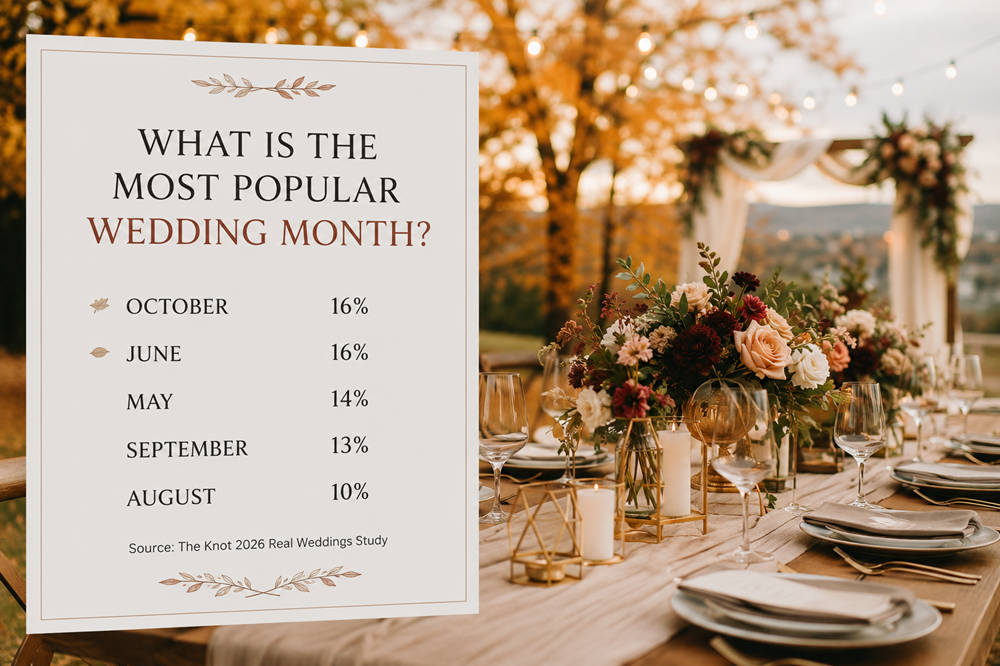
According to The Knot’s 2026 Real Weddings Study, October and June were tied as the most popular months among surveyed U.S. couples who married in 2025. Each accounted for 16% of weddings.
The leading months were:
- October: 16%
- June: 16%
- May: 14%
- September: 13%
- August: 10%
About 76% of weddings took place between May and October, making late spring, summer, and early fall the main wedding season. October remains the month most closely associated with peak wedding demand because it has ranked highly for several years, although June now shares the top position.
Why October Weddings Are So Popular
October appeals to couples who want an outdoor celebration without the intense heat that can accompany midsummer dates. In many parts of the country, daytime temperatures remain comfortable for a ceremony, while cooler evenings suit a formal or candlelit reception.
Fall scenery is another major attraction. Colorful foliage can give gardens, vineyards, wooded properties, and mountain venues a naturally striking backdrop. Shades such as burgundy, rust, gold, brown, and deep green also work easily across invitations, flowers, linens, and table arrangements.
Earlier sunsets help create a warm evening atmosphere. Candles, lanterns, fireplaces, and string lights become visible sooner, allowing the reception to feel intimate without beginning especially late.
October conditions vary considerably by region. Northern destinations may already be cold, and some areas face rain, wind, or early frost. An outdoor celebration therefore needs a sheltered alternative and a schedule that accounts for the local sunset time.
Why June Is Also a Top Wedding Month
June offers the classic appeal of an early-summer wedding. Its long daylight hours provide more time for an outdoor ceremony, photographs, cocktails, and dinner before darkness falls.
The month is particularly well suited to gardens and green outdoor venues. Trees and lawns are often full, while seasonal flowers can support romantic, colorful, or understated arrangements. Exact flower availability will depend on the region and local growing conditions.
June also accommodates many different settings, from coastal celebrations and estate weddings to tented receptions and relaxed backyard gatherings.
Weather remains an important consideration. June can be pleasant in some northern and coastal areas but hot, humid, or stormy elsewhere. Shade, water, cooling, and access to an indoor space may be necessary in warmer climates.
How the Other Popular Wedding Months Compare
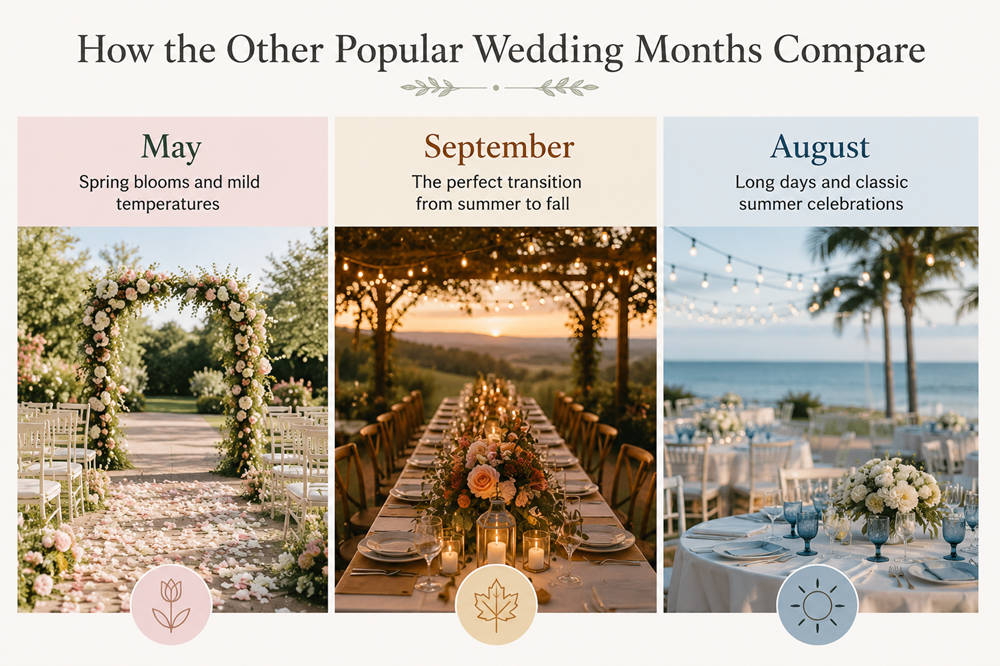
May, September, and August follow October and June in popularity. Each offers a different seasonal character.
May
May is associated with spring greenery, flowering landscapes, and generally mild conditions in many regions. It can be especially attractive for gardens, estates, conservatories, and venues surrounded by mature trees.
Spring rain can be unpredictable, while graduation ceremonies, school events, and Memorial Day travel may affect some dates.
September
September sits between summer and fall. Early dates may retain warm weather and extended daylight, while later dates can bring cooler evenings and the beginning of autumn color.
This transition allows couples to create either a late-summer celebration or an early-fall setting. Coastal destinations may still need to account for hurricane and tropical-storm risks.
August
August works well for waterfront weddings, outdoor receptions, and celebrations designed around long summer evenings. In cooler parts of the country, it may provide some of the most favorable outdoor conditions of the year.
Heat can be a concern elsewhere. A later ceremony, shaded seating, an indoor reception area, and readily available water can make the day more comfortable for guests.
What Choosing a Popular Wedding Month Means for Planning
High-demand months can make desirable dates more competitive. Popular venues may have limited Saturday availability, especially when they host only one wedding per day. Photographers, caterers, florists, musicians, and beauty professionals can also fill their calendars early.
Couples who have a particular venue or vendor in mind may need to reserve well in advance or consider a Friday or Sunday celebration. Changing the day of the week can provide more options without giving up the preferred season.
Demand may also affect pricing. Some venues use seasonal rates or require higher minimum spending for peak Saturdays. These policies vary, so it is more useful to compare complete proposals for several dates than to assume every wedding in June or October will cost more.
Save-the-dates are especially important when guests need to arrange flights, accommodation, childcare, or time away from work. During the busiest months, they may also be balancing several weddings and other seasonal events.
Does the Most Popular Wedding Month Vary by Location?
National rankings cannot identify the ideal wedding month in every destination. A pleasant outdoor date in one region may fall within another area’s hottest, wettest, or coldest season.
In hot and humid climates, spring or late fall may be more comfortable than June. Northern and mountain destinations often have shorter outdoor seasons, increasing demand for summer dates. Desert locations may be most pleasant during cooler months, while coastal and tropical venues require attention to rainy and hurricane seasons.
Local tourism can also affect the experience. A beach town may be busiest in summer, while a mountain resort may have its highest accommodation prices during ski season. Festivals, conventions, sporting events, and holiday weekends can create additional demand at any time of year.
Before choosing a date, couples can review typical monthly temperatures, precipitation, and snowfall through NOAA’s U.S. Climate Normals. These long-term averages cannot predict the weather on a specific day, but they provide useful context when comparing seasons at a particular location.
Are Less Popular Wedding Months Worth Considering?
November through April is the quieter half of the national wedding calendar. In the latest survey, only about 24% of weddings took place during these months, with December accounting for the smallest share at 1%.
A wedding outside the main season can have a distinctive appearance. Winter celebrations may feature candlelight, evergreen branches, rich fabrics, dramatic indoor architecture, or snowy surroundings. Early-spring weddings can feel fresh and understated before gardens and venues enter their busiest period.
These months also bring different practical concerns. Short daylight hours can limit outdoor photography, winter weather may disrupt travel, and dates near major holidays can conflict with family plans. A nationally quiet month may still be busy in a ski town, warm winter destination, or city hosting a major event.
An off-season wedding works best when the venue suits the time of year rather than attempting to recreate a summer celebration in unsuitable conditions.
How to Choose the Best Wedding Month for You
Begin with the setting and atmosphere you want. A flower-filled garden, warm coastal evening, colorful autumn landscape, and candlelit winter reception naturally point toward different seasons.
Narrow the choice to two or three months, then compare the venue’s seasonal appearance, available dates, local climate, and actual costs. Guest travel needs and important family commitments can help determine which option is most practical.
October and June may be the most popular wedding months, but popularity alone does not make a date right. The best month is one that suits the location, supports the planned experience, and allows the people who matter most to attend.