What Is a Shotgun Wedding? Meaning, Origin, and Modern Use
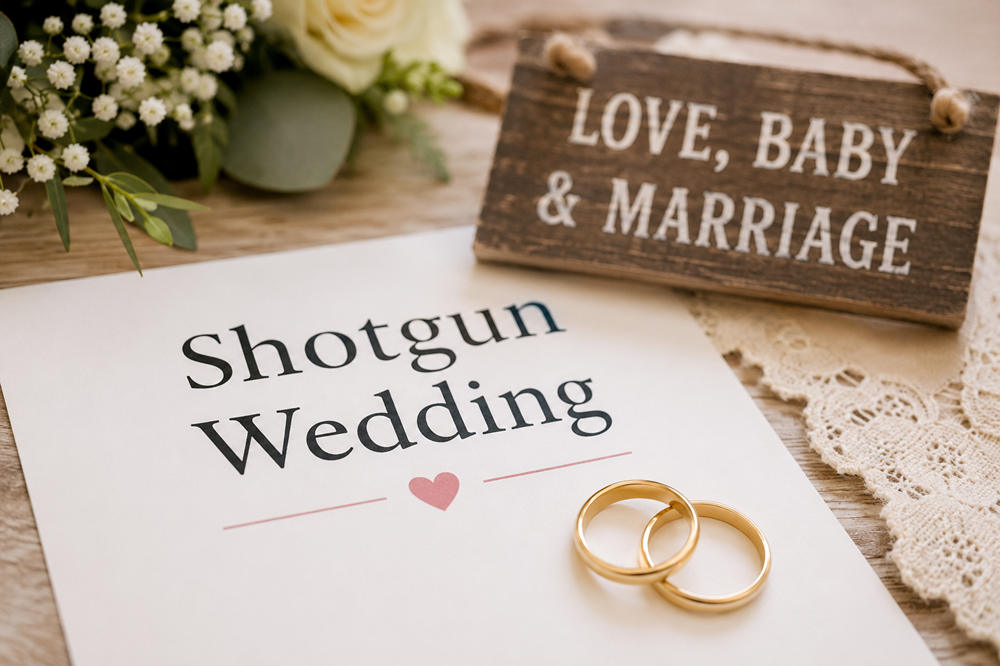
A shotgun wedding traditionally means a marriage prompted by pregnancy and pressure to marry. The phrase suggests that the wedding is happening out of obligation or urgency, rather than simply because the couple decided it was the right time.
What Is a Shotgun Wedding?
A shotgun wedding is a marriage arranged because one partner is pregnant, usually before the baby is born. In its traditional sense, the couple—or one member of the couple—feels pushed toward marriage by relatives, religious expectations, social attitudes, or practical concerns.
Merriam-Webster defines a shotgun marriage as one that is forced or required because of pregnancy. That element of pressure is what separates the expression from a wedding that simply happens during pregnancy.
A situation commonly described as a shotgun wedding may involve:
- An unexpected pregnancy before marriage
- Pressure to make the relationship socially or legally official
- A ceremony organized sooner than the couple had intended
- A belief that marriage is the only acceptable response
The term describes why the marriage is taking place, not what the ceremony looks like. A shotgun wedding could be held at a courthouse, church, family home, or traditional wedding venue.
Why Is It Called a Shotgun Wedding?
The name comes from a stereotypical scene in which the father of a pregnant woman threatens a reluctant groom with a shotgun until he agrees to marry her. The weapon represents intimidation: the groom is supposedly standing at the altar because refusing is not a realistic option.
This image is generally figurative rather than a description of what happened at most weddings. Over time, it became a humorous or exaggerated way to describe a marriage formed under family pressure.
The expression was already familiar in American political commentary by the late 19th century. A Library of Congress political cartoon published in 1897 portrayed the proposed annexation of Hawaii as “another shotgun wedding, with neither party willing.” Uncle Sam and a woman representing Hawaii stand before a minister while a politician behind them holds a shotgun marked “Bluster.”
The cartoon shows that the phrase was not limited to literal weddings. It could also describe any union in which the parties appeared reluctant but were brought together by outside forces.
The Social History Behind Shotgun Weddings
Shotgun weddings were associated with periods when pregnancy outside marriage carried heavier social consequences. In many communities, an unmarried pregnancy could affect the reputation, security, and future prospects of both the expectant mother and her family.
Marriage was often presented as a way to restore respectability and establish a socially recognized household before the child was born. Families might pressure the couple to marry quickly so that the birth would take place within marriage or so that fewer people would question when the pregnancy began.
Financial concerns also shaped these decisions. When women had fewer independent employment and property opportunities, marriage could be treated as the most reliable way to secure financial support for the mother and child. The expectant father, meanwhile, might be told that marrying was the proper way to accept responsibility.
Religious teachings and community expectations could add another layer of pressure. Couples might fear rejection, gossip, or embarrassment if they chose to remain unmarried, even when they were uncertain about spending their lives together.
Family structures are more varied today. Cohabitation, unmarried parenting, blended families, and delayed marriage are more visible and widely discussed than they once were. Pew Research Center’s research on the modern American family documents long-term changes in marriage and household patterns. These changes mean that an unexpected pregnancy does not carry the same automatic expectation of marriage in every family or community.
What Does “Shotgun Wedding” Mean Today?
People still use the phrase in its traditional sense, but it is also used more casually. Friends may jokingly call a quickly arranged wedding a shotgun wedding when they know the couple is expecting a baby, even if both partners are happy about getting married.
This casual use softens the original suggestion of force, but the expression still carries an undertone of pressure. It can imply that the pregnancy accelerated the decision or that the marriage might not have happened otherwise.
The phrase is also used figuratively outside relationships. A business merger, political agreement, or organizational partnership may be called a “shotgun marriage” when circumstances push two reluctant parties together. In each case, the central idea is the same: the union is being driven by necessity rather than enthusiasm.
Is a Wedding During Pregnancy Automatically a Shotgun Wedding?
No. Being pregnant at the time of a wedding does not automatically make it a shotgun wedding.
The ceremony may have been planned before the pregnancy began. A couple may also decide independently that they want to marry before their child arrives, without pressure from relatives or the surrounding community.
There are many practical and personal reasons an expectant couple might choose to marry:
- They already intended to marry and adjusted the date.
- They want to celebrate before caring for a newborn takes priority.
- They feel emotionally ready to make the commitment.
- The timing works better for family attendance, housing, insurance, or travel.
In these situations, “wedding during pregnancy” or “wedding before the baby arrives” is more accurate. Those descriptions do not make assumptions about whether the couple wanted the marriage.
Is the Term “Shotgun Wedding” Offensive or Outdated?
The phrase is still widely understood, but it can sound judgmental when used to describe a real couple. Calling a marriage a shotgun wedding may suggest that one partner was trapped, that the relationship was unstable, or that the pregnancy was the only reason for the ceremony.
It also comes from an old-fashioned, gendered stereotype. The traditional scene assumes that a father controls his daughter’s choices and must threaten a man into accepting responsibility. That image reflects historical ideas about female reputation, male obligation, and family authority that do not represent every modern relationship.
Because the circumstances behind a marriage are often private, using the label without knowing the couple’s experience can feel intrusive. The term is most appropriate when:
- Explaining its definition or history
- Discussing a fictional plot
- Describing a clearly documented historical situation
- Repeating language the couple has chosen for themselves
- Using it metaphorically for a reluctant business or political alliance
When speaking about someone personally, neutral language is usually kinder and more precise.
How a Shotgun Wedding Differs From Other Quick Marriages
A wedding can happen quickly for many reasons. The timeline alone does not determine whether it is a shotgun wedding.
An Elopement
An elopement is a small or private marriage chosen by the couple. They may elope to reduce expenses, avoid family conflict, travel somewhere meaningful, or keep the ceremony intimate.
The important feature is personal choice. An elopement may be planned quickly, but it is not defined by pregnancy or pressure to marry.
A Rushed Wedding
A rushed wedding is any ceremony organized within a short period. The couple may be responding to a military deployment, serious illness, work relocation, immigration matter, venue opening, family circumstance, or scheduling problem.
“Rushed” refers only to how quickly the wedding is planned. It says nothing about whether the couple freely chose the marriage.
A Marriage of Convenience
A marriage of convenience is entered mainly for a practical benefit, such as legal status, finances, property, inheritance, or social standing. It is not specifically connected to pregnancy.
Both people may knowingly agree to the arrangement, while the traditional image of a shotgun wedding suggests that at least one person feels reluctant or pressured.
A Forced Marriage
A forced marriage occurs when one or both people cannot give full, free, and informed consent. The pressure may involve threats, violence, emotional manipulation, financial control, or fear of rejection by family or community.
UN Human Rights identifies forced marriage as a serious human-rights violation. It should not be treated as a humorous type of hurried wedding.
A couple may feel social pressure after a pregnancy while still retaining the ability to make their own decision. However, when either person cannot safely or realistically refuse, the situation is a forced marriage—not merely a wedding arranged on short notice.
A shotgun wedding therefore means more than a fast ceremony or a wedding held during pregnancy. In its traditional sense, it describes a marriage shaped by pregnancy, urgency, and outside pressure. Because the phrase can imply reluctance or coercion, it is best used carefully when discussing a real couple.