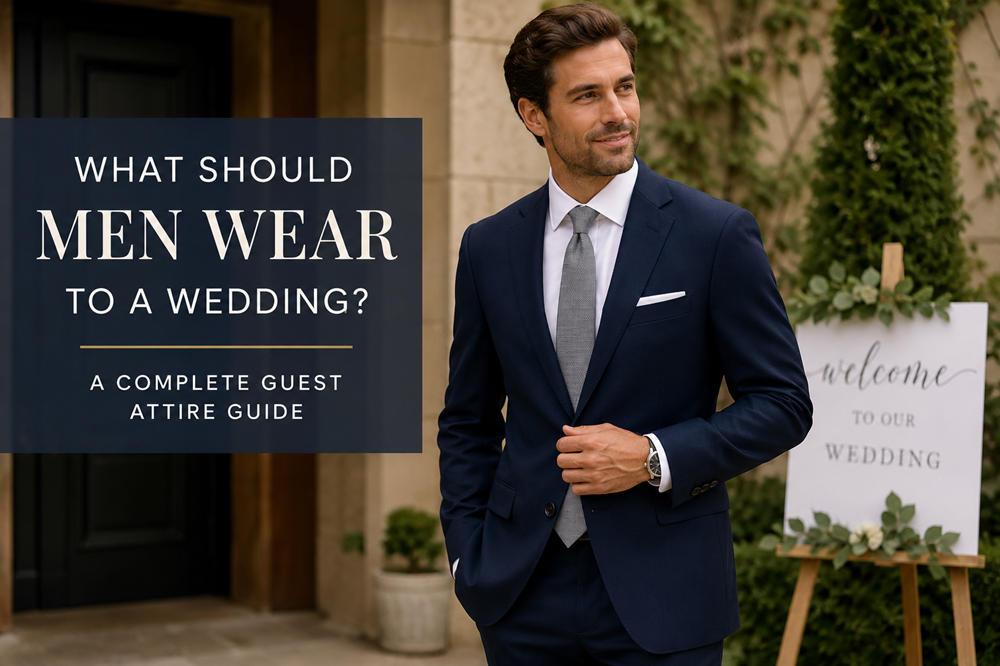
What Should Men Wear to a Wedding? A Complete Guest Attire Guide
Men should choose wedding attire by starting with the dress code on the invitation. A tuxedo may be required for a black-tie celebration, while a suit, blazer, or tailored separates may suit a less formal event.
Once you understand the expected formality, consider the season, venue, ceremony time, and weather. The aim is to look polished and respectful without dressing like a member of the wedding party.
What Should a Man Wear as a Wedding Guest?
Most male wedding guests will need some combination of a suit or blazer, collared shirt, tailored trousers, and smart shoes. The exact outfit depends on where the celebration falls on the dress-code scale.
A navy or charcoal suit is one of the most dependable choices. With a crisp shirt, tie, and polished leather shoes, it can work for formal, cocktail, and many semi-formal weddings. For a relaxed event, the same suit can be softened with a patterned shirt, knitted tie, or loafers.
More formal dress codes have stricter requirements. White tie calls for traditional evening dress, while black-tie attire normally means a tuxedo. At a casual wedding, chinos and a collared shirt may be suitable, but the outfit should still look intentional.
The invitation always takes priority over assumptions about the venue. A beach ceremony can have a formal dress code, and a wedding in an elegant hotel may still be cocktail or dressy casual.
Men’s Wedding Attire for Every Dress Code
Wedding dress codes range from highly formal to relaxed. Identifying the correct level first will make every other decision, from shoes to accessories, much easier.
White-Tie Wedding
White tie is the most formal dress code and is uncommon at modern weddings. When it appears on an invitation, guests are expected to follow its traditional requirements closely.
Men wear a black evening tailcoat with matching formal trousers, a stiff white shirt, a low-cut white waistcoat, and a white bow tie. The outfit is completed with black dress socks and highly polished formal shoes.
A standard tuxedo or dark business suit is not formal enough for a true white-tie event. Because the required pieces are specialized, renting a complete outfit is often the simplest solution.
Outfit formula: Black tailcoat, white waistcoat, formal white shirt, white bow tie, formal black trousers, and polished black shoes.
Black-Tie Wedding
A black-tie wedding calls for a tuxedo rather than an ordinary suit. The traditional choice is a black or midnight-blue dinner jacket with matching trousers, a formal white shirt, and a black bow tie.
Complete the outfit with black dress socks and polished black shoes. Patent leather is traditional, although well-polished leather Oxfords are also appropriate. A cummerbund or low-cut waistcoat may be added if it suits the tuxedo.
A black necktie does not carry the same formality as a bow tie. Similarly, a dark business suit should not replace a tuxedo when the invitation states black tie without qualifiers.
Outfit formula: Black or midnight-blue tuxedo, white formal shirt, black bow tie, black socks, and black dress shoes.
Black-Tie-Optional or Formal Wedding
Black-tie optional gives guests a clear choice between a tuxedo and an elegant dark suit. Men who do not own a tuxedo can wear a well-tailored black, charcoal, or deep navy suit with a white shirt, conservative tie, dark socks, and leather dress shoes.
Formal attire is similar but can vary with the time of day. A formal daytime wedding commonly calls for a dark suit, conservative shirt, and tie. At an evening event, a tuxedo may be welcome, although a refined dark suit is often accepted unless the invitation specifically requires black tie.
A complete, well-fitted suit is better than an improvised tuxedo-style outfit made from mismatched pieces.
Outfit formula: Dark navy suit, white shirt, silk tie, dark socks, and polished black or dark brown Oxfords.
Cocktail Wedding
Cocktail wedding attire falls between semi-formal and formal. A tailored suit and tie is the safest choice for men, particularly when the ceremony takes place in the evening or at an upscale venue.
Navy, charcoal, medium gray, and deep seasonal colors all work well. A subtle pattern or textured fabric can make the outfit feel celebratory without appearing too casual.
Some modern cocktail weddings permit a blazer with dress trousers or an open collar, but guests should not assume the tie is optional. Wear one unless the invitation, venue, or couple’s guidance clearly suggests a more relaxed approach.
This dress code allows some personality through a pocket square, patterned tie, textured shirt, or distinctive loafers. One or two expressive details are enough.
Outfit formula: Navy suit, pale blue shirt, textured tie, brown leather derbies, and a simple pocket square.
Semi-Formal Wedding
Semi-formal attire is dressier than casual clothing but slightly more relaxed than cocktail attire. A suit remains the simplest option, although a blazer with tailored trousers may also be suitable.
For a daytime wedding, consider navy, medium gray, muted blue, or another seasonally appropriate color. Evening celebrations generally favor darker shades and more polished accessories.
A tie is usually a good choice, especially when the invitation provides few other clues. Jeans, casual sneakers, and ordinary office separates are generally too relaxed unless the couple specifically requests them.
Outfit formula: Medium-gray suit, white or pale blue shirt, understated tie, leather loafers, and matching belt.
Dressy-Casual Wedding
Dressy casual gives guests more flexibility while still requiring a polished appearance. A blazer, button-down shirt, and tailored trousers provide a reliable foundation.
Pressed chinos may replace dress trousers when they suit the venue and season. Loafers, brogues, or leather lace-up shoes work well, and a tie is often optional.
Texture and color are welcome at this level. A linen-blend blazer or softly patterned shirt can suit a daytime garden wedding, but avoid stacking too many casual choices together. An untucked shirt, sneakers, and relaxed chinos can quickly make the outfit look too informal.
Outfit formula: Unstructured blue blazer, white button-down shirt, stone chinos, brown loafers, and no tie.
Casual Wedding
A casual wedding calls for an elevated version of everyday clothing. A collared shirt with chinos or tailored trousers is usually appropriate, with a lightweight blazer available if the setting calls for another layer.
Linen, cotton, and softly structured fabrics work particularly well for warm daytime events. The clothing should still be pressed, properly fitted, and chosen specifically for the occasion.
Jeans, shorts, T-shirts, flip-flops, and athletic sneakers should be reserved for weddings where the couple has clearly said they are welcome.
Outfit formula: Linen button-down shirt, tailored chinos, leather loafers, and an optional lightweight blazer.
How the Season, Time, and Venue Affect the Outfit
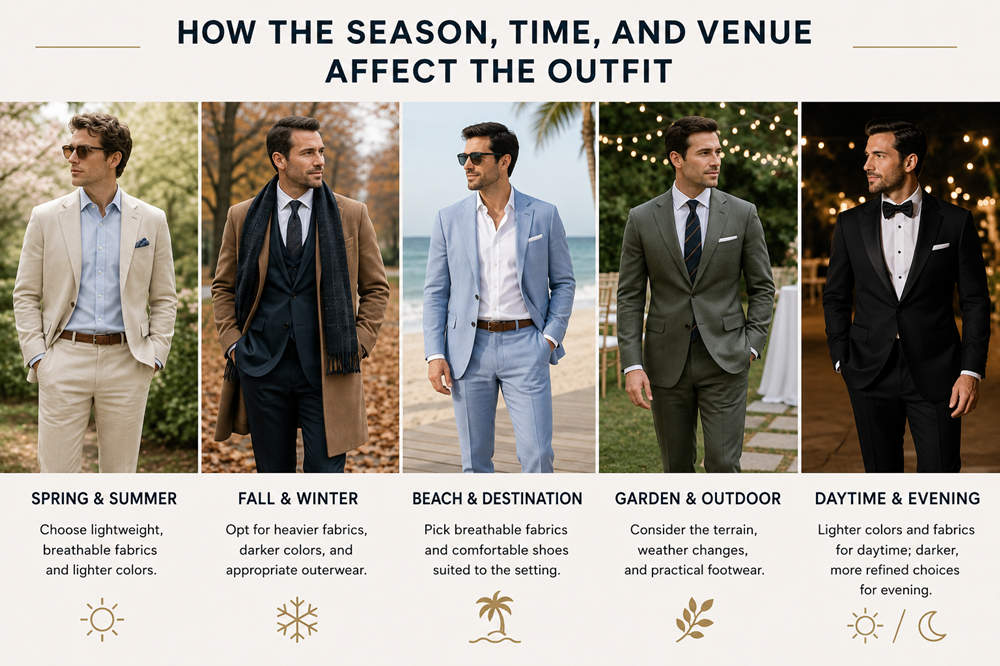
The dress code determines the type of outfit. The season, ceremony time, and venue help you select its fabric, color, layers, and footwear.
Spring and Summer Weddings
Warm-weather weddings are more comfortable in lightweight, breathable fabrics. Tropical-weight wool provides a formal appearance without the weight of traditional suiting. Linen, cotton, seersucker, and linen blends can work for cocktail, semi-formal, and casual events.
Daytime celebrations often suit light gray, medium blue, tan, or muted green. A formal evening wedding may still require a dark suit or tuxedo regardless of the temperature.
Choose a breathable shirt and avoid excessive layers. Keep the jacket on through the ceremony, then follow the hosts and other guests before removing it at the reception.
Fall and Winter Weddings
Cooler weather allows for heavier wool, flannel, velvet accents, and richer textures. The focus should be on warmth and suitable outerwear rather than simply choosing a darker color.
A wool overcoat complements a suit or tuxedo more naturally than a casual puffer or technical rain jacket. Gloves and scarves should also be understated enough to work with the rest of the outfit.
For wet or snowy conditions, choose shoes with practical soles and carry formal footwear separately when necessary.
Beach and Destination Weddings
Beach weddings require clothing that works in heat, wind, and sand. A lightweight suit in tropical wool, linen, or a linen blend can satisfy a formal or cocktail dress code without feeling excessively heavy.
For a relaxed seaside celebration, tailored trousers with a breathable shirt and unstructured blazer may be enough. Loafers or refined slip-on shoes are easier to manage on sand than heavy lace-up footwear.
Beach wedding attire is not automatically casual. Check whether the reception moves into a resort, restaurant, or ballroom, where a very relaxed outfit may no longer feel appropriate.
Garden and Outdoor Weddings
For a garden or outdoor venue, consider the condition of the ground. Grass, gravel, and uneven paths favor stable loafers, derbies, or brogues rather than delicate soles.
Bring a suitable layer if the temperature may fall after sunset. A streamlined raincoat, wool coat, or compact umbrella will protect the outfit without changing its level of formality.
Daytime and Evening Weddings
Daytime weddings usually allow lighter suit colors, softer textures, and less dramatic accessories. Medium gray, blue, tan, and subtle patterns often work well when the dress code permits them.
Evening weddings generally call for a more refined finish. Deep navy and charcoal suits, crisp white shirts, darker ties, and highly polished shoes are dependable choices.
The time of day does not override a named dress code. Black tie still requires a tuxedo, even when the ceremony begins outdoors before sunset.
What Men Should Avoid Wearing to a Wedding
Most wedding attire mistakes happen when a guest ignores the stated formality or treats the celebration like an ordinary social event. Unless the couple says otherwise, avoid:
- Jeans, cargo pants, shorts, or heavily distressed clothing
- Running shoes, casual flip-flops, or worn-out footwear
- T-shirts, hoodies, and untucked casual shirts
- Wrinkled clothing or an obviously poor-fitting suit
- Novelty ties and distracting accessories
- An outfit that deliberately imitates the known groomsmen look
- Clothing that is far more formal or casual than the invitation requests
A white dress shirt is traditional and appropriate with a suit or tuxedo. An entirely white or ivory outfit is better reserved for weddings that specifically request it.
Fit also matters. A simple suit with the correct sleeve and trouser length will usually look better than an expensive one that hangs poorly. Minor tailoring can make a substantial difference.
Keep the complete outfit in place during the ceremony and initial reception formalities. Once the hosts and other guests begin relaxing their jackets or ties, it is generally safe to do the same.