What Is a Wedding Dress Fitting? What to Expect at Each Appointment
A wedding dress fitting is an alterations appointment where a seamstress adjusts your gown to suit your body, shoes, and preferred level of comfort. It takes place after you have chosen the dress and usually after your own gown has arrived.
During the fitting process, the seamstress may refine the bodice, set the hem, adjust straps, add support, and prepare the train for the reception. The goal is not simply to make the dress smaller or tighter. It is to make sure the gown looks balanced and allows you to move safely throughout the wedding day.
What Is a Wedding Dress Fitting?
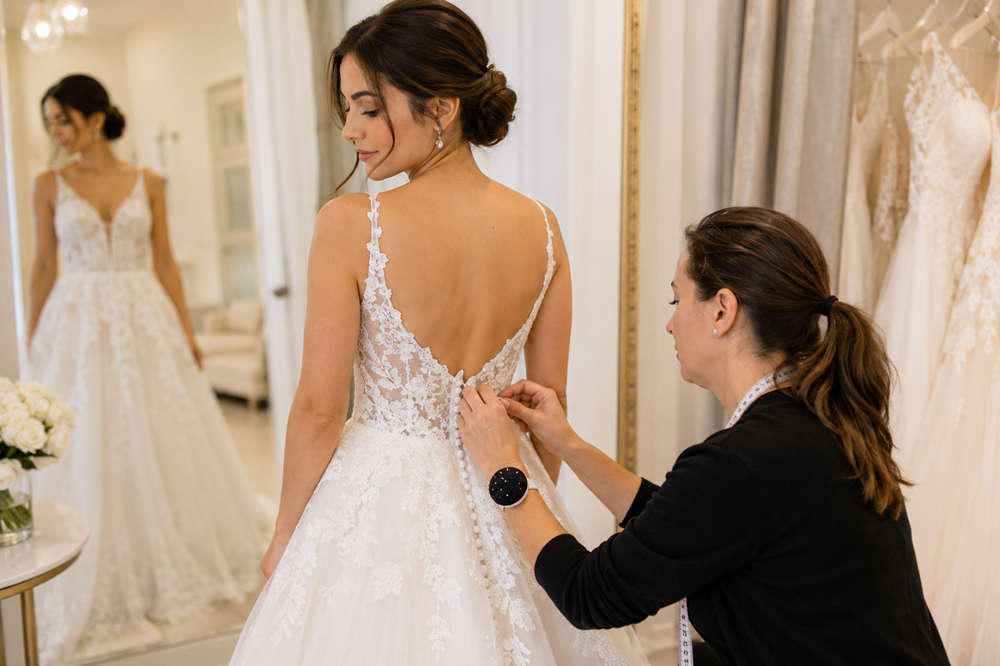
At a wedding dress fitting, you put on the gown while a bridal alterations specialist examines how it sits on your body. The specialist may pin fabric, mark the hem, inspect the seams, and discuss changes that could improve the fit.
Wedding dresses are generally produced according to standard size charts. Your measurements may fall into different sizes at the bust, waist, and hips, so even a correctly ordered gown may need some tailoring.
For example, the dress might fit through the hips but feel loose at the waist. The bodice may fit well while the straps slip from your shoulders. A skirt may have the correct shape but still be too long for your wedding shoes.
The fitting may take place at the bridal salon where you bought the gown or with an independent seamstress. Because bridal dresses can include boning, lace, beadwork, corsetry, and several skirt layers, it is helpful to work with someone experienced in formalwear alterations.
How Is a Fitting Different From a Bridal Shopping Appointment?
A bridal shopping appointment is for trying on different dresses and choosing a style. The sample gowns in a salon may be temporarily clipped at the back to suggest how they could look in your size, but no permanent alterations are made.
After you select a gown, the salon may take your measurements and recommend a size to order. This gives the designer or retailer a starting point, but it does not mean the dress is being custom-made to every measurement.
A fitting begins once the actual gown you intend to wear is available. Instead of comparing styles, you and the seamstress focus on how that specific dress should be tailored.
What Happens at Each Wedding Dress Fitting?
Many alteration processes include about three appointments, although a straightforward hem may require fewer and extensive customization may require more. Each fitting moves the gown closer to its finished shape.
The First Fitting
The first fitting is a full assessment of the dress. You will put it on with your intended shoes and undergarments so the seamstress can see its true length and shape.
The specialist will examine areas such as the neckline, bust, waist, hips, straps, sleeves, zipper, and skirt. You should mention anything that feels uncomfortable, insecure, or different from what you expected.
Major alterations are usually identified at this stage. The seamstress may pin the side seams, mark where straps should be shortened, determine the finished hemline, or discuss whether the gown needs additional internal support.
The train will also be examined, although the exact bustle design may be finalized at a later appointment once the gown’s main fit is established.
The Second Fitting
The second fitting is an opportunity to evaluate the first round of sewing. The bodice and skirt should now be closer to their finished proportions, making it easier to identify smaller issues.
Walk around the fitting room, sit down, lift your arms, turn from side to side, and take a few dance steps. Movement can reveal pulling, slipping, or tightness that is not noticeable when you stand still.
This is also a common time to check the bustle. The seamstress can determine where the train should be lifted and how the fabric should be arranged so the skirt keeps an attractive shape during the reception.
The Final Fitting
At the final fitting, the alterations should be complete or require only very small refinements. Inspect the gown from every angle and test your movement again before approving the finished fit.
Check that the zipper, buttons, hooks, corset ties, and other closures work without excessive force. Make sure the hem falls correctly with your wedding shoes and that decorative details sit neatly.
Bring the person who will help you dress on the wedding day, especially if the gown has complicated buttons, several skirt layers, or a bustle. The seamstress can demonstrate how to fasten everything correctly and explain how to avoid pulling on delicate fabric.
What Alterations Can Be Made to a Wedding Dress?
The available changes depend on the gown’s construction, fabric, seam allowances, and decorative details. Common wedding dress alterations include:
- Taking in the bodice, waist, or hips: Removes excess fabric so the gown follows the body more closely.
- Letting out a seam: Adds room when the dress contains enough fabric inside its seam allowances.
- Shortening the hem: Sets the skirt at a practical length for your height and shoes.
- Adjusting straps or sleeves: Improves support, proportion, and freedom of movement.
- Refining the neckline: Corrects gaping, tightness, or unwanted exposure when the design allows it.
- Adding internal support: May involve cups, boning, panels, or other structural elements.
- Creating a bustle: Secures the train above the floor after the ceremony.
- Repositioning embellishments: Restores lace, beads, buttons, or appliqués affected by the sewing.
Design changes such as adding sleeves, altering the back, or reshaping a neckline may also be possible, but they require more time and can be more complex than standard fit corrections.
When Should Wedding Dress Fittings Begin?
Reserve an alterations specialist early, particularly if your wedding falls during a busy season. You do not necessarily need to begin sewing immediately, but securing a place on the seamstress’s schedule can prevent last-minute difficulty.
A common wedding dress alterations timeline looks like this:
- First fitting: Approximately eight to twelve weeks before the wedding
- Second fitting: Approximately four to six weeks before the wedding
- Final fitting: Approximately one to two weeks before the wedding
This is a general framework rather than a fixed rule. Kleinfeld’s fittings and alterations guidance, for example, notes that the number and spacing of appointments can vary according to the gown and the work required.
Allow more time for major resizing, custom sleeves, structural changes, detailed beadwork, vintage materials, or a redesigned neckline or back. If the dress needs only a basic hem or strap adjustment, the process may be shorter.
What Should You Bring to a Wedding Dress Fitting?
The correct items allow the seamstress to work with the same proportions you will have on the wedding day. Bring them to every appointment rather than changing your foundation garments or heel height partway through the process.
Your Wedding Shoes
Bring the exact shoes you plan to wear or another pair with the same heel height and sole thickness. The seamstress will use them when marking the hem.
If you intend to change into lower shoes for the reception, discuss this before the hem is finalized. The dress may need a length that works safely with both pairs.
Your Intended Undergarments
Wear the bra, shapewear, cups, underwear, or other foundation garments planned for the wedding. They can change the height of the bust, the fit of the bodice, and the way fabric lies across the waist and hips.
Some structured gowns provide enough built-in support that a separate bra is unnecessary. Ask the seamstress before purchasing something new solely for the dress.
Accessories That Affect the Gown
Bring any belt, sash, overskirt, detachable sleeve, cape, or other accessory that touches or changes the dress. These pieces may affect the waistline, neckline, or overall silhouette.
A veil does not usually change the fit, but bringing it to a later appointment can help you see how the complete look works together.
Reference Images for Planned Changes
If you and the seamstress have discussed a customization, bring photographs that clearly show the intended result. Visual references are particularly useful for sleeve shapes, neckline coverage, detachable elements, and bustle styles.
How Should a Properly Fitted Wedding Dress Feel?
A well-fitted gown should feel secure without making it difficult to breathe, sit, or move. The exact sensation will vary according to the silhouette, but you should not be in pain or feel that a seam or closure is under extreme pressure.
The bodice should remain in position without constant pulling. Straps should stay on your shoulders without slipping or digging into the skin, and the neckline should lie smoothly rather than curling outward or creating a visible gap.
Strong horizontal lines often suggest that an area is too tight, while sagging or bunching can indicate extra fabric. Some creasing is natural when you sit, especially in firm materials, but the gown should return to its intended shape when you stand.
You should also be able to:
- Walk with a safe, reasonably natural stride
- Sit without severe pressure around the waist or ribs
- Raise your arms enough to hug and dance
- Use stairs without repeatedly stepping on the skirt
- Close the dress without straining the zipper or seams
Do not hesitate to speak up when something feels wrong. A seamstress can evaluate an issue more effectively during the appointment than after the gown has been taken home.
What Happens After the Final Fitting?
Before leaving, confirm the pickup date and ask whether the gown will be steamed or pressed. Find out how it should be hung, stored, and transported without crushing the skirt or damaging its embellishments.
Heavy gowns often include internal hanger loops that support the dress without placing its full weight on delicate straps or sleeves. Keep the gown inside its garment bag in a clean, dry area away from pets, food, makeup, smoke, and direct sunlight.
Record the bustle demonstration and share it with the person who will assist you. A clear video is often more useful than trying to remember the location of several hidden loops or buttons.
Ask the seamstress what belongs in a gown-specific emergency kit. The safest supplies depend on the fabric and construction, so avoid using stain products, pins, or home sewing methods that have not been approved for the dress.
Preparing for a Comfortable Final Fit
A wedding dress fitting turns a standard-size gown into one that works with your proportions and movement. Bring consistent shoes and undergarments, explain any discomfort clearly, and test the dress while walking and sitting.
By the last appointment, the gown should feel supportive, balanced, and manageable enough to wear from the ceremony through the reception.