Wedding Dress Cleaning and Preservation: How to Protect Your Gown
Your wedding dress may look clean after the celebration, but its fabric can still hold perspiration, body oils, makeup, drink residue, and dirt from the floor. Some stains are easy to see, while others may not become noticeable until they begin to darken or discolor the fabric.
Cleaning removes stains and residues. Preservation begins with appropriate cleaning and adds supportive, archival-quality packaging for long-term storage. The right approach depends on the gown’s fabric, construction, condition, and what you intend to do with it.
What to Do With the Dress After the Wedding
You do not need to take the gown to a cleaner immediately after the reception, but it should not remain untreated for months. Spills and invisible residues can become more difficult to remove as they settle into the fibers.
Until you arrange cleaning, keep the dress in a clean, dry room away from direct sunlight, pets, food, and drinks. Do not leave it in a hot car, damp basement, garage, or attic. Handle it as little as possible, particularly around the bodice, sleeves, and train.
Examine the dress and make a note of any problem areas, including:
- Dirt, mud, or grass along the hem
- Makeup around the neckline
- Food or drink spills
- Perspiration around the bodice or underarms
- Loose beads, sequins, or appliqués
- Torn lace, damaged seams, or broken fastenings
Do not experiment with bleach, stain-removal pens, club soda, or household cleaning products. A treatment that works on ordinary clothing could leave a ring, weaken delicate fibers, affect the color, or loosen glued decorations.
Check the sewn-in care label before arranging treatment. The Federal Trade Commission’s Care Labeling Rule requires garment manufacturers and importers to provide care instructions. A specialist must also consider alterations, stains, embellishments, and materials added after the gown was made.
How Professional Wedding Dress Preservation Works
Professional preservation is more than ordinary dry cleaning followed by placing the gown in a decorative box. A qualified specialist should select a process based on the dress’s materials, construction, embellishments, and condition.
Inspection and Fabric Assessment
The process usually begins with a detailed examination of the outer fabric, lining, structure, lace, and decorative elements. Wedding gowns often combine materials that may respond differently to water, solvents, heat, or stain treatments.
The specialist should identify visible marks as well as areas likely to contain perspiration, body oils, or clear drink residue. Existing damage, such as loose appliqués or torn seams, should be documented before treatment begins.
Ask whether the company records the gown’s condition with written notes or photographs. This provides a useful reference and allows the cleaner to discuss stains or damage that may not be fully correctable.
Stain Treatment and Cleaning
Different stains require different treatments. Hem dirt, makeup, perspiration, wine, frosting, and oily food should not automatically be treated in the same way. The cleaner must consider both the stain and the material beneath it.
This individualized approach is particularly important for gowns with silk, lace, structured bodices, beading, metallic thread, or glued decorations. Before approving the service, ask which cleaning process is planned and why it is appropriate for your dress.
It is also reasonable to ask whether the gown will be cleaned on its own or together with other garments. A preservation specialist should be able to explain the process clearly without relying on vague promises or technical language.
Repairs and Final Inspection
Cleaning packages do not always include repairs. Reinforcing a seam, repairing lace, replacing a hook, or reattaching beads may be priced separately.
Small repairs are worth addressing before long-term storage because loose embellishments can catch on nearby fabric and minor tears may become larger when the gown is handled or folded.
A reputable service should inspect the dress after treatment and before packaging. Some companies allow the owner to review it at this stage, providing an opportunity to raise concerns while the gown is still accessible.
Archival Packaging
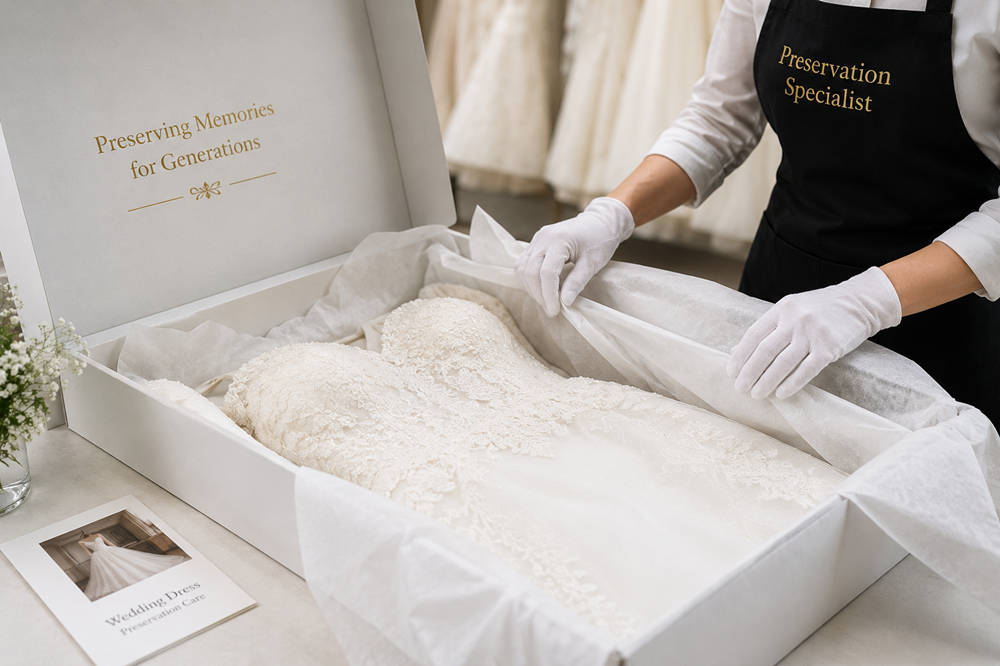
Once cleaned, the gown is usually folded into an appropriately sized preservation box. Tissue is placed around the bodice, sleeves, train, and folded areas to provide support, soften creases, and reduce friction between layers.
The Smithsonian’s textile-storage guidance explains that acid-free boxes and tissue help protect garments from handling, abrasion, light, and dust. Its guidance on acid-free tissue paper recommends neutral-pH, unbuffered tissue as a practical general choice because buffered products may be unsuitable for protein-based fibers such as silk or wool.
The box should provide enough space to support the dress without tightly compressing its skirt, train, structured areas, or embellishments. Be cautious if an elaborate gown is being forced into a surprisingly small container.
Can You Clean a Wedding Dress at Home?
A simple wedding dress may sometimes be cleaned at home when its care label permits washing. However, the decision should be based on the gown’s complete construction rather than the main fabric listed in its product description.
A relatively unstructured dress made from washable material, without delicate lace, boning, glued decorations, or extensive embellishment, may be suitable for careful home cleaning. Follow the stated instructions for water temperature, detergent, washing, and drying.
Professional treatment is generally safer when a gown includes:
- Silk, wool, or delicate lace
- Structured cups, boning, or corsetry
- Beads, sequins, pearls, or crystals
- Glitter, metallic thread, or glued appliqués
- Several contrasting fabrics or colors
- A long or heavily soiled train
- Vintage materials or unknown stains
Even when the outer fabric is washable, internal supports or decorative elements may shrink, lose their shape, bleed color, tarnish, or detach. Spot cleaning can also create water rings or leave one area noticeably lighter than the surrounding fabric.
How to Choose a Wedding Dress Cleaning and Preservation Service
A cleaner who handles everyday clothing may not have experience with elaborate bridal gowns. Look for a company that regularly treats wedding dresses and can explain how its process will be adapted to yours.
Before leaving or shipping the gown, ask:
- Is the dress cleaned on-site or sent to another company?
- How will its materials and stains be assessed?
- Will existing damage be documented?
- Are repairs included or charged separately?
- Can the dress be inspected before packaging?
- What type of tissue and storage box will be used?
- Can the preservation box be opened later?
- How are the veil and accessories handled?
- What insurance applies if the gown is lost or damaged?
- What does the written guarantee cover?
A long guarantee is meaningful only when its exclusions, inspection requirements, and claims process are clearly explained. Confirm whether opening the box, moving the gown, or storing it in certain conditions could affect the coverage.
Mail-in preservation can be useful when no experienced local provider is available. The service should include clear packing directions, tracking, sufficient insurance, and confirmation when the gown arrives.
How Much Wedding Dress Cleaning and Preservation Costs
Professional cleaning and preservation often costs between $250 and $1,000. Couture gowns, severe staining, complicated repairs, unusual materials, or conservation-level treatment can cost considerably more, with some specialist services exceeding $2,000.
The final price may depend on:
- The fabric and construction of the gown
- The length and fullness of the skirt or train
- The amount of lace, embroidery, or beading
- The number and severity of stains
- Repairs or replacement embellishments
- The preservation materials and box size
- Shipping and insurance
- Additional items such as a veil, cape, or overskirt
Compare the contents of each package rather than looking only at the advertised price. One quote may cover basic cleaning and boxing, while another includes detailed stain treatment, minor repairs, archival materials, insured shipping, and a written guarantee.
Ask for an itemized estimate after the provider has inspected the dress or reviewed detailed photographs. A flat starting price may not apply to a heavily embellished, vintage, couture, or badly stained gown.
How to Store a Preserved Wedding Dress at Home
Keep the preservation box flat in a clean, dark, climate-controlled part of the home. An interior closet shelf or another elevated, protected space usually works well, provided the box is not crushed or placed near plumbing, heating vents, or direct sunlight.
Avoid attics, garages, sheds, and damp basements. Textiles can be damaged by heat, light, unstable humidity, pests, pollutants, leaks, and improper handling.
The Canadian Conservation Institute recommends flat storage for textiles because it supports the entire garment instead of forcing the shoulders or straps to carry its weight. This is especially useful for heavy, fragile, or highly decorated dresses.
Do not stack luggage, boxes, or other heavy objects on top of the gown. Keep it away from exterior walls and any area where condensation or water damage is possible.
Follow the preservation company’s instructions about opening and inspecting the box. Do not open a sealed or warranty-covered package unless the provider confirms that doing so is permitted.
When an inspection is recommended, place the gown on a clean, dry surface and support its weight as it is lifted. Avoid pulling it by the straps, sleeves, lace, or embellishments. Any new folds should be gently cushioned with suitable tissue before the gown is returned to its box.
Is Wedding Dress Preservation Worth It?
Full preservation is most useful when you want to keep the dress as a personal memento, pass it to a family member, wear or redesign it in the future, or protect a gown with significant sentimental or financial value.
Cleaning without long-term preservation may be enough when you plan to sell, donate, or repurpose the dress soon. Prompt cleaning can still improve its condition and prevent untreated stains from becoming harder to remove.
Preservation cannot guarantee that every fabric, dye, adhesive, or embellishment will remain completely unchanged forever. Materials naturally age. What proper preservation can do is remove damaging residues, reduce avoidable stress, and provide a cleaner and more stable storage environment.
The decision does not have to be based on the original price of the dress. A simple gown with strong emotional meaning may be more important to preserve than an expensive one you do not intend to keep.