Engagement Ring vs. Wedding Ring: What Is the Difference and Do You Need Both?
An engagement ring and a wedding ring traditionally represent two different moments. The engagement ring marks the decision to marry, while the wedding ring is exchanged during the ceremony as a symbol of marriage.
Many people wear both, but you do not have to. One ring can serve both purposes, and couples are free to adapt the tradition to their style, budget, culture, and daily lives.
Engagement Ring vs. Wedding Ring at a Glance
| Feature | Engagement Ring | Wedding Ring |
|---|---|---|
| When it is given | During a proposal or engagement | During the wedding ceremony |
| Traditional purpose | Represents the intention to marry | Represents the marriage commitment |
| Typical design | Often has a prominent diamond or gemstone | Usually has a lower-profile band design |
| After the wedding | May be worn with a wedding ring or on its own | May be worn alone or with an engagement ring |
What Each Ring Represents
The Engagement Ring
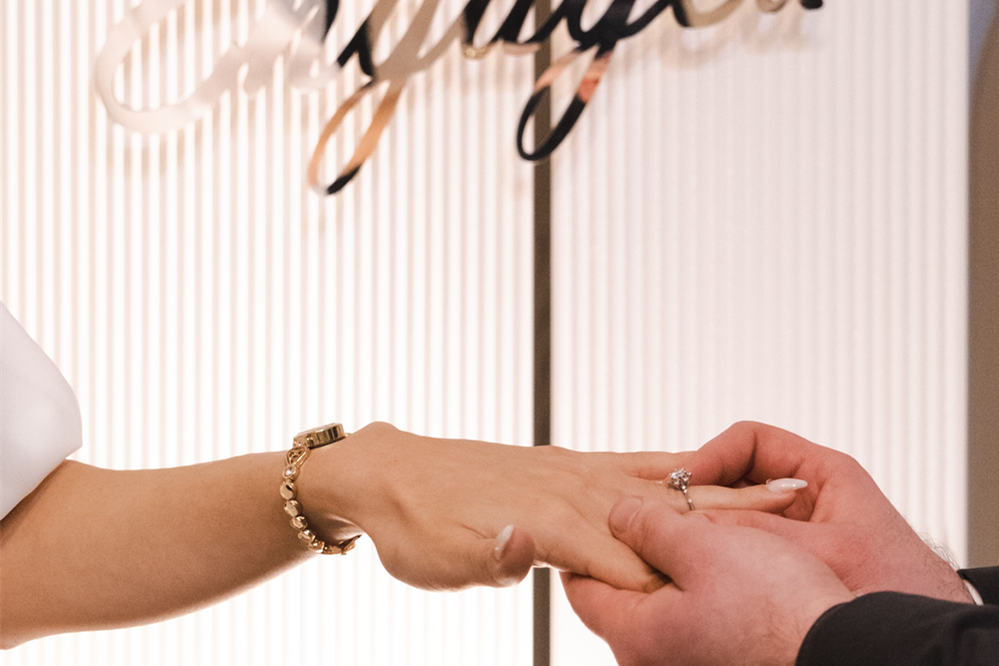
An engagement ring is associated with the promise or shared decision to get married. It may be presented during a proposal, selected together afterward, or purchased before the engagement is publicly announced.
Its significance does not depend on a particular gemstone or price. While diamond solitaires are familiar choices, engagement rings can feature colored gemstones, clusters, multiple stones, plain bands, vintage pieces, or unconventional designs.
There are no fixed gender rules. One partner may wear an engagement ring, both partners may exchange rings, or the couple may decide not to use engagement jewelry at all.
The Wedding Ring
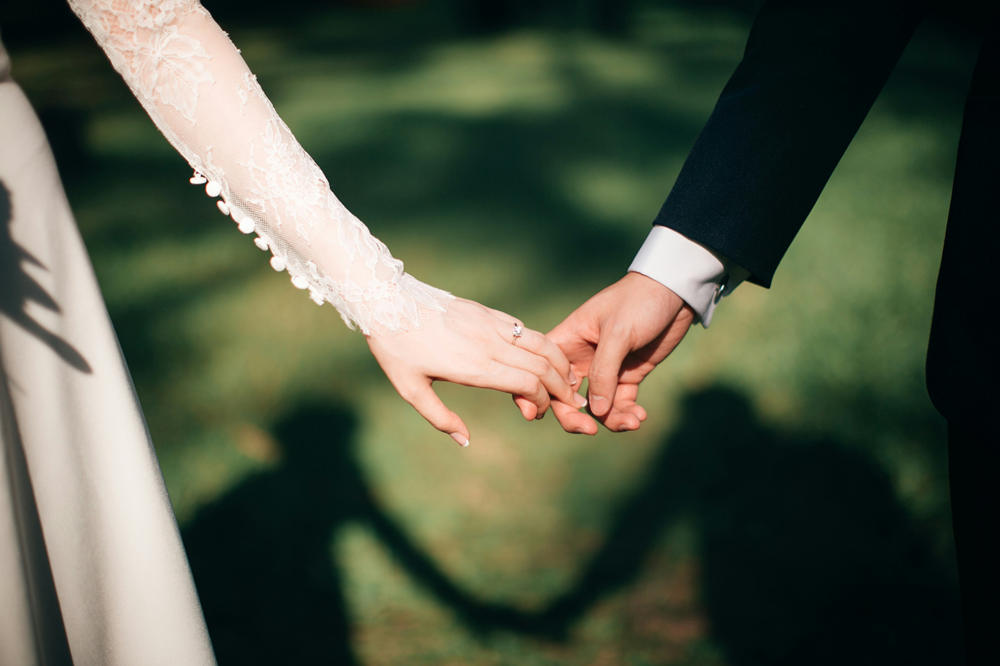
A wedding ring is normally exchanged during the ceremony. It is connected to the vows and is commonly worn afterward as a visible symbol of marriage.
Because many people intend to wear it frequently, comfort and durability often influence its design. Options range from narrow polished bands to wider rings with matte finishes, engraving, textures, or recessed gemstones.
Couples may buy new wedding rings, use family pieces, choose temporary bands, or skip the exchange. The meaning of the ceremony does not depend on purchasing new or expensive jewelry.
How Engagement Rings and Wedding Rings Usually Look Different
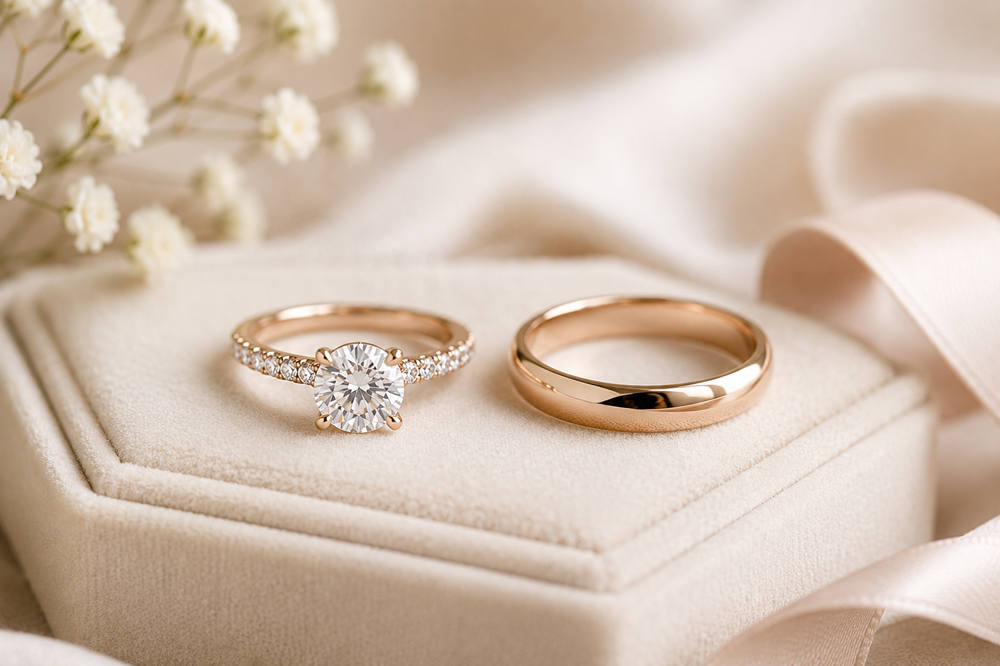
The most noticeable difference is often the profile of the ring. An engagement ring commonly has a center diamond or gemstone raised above the band. The main stone may appear alone or be accompanied by a halo, side stones, or decorative metalwork.
A wedding ring is more likely to have a continuous, lower-profile shape. Common styles include:
- Plain polished or brushed metal bands
- Pavé bands set with rows of small stones
- Channel-set bands with stones between metal edges
- Eternity rings with stones continuing around the band
- Curved or contoured bands designed around a center setting
- Engraved, braided, hammered, or textured rings
These are common design patterns, not strict definitions. A wedding ring can be highly detailed, while an engagement ring can be a simple band without a large stone.
The profile also affects everyday use. A raised setting may catch on clothing or gloves, while a smooth band can be easier to wear during physical work. A diamond-set wedding band may require more care than a plain metal ring, even if it looks less prominent than the engagement ring.
Do You Need Both an Engagement Ring and a Wedding Ring?
No. An engagement ring can also serve as your wedding ring if you do not want to purchase or wear a separate band.
Two rings may appeal to people who like the traditional stacked appearance or want each piece to represent a separate milestone. A set also offers flexibility: both rings can be worn for celebrations, while the simpler band can be used alone for work, travel, exercise, or everyday errands.
Using only one ring may be more practical when:
- You prefer a simple appearance
- Two rings feel crowded or uncomfortable
- Your engagement ring already feels complete
- You would rather spend your budget on one ring
- Your work or hobbies make stacked rings inconvenient
- You do not feel connected to the two-ring tradition
Other couples skip engagement rings and exchange wedding bands at the ceremony. Some use a modest proposal ring and later replace it with a permanent wedding ring. None of these choices carries less meaning simply because fewer pieces of jewelry are involved.
Which Ring Goes on First?
In the traditional arrangement, the wedding ring is worn first, with the engagement ring placed above it. In the United States, both are commonly worn on the ring finger of the left hand.
Someone who already wears an engagement ring may move it temporarily to the right hand before the ceremony. The wedding band can then be placed on the left ring finger during the vows, followed by the engagement ring afterward.
This remains the conventional order described by the Emily Post Institute, but it is a custom rather than a requirement. You can reverse the order if the rings fit better, wear them on separate hands, or follow a cultural tradition in which wedding jewelry is placed on the right hand.
How to Choose a Wedding Ring That Works With Your Engagement Ring
If you plan to wear both rings on the same finger, evaluate them as a set rather than choosing each one separately. A visually attractive combination may still feel uncomfortable or cause unnecessary wear if the shapes do not work together.
Check Whether the Rings Sit Flush
A straight wedding band can sit closely beside an engagement ring when there is enough space beneath the center setting. Low baskets, large side stones, halos, or decorative bands may create a gap.
A gap is not necessarily a flaw. Some people prefer the visual separation. Those who want a closer fit can consider a curved, contoured, notched, or custom-made wedding band that follows the engagement ring’s outline.
Look for Harmful Contact
Check whether exposed diamonds, gemstones, prongs, or sharp settings rub against the neighboring ring. Repeated contact can scratch metal, wear down settings, or damage stones.
A jeweler can inspect the rings from the top and side to identify pressure points. This is especially helpful when combining pieces that were not designed as a matching set.
Balance the Proportions
A narrow wedding band can maintain the delicate appearance of a slim engagement ring. A wider band creates more contrast and may give the set a bolder look.
Try the complete combination on before deciding. Two individually comfortable rings may feel noticeably tighter when stacked because they cover more of the finger.
Decide Whether to Match the Metals
Matching metals can create a unified appearance, but mixed-metal sets can look equally intentional. Yellow gold may add warmth beside platinum or white gold, while rose gold can create a softer contrast.
The Gemological Institute of America’s ring-stacking guidance includes mixed metals, textures, and gemstones among the ways a ring combination can be personalized.
Also consider how the metals will perform over time. Gold, platinum, silver, titanium, and tungsten differ in weight, maintenance, resizing options, and resistance to everyday wear. The best choice depends on the wearer’s routine rather than color alone.
Test the Set During Normal Movement
Move your fingers, make a fist, type, and hold a small object while wearing both rings. They should not pinch the skin, limit movement, or rotate so often that the settings fall out of alignment.
Ring size may also need to be adjusted for a wider stack. A jeweler can check whether the finished set is secure without feeling restrictive.
Do Couples Need Matching Wedding Rings?
Wedding rings do not have to match. Each partner may have different preferences, occupations, hand shapes, and comfort needs.
Couples who want a subtle connection can choose the same metal, finish, engraving, or small design detail while selecting different widths and shapes. Completely different rings are also appropriate. Their shared meaning does not depend on their looking identical.
Choosing the Right Ring Arrangement
Whether you choose one ring or two, look for an arrangement that feels comfortable, suits your budget, and reflects what the jewelry means to you. Tradition can offer a starting point, but it does not have to determine the final choice.