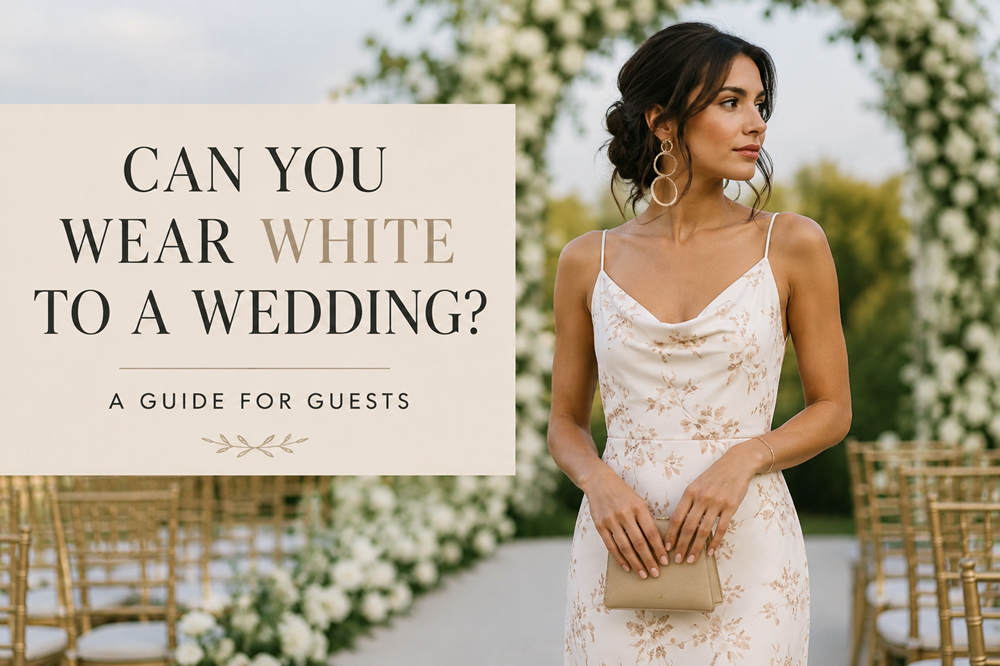
Can You Wear White to a Wedding? A Guide for Guests
Choosing a wedding guest outfit can become surprisingly complicated when white, ivory, or cream is involved. Although dress codes have become more flexible, wearing a predominantly white outfit is still usually best avoided. There are exceptions, including all-white celebrations and clothing chosen by the couple, but the safest approach is to make sure your outfit cannot be confused with bridal attire.
Can You Wear White to a Wedding?
In most cases, you should not wear an entirely or predominantly white outfit to a wedding. This includes dresses, jumpsuits, suits, and coordinated separates in white, ivory, cream, or another shade that appears nearly white.
The custom is most closely associated with Western weddings, where white and similar colors are commonly reserved for the person getting married. Following that convention is a simple way to avoid creating an uncomfortable distraction.
That does not mean every trace of white is inappropriate. A dark floral dress with a few white flowers, a white shirt beneath a navy suit, or a small white handbag will rarely be mistaken for bridalwear. The complete appearance of the outfit matters more than the presence of a single white detail.
The clearest exception is when the couple specifically asks guests to wear white. Instructions on the invitation or wedding website take priority over the usual rule. Otherwise, established wedding guest etiquette generally favors choosing another color.
Why Wedding Guests Traditionally Avoid White
A wedding outfit is not only a personal fashion choice. It also becomes part of the setting the couple has planned, including the ceremony, reception, and photographs.
At many Western weddings, a white or ivory outfit visually identifies the bride or another person getting married. When a guest arrives in a similar color, the outfit may appear competitive even when that was never the guest’s intention.
The purpose of the custom is not to suggest that the couple owns a color in every setting. It is a form of consideration for one particular day. Guests are usually asked to avoid only a narrow group of bridal shades, leaving plenty of other colors and styles available.
Modern bridal fashion also extends beyond the traditional bright white gown. Someone may wear ivory, champagne, pale beige, blush, silver, or a soft patterned dress. Guests may not know the chosen outfit in advance, which is why avoiding very pale, bridal-looking clothing remains a useful guideline.
When Wearing White May Be Appropriate
The usual rule does not apply equally to every wedding. The couple’s stated plans, the guest’s role, and the cultural setting can all change what is appropriate.
The Couple Requests an All-White Dress Code
Some couples plan an all-white ceremony, reception, welcome party, or destination celebration. In that situation, wearing white is not merely acceptable—it is part of the requested dress code.
Read the wording carefully to see whether the instruction applies to the wedding itself or only to a related event. A welcome dinner might have an all-white theme while the ceremony follows a different dress code.
The invitation may also specify a narrower palette such as cream, beige, or neutral colors. Follow the exact guidance rather than avoiding white out of habit. The couple has chosen the visual effect and expects guests to participate.
You Are Given a Specific Role or Outfit
Members of the wedding party may be asked to wear white, ivory, champagne, or another pale color. This can include bridesmaids, attendants, flower girls, readers, performers, or close family members.
When the couple selects or approves the clothing, there is no etiquette problem. The outfit is part of the wedding design rather than an independent guest choice.
Approval should be clear rather than assumed. A relative should not decide that wearing ivory is appropriate simply because it coordinates with the flowers or wedding party. The exception applies when the couple has intentionally included the outfit in their plans.
The Wedding Follows Different Cultural Traditions
Wedding clothing varies widely across cultures, religions, families, and regions. White does not carry the same bridal meaning everywhere, and some celebrations may place greater importance on avoiding or wearing other colors.
The Metropolitan Museum of Art’s exploration of wedding attire across different cultures illustrates how clothing can reflect distinct community traditions rather than one universal set of rules.
For a ceremony rooted in traditions you do not know well, begin with the invitation and wedding website. Any instructions provided by the couple are more relevant than general Western etiquette. A close family member or member of the wedding party may also be able to clarify cultural expectations.
Can You Wear a White Floral or Patterned Dress?
A floral or patterned dress can be suitable when white appears only as a minor part of the design. The important question is not whether the fabric contains white, but whether the outfit looks white overall.
A navy dress covered with white flowers, for example, will still read as navy. A cream dress with a few widely spaced pink flowers may look mostly cream, especially from across the room. The second option is more likely to seem bridal or attract questions.
Consider the balance of the print before deciding:
- Another color should clearly dominate the fabric.
- The pattern should remain visible from several feet away.
- The white background should not occupy most of the dress.
- The cut and fabric should not resemble a wedding gown.
- The outfit should still look colorful in photographs.
Be especially careful with small, delicate prints on an ivory or white background. Fine details can disappear in bright sunlight, low-resolution photographs, or pictures taken from a distance. The resulting image may make the dress appear much whiter than it looked in person.
A bold multicolored print is generally easier to wear than a nearly white dress with minimal decoration. Current guidance on wearing white as a wedding guest similarly distinguishes colorful patterns from clothing with a prominent white background.
Which White Clothing and Accessories Are Usually Acceptable?
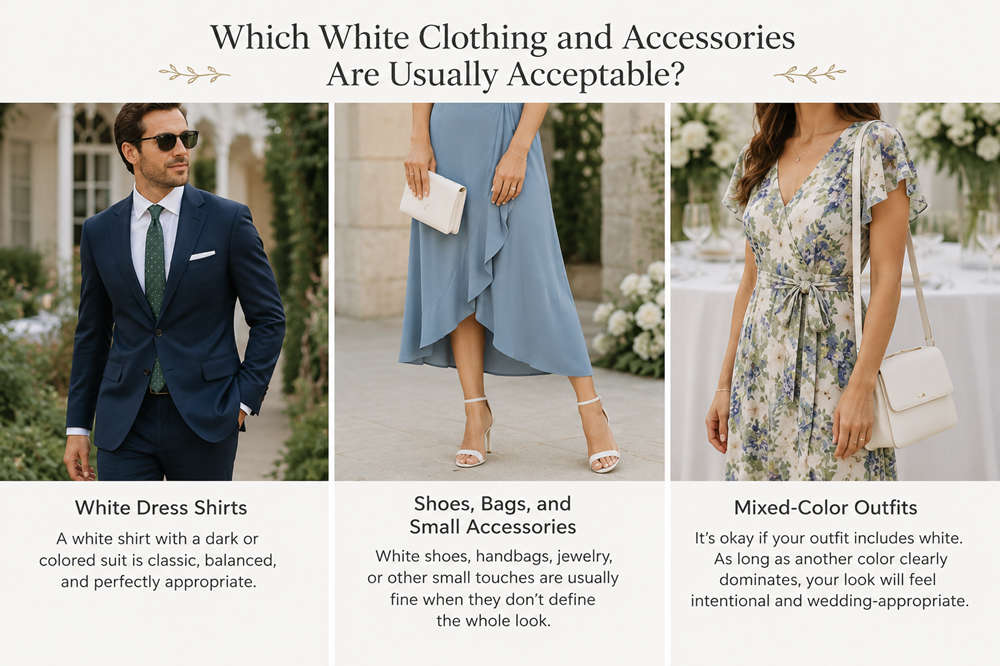
The etiquette rule mainly concerns outfits that appear predominantly white or bridal. Individual garments and accessories are often acceptable when they form a small part of a clearly nonwhite look.
White Dress Shirts
A white dress shirt worn beneath a dark or colored suit is standard wedding attire. The jacket, trousers, tie, and other details establish the outfit’s overall appearance, so the shirt is unlikely to cause confusion.
The same principle can apply to a white blouse paired with a colorful skirt or tailored trousers. However, the complete outfit should remain visibly different from a white bridal suit or coordinated white ensemble.
Shoes, Bags, and Small Accessories
White shoes, handbags, belts, jewelry, hair accessories, and pocket squares are generally less significant than a white dress or suit. They can be worn when they complement an outfit whose main color is clearly something else.
Context still matters. A white veil-like headpiece, bridal hair comb, or long pair of white gloves may attract more attention than an ordinary cream clutch. The concern is the accessory’s bridal association, not simply its color.
Mixed-Color Outfits
Color-blocked dresses, striped clothing, and patterned separates can include white without looking like bridalwear. A black-and-white geometric dress or a green outfit with white trim will normally read according to its stronger color and pattern.
Look at the proportions rather than counting individual pieces. A white blazer, white blouse, and pale skirt may collectively create an almost all-white outfit even though each garment is technically separate. One white element combined with deeper colors is much easier to judge.
How to Tell Whether an Outfit Is Appropriate
Store lighting and close-up mirrors do not always show how an outfit will appear at the wedding. A few simple checks can reveal whether a pale color or subtle print is likely to cause a problem.
Step Back From the Mirror
View the outfit from across the room. If you notice “white dress” before noticing the flowers, stripes, or contrasting details, the outfit probably contains too much white.
Take Photographs in Different Lighting
Photograph the outfit indoors, near a window, and outside in daylight. Use the camera flash for one picture. Pale blue, blush, silver, beige, and champagne fabrics can lose their undertones and appear white under certain lighting conditions.
Consider the Shape and Fabric
Color is only part of the impression. A floor-length ivory lace dress with tulle, beading, a train, or a corseted bodice may look bridal even when it is not technically white. A simple cream cardigan worn with dark trousers does not create the same effect.
Review the Dress Code
Check the invitation and wedding website for guidance about colors, formality, location, and theme. The dress code can help determine whether the outfit is appropriate beyond the question of white.
A colorful cotton dress may work beautifully for a casual garden ceremony but feel too relaxed for a white-tie event. Similarly, a dramatic evening gown may suit a formal ballroom wedding while overwhelming a daytime beach celebration.
Use the Easy-Replacement Test
If you already own another suitable outfit that raises no etiquette concerns, wearing it is usually the simplest choice. You should be able to enjoy the celebration without repeatedly wondering how your clothing will be perceived.
An outfit that requires a long explanation—“It is technically pale gray,” “The flowers make it acceptable,” or “It looked darker online”—may not be worth the uncertainty.
Do Not Confuse White Tie With Wearing White
A white-tie wedding does not ask guests to dress entirely in white. The term describes an exceptionally formal level of eveningwear rather than a color theme.
Traditional masculine white-tie attire includes a black tailcoat and matching trousers worn with a formal white shirt, white waistcoat, and white bow tie. Traditional feminine attire generally consists of a full-length evening gown, which does not need to be white.
Guests attending a white-tie wedding should pay close attention to the event’s time and instructions. The formality requires careful tailoring, elevated fabrics, and appropriate evening accessories, but it does not cancel the usual caution about wearing a bridal-looking white gown.
What to Wear Instead of White
Choosing another color does not mean settling for an outfit that feels dull or overly safe. Wedding guest clothing can still be elegant, seasonal, and expressive.
For spring celebrations, consider lavender, soft blue, coral, fresh green, or a colorful botanical print. These shades suit garden settings without moving too close to ivory.
Summer weddings work well with turquoise, yellow, rose, cobalt, terracotta, and brighter prints. Lightweight fabrics can keep the outfit comfortable while a clear color prevents it from appearing bridal in strong sunlight.
For fall, deeper shades such as burgundy, forest green, rust, plum, chocolate brown, and navy complement the season. Rich textures can add interest without relying on pale colors.
Winter weddings offer room for jewel tones, metallic accents, dark florals, midnight blue, emerald, and deep red. At a formal evening celebration, saturated colors often photograph particularly well.
Neutral-color lovers can choose camel, taupe, charcoal, mocha, or deeper beige shades. Check pale neutrals in photographs before wearing them, since light champagne and very soft beige may appear closer to white than expected.
The venue and dress code should guide the final decision. A flowing printed dress may suit a beach or vineyard wedding, while a structured midi dress, tailored suit, or full-length gown may be better for a hotel or ballroom celebration.