Rain on Your Wedding Day: Meaning, Good Luck, and Practical Planning Tips
Rain on your wedding day may feel disappointing, especially when you have pictured an outdoor ceremony or open-air reception. However, it does not have to spoil the celebration.
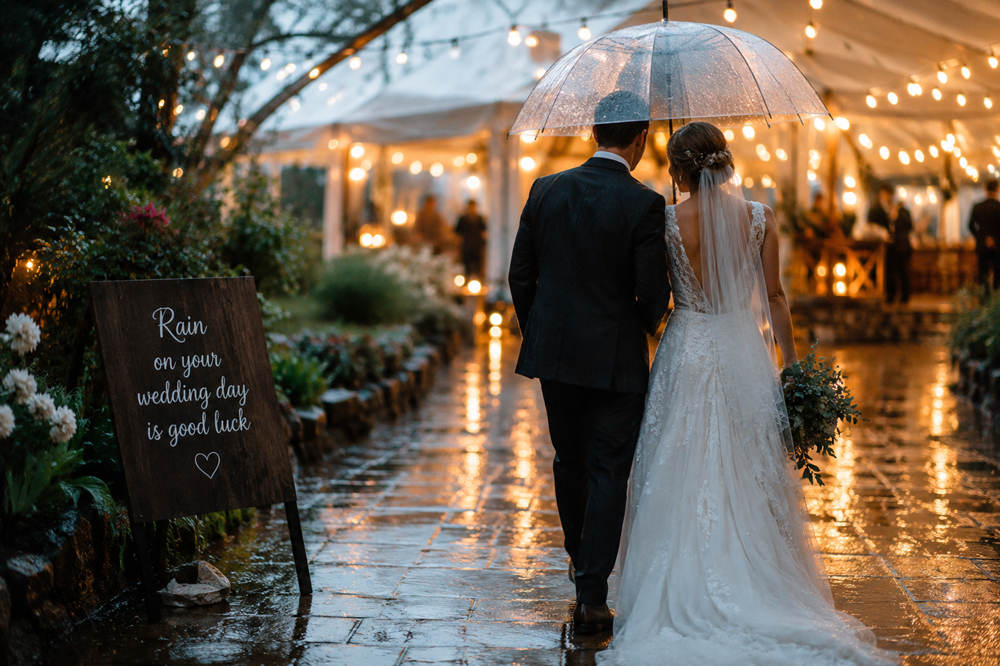
In popular wedding folklore, rain represents good luck, renewal, and a lasting marriage. In practical terms, a well-prepared backup plan can keep guests comfortable and allow the day to continue without unnecessary stress.
Is Rain on Your Wedding Day Good Luck?
Rain on a wedding day is commonly treated as a sign of good luck. This belief comes from wedding folklore rather than any guarantee about the couple’s future, but it can offer a reassuring way to view an unexpected forecast.
Different traditions connect rain with fertility, prosperity, cleansing, and a strong marriage. One popular explanation compares marriage to a knot: once a knot becomes wet, it can be more difficult to untie.
These interpretations are symbolic. The weather cannot determine whether a marriage will be successful, but the superstition may help couples approach a rainy day with a more positive perspective. You can read more about the history of these beliefs in this guide to rainy wedding-day traditions.
What Does Rain on a Wedding Day Symbolize?
Although the meanings vary among cultures and families, most positive interpretations of wedding-day rain are connected with growth, renewal, and endurance.
A Fresh Beginning
Rain washes the landscape and refreshes the air, so it is often associated with cleansing and renewal. At a wedding, it can represent the transition from one stage of life into another and the beginning of a shared future.
Fertility and Abundance
Rain has long been essential to healthy crops and plentiful harvests. This connection led some communities to view it as a symbol of fertility, prosperity, and abundance.
Today, couples may interpret abundance more broadly as a hopeful wish for a secure, loving, and fulfilling life together.
A Strong and Lasting Marriage
The expression “tying the knot” makes rain especially meaningful in wedding folklore. A wet knot tends to tighten and become harder to loosen, so wedding-day rain is sometimes viewed as a symbol of an enduring commitment.
Blessings and Tears of Joy
Another poetic interpretation describes rain as a shower of blessings or joyful tears surrounding the marriage. These beliefs are not meant to be taken literally, but they can add warmth to a day that looks different from the couple’s original plans.
Why Every Outdoor Wedding Needs a Rain Plan
Any wedding with an outdoor ceremony, cocktail hour, reception, or portrait session should have a weather alternative. Rain can develop unexpectedly, even during seasons or in locations known for generally clear conditions.
The backup plan should be created while choosing the venue and arranging rentals, not after rain appears in the forecast. Early planning gives the venue and vendors time to confirm equipment, staffing, setup requirements, and possible additional costs.
Couples should also be comfortable with the alternative location. A backup space that feels attractive and intentional will be easier to accept than one treated as an emergency afterthought. Current outdoor wedding planning guidance recommends viewing the actual rain location and settling the practical details well before the wedding.
What a Wedding Rain Plan Should Include
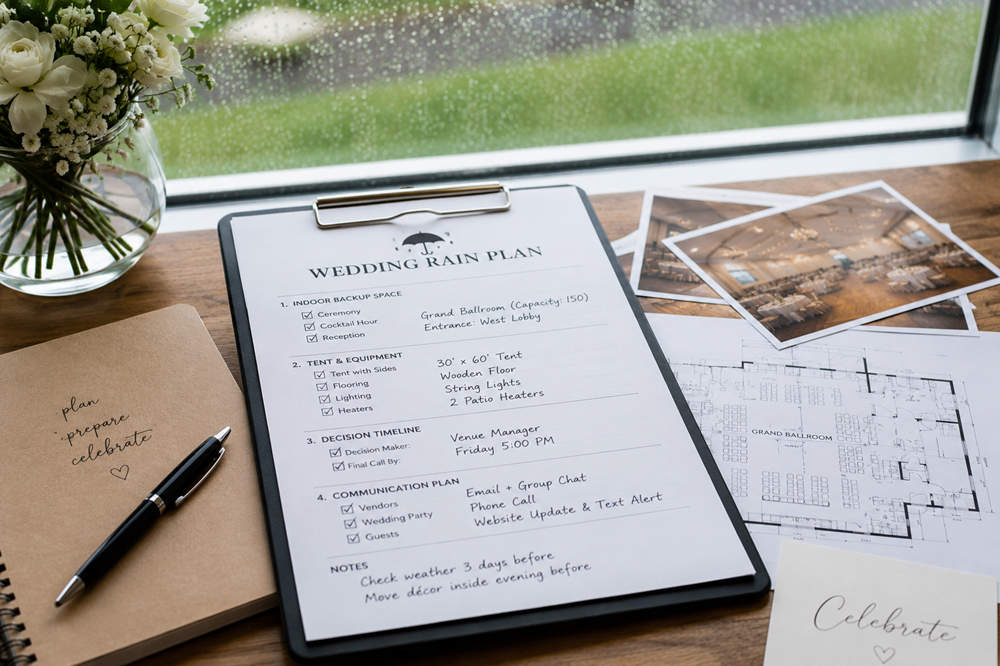
A useful rain plan should identify where the celebration will move, how the site will be protected, who will make the final decision, and how changes will be communicated.
An Indoor or Covered Backup Space
Confirm where each outdoor portion of the wedding will take place if the weather changes. The ceremony, cocktail hour, dinner, and dancing may move to separate rooms, or one room may need to be rearranged between events.
Check that the alternative space can safely accommodate the full guest list. It should have sufficient room for seating, an aisle, musicians, floral arrangements, catering staff, accessibility needs, and any important traditions or activities.
Ask the venue whether moving inside affects setup time, rental costs, furniture arrangements, or vendor access. These conditions should be understood before signing the contract whenever possible.
Tent, Flooring, and Ground Conditions
A tent can provide shelter from ordinary rain, but the structure must be planned carefully. Depending on the location, it may require sidewalls, secure entrances, flooring, lighting, ventilation, heating, and protected electrical connections.
Ground conditions matter as much as rainfall during the event. Rain on the previous day may leave grass muddy or uneven even if the wedding morning is dry. Stable flooring makes the space safer and more comfortable for tables, chairs, formal shoes, wheelchairs, and dancing.
The venue and rental company should evaluate drainage, installation, wind limits, access routes, and emergency procedures. A tent should never be treated as protection during severe weather.
If thunder is heard, everyone should move into a substantial enclosed building or a hard-topped vehicle. Tents, gazebos, covered patios, and porches do not provide adequate lightning protection. The National Weather Service recommends remaining in safe shelter for at least 30 minutes after the last sound of thunder.
A Clear Decision Timeline
Decide who has the authority to activate the rain plan. This responsibility is usually best given to the wedding planner, venue coordinator, or another trusted professional rather than the couple.
The deadline will depend on how long vendors need to install equipment, move furniture, relocate flowers, protect sound systems, and prepare the alternative space. A tent may require a decision several days in advance, while moving a ceremony indoors may be possible on the wedding morning.
Once the deadline has been reached and the decision is made, the team should commit to that plan. Continually switching between locations can create confusion and make it harder for vendors to prepare the space properly.
Communication With Vendors and Guests
Every vendor affected by the location change should understand the backup plan. This may include the photographer, florist, caterer, officiant, musicians, rental company, transportation provider, and entertainment team.
Assign one person to send updates so vendors receive consistent instructions about arrival times, entrances, loading areas, and revised setup locations.
Guests only need information that affects their experience. A wedding website update, email, group message, or venue sign can explain changes to parking, transportation, ceremony location, or footwear recommendations without making the situation sound alarming.
How to Keep Guests Comfortable in the Rain
Guest comfort begins with making arrival and movement around the venue as easy as possible. Place umbrellas near parking areas, shuttle stops, and exits so they are available where people actually need them.
A covered drop-off area is particularly valuable for older guests, people with limited mobility, families with young children, and anyone wearing formal shoes. When parking is far from the main building, shuttle service can prevent guests from walking across wet or muddy ground.
Place absorbent mats at entrances and provide umbrella stands or large containers to prevent puddles indoors. A small supply of towels can be kept near the entrance for damp coats, bags, or mobility equipment.
Rain can also change the temperature. Heating and warm beverages may be appropriate during cool weather, while fans and good ventilation may be more useful on a humid summer day.
If guests will need to cross grass, gravel, or uneven paths, mention the surface on the wedding website. This allows them to choose suitable footwear without placing unnecessary emphasis on the forecast.
Taking Beautiful Wedding Photos in the Rain
Rain changes the photography plan, but it can create striking visual conditions. Cloud cover often produces soft, even light, while wet paths, windows, and city streets can add reflections to the photographs.
Discuss sheltered portrait locations with the photographer before the wedding. Large windows, hotel lobbies, greenhouses, indoor staircases, and covered walkways may provide attractive backgrounds during ordinary rain.
Clear umbrellas can protect the couple without hiding their faces or clothing. Towels should also be nearby so shoes, bouquets, and umbrella handles can be dried between photographs.
Outdoor portraits should always remain optional. A short session may be possible during light rain, but thunder, lightning, flooding, or strong winds require everyone to stay inside. A porch or covered walkway may offer protection from a shower, but it is not a safe location during a thunderstorm.
The photographer can still document meaningful indoor moments, including the ceremony, reactions from family members, decorative details, and candid interactions between guests.
How to Adjust the Wedding Timeline
A passing shower may require only a brief change, while steady rain may call for the complete backup schedule. Building a little flexibility into the timeline makes either response easier.
The planner might move family portraits indoors, delay the first look, or adjust the ceremony start by a few minutes while a shower passes. Guest arrival may also need additional time if vehicles are using a single covered drop-off point.
Cocktail hour can provide a helpful buffer. If the ceremony begins late, it may be shortened slightly without affecting dinner. If the sky clears, the photographer may use part of that period for outdoor portraits.
When persistent rain makes the original schedule impractical, it is generally better to proceed confidently with the alternative. Moving guests and equipment repeatedly in the hope of a brief dry period can make the day feel more disrupted than simply using the prepared indoor plan.
How to Preserve the Wedding Atmosphere Indoors
Moving inside does not mean abandoning the style the couple chose. The original flowers, ceremony backdrop, signs, linens, and meaningful decorative details can help the backup room feel connected to the rest of the wedding.
Lighting often makes the greatest difference. Lamps, candles where permitted, and warm overhead lighting can soften a plain room and create a more intimate atmosphere.
Flowers can be repositioned to frame the ceremony area, define the aisle, or make a large indoor room feel more focused. Tables and lounge furniture can also be arranged to create smaller, comfortable gathering spaces.
When the venue has large windows or a tent with transparent panels, leaving the rainy view visible can preserve a connection to the outdoors without exposing guests to the weather.
Embracing a Rainy Wedding Day
It is understandable to feel disappointed when rain changes an outdoor wedding plan. Once the alternative arrangements are in place, however, attention can return to the vows, the guests, and the reason everyone has gathered.
Rain may change the location, photographs, or schedule, but it does not change the meaning of the celebration. With thoughtful preparation and a dependable vendor team, the day can still feel polished, personal, and memorable.