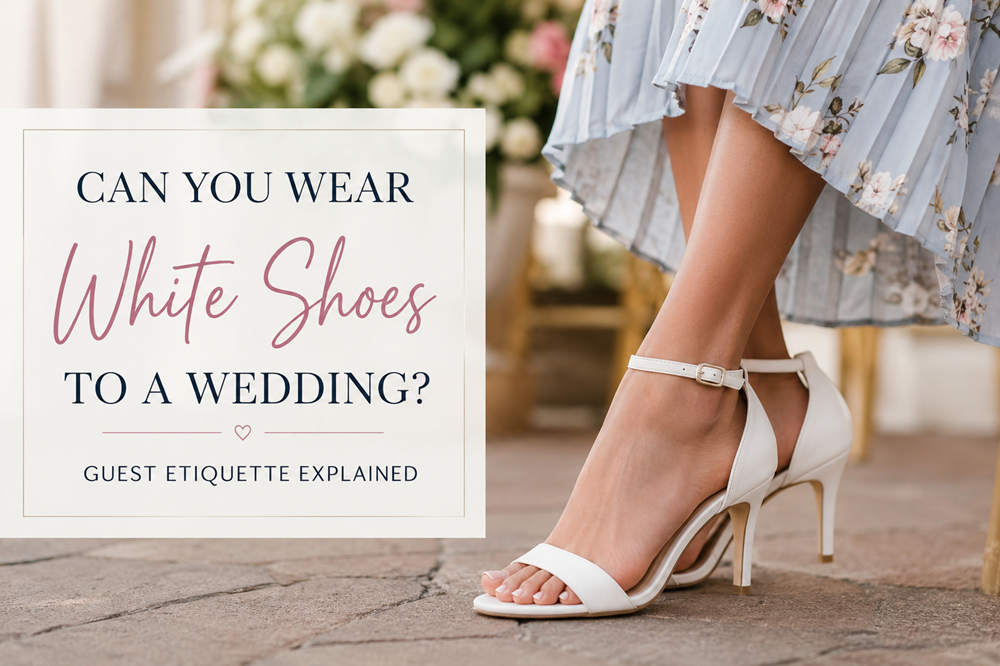
Can You Wear White Shoes to a Wedding? Guest Etiquette Explained
White shoes are often acceptable for wedding guests, but they are not suitable for every celebration. A simple pair worn with a colorful outfit is unlikely to cause concern, while white satin heels paired with a pale dress may look noticeably bridal.
The best choice depends on the dress code, the formality of the wedding, and the impression created by the complete outfit. When the shoes feel questionable, choosing another neutral shade is an easy way to avoid an etiquette concern.
Can You Wear White Shoes to a Wedding?
In many cases, you can wear white shoes to a wedding. Footwear covers a relatively small part of the outfit, so plain white shoes are usually less noticeable than a white dress, suit, or jumpsuit.
However, opinions about white wedding guest shoes vary. Some people consider them harmless when they are the only white part of the outfit. Others prefer that guests avoid white, ivory, and off-white accessories altogether, especially at formal or traditional celebrations.
Look at the entire outfit rather than judging the shoes by themselves. White sandals with a blue floral dress will generally appear to be a neutral accessory. White satin pumps worn with a champagne dress, pearl handbag, and cream wrap may create a much more bridal effect.
The couple’s instructions should always take priority. Check the invitation or wedding website for a dress code, color theme, or any guidance about what guests should wear.
When White Shoes Are Usually Appropriate
White shoes tend to work best at relaxed, daytime, and warm-weather weddings. Their design should still suit the location and requested level of formality.
Casual and Daytime Weddings
A casual or daytime celebration usually offers more flexibility with colors and accessories. White flats, low heels, loafers, or simple sandals can complement a colorful sundress, tailored jumpsuit, or polished separates.
Casual footwear should still look suitable for a special occasion. Make sure the shoes are clean and in good condition. Noticeable stains, worn soles, or heavy scuffing can make an otherwise appropriate outfit look careless.
Beach and Garden Weddings
White footwear can fit naturally with the soft colors and light fabrics often worn to beach and garden weddings. It pairs easily with floral prints, pastels, linen, and bright summer shades.
Consider the ground before choosing the shoe style. Flats, wedges, block heels, and sturdy sandals are easier to wear on sand, grass, gravel, or uneven paths than narrow heels.
Weather may also affect the decision. White fabric shoes can quickly show mud or water marks, so leather or another easy-to-clean material may be more practical for an outdoor celebration.
Cocktail and Semi-Formal Weddings
White shoes can work with cocktail or semi-formal clothing when they have a polished shape and an understated finish. Structured pumps, slingbacks, or elegant heeled sandals may complement a jewel-toned dress, patterned jumpsuit, or tailored suit.
Simple leather and matte finishes generally feel less bridal than glossy white satin, lace, pearls, or elaborate decoration. The cleaner the design, the easier it is to treat the shoes as a neutral accessory.
Weddings With a White or Neutral Dress Code
Some couples ask their guests to wear white, cream, beige, or a coordinated neutral palette. In that situation, white shoes are completely appropriate and may help bring the outfit in line with the requested theme.
Read the wording carefully. An all-white dress code may require a different outfit from a broader neutral theme that includes tan, gray, champagne, or metallic shades.
The color request does not replace the dress code. A formal all-white wedding still calls for refined footwear, while simple sandals or flats may suit a relaxed beach celebration.
When It Is Better to Choose Another Color
White shoes are not automatically inappropriate, but certain combinations and settings make another shade a safer option.
Black-Tie and White-Tie Weddings
Formal weddings require elegant, carefully chosen footwear. White shoes may work if they have a sophisticated design and coordinate well with the clothing, but casual white styles can look out of place with evening attire.
Bridal-looking white shoes may also attract more attention in a formal setting. Black, navy, silver, gold, or a shade taken from the outfit will often create a more balanced look.
Ceremonies With Unfamiliar Traditions
Colors can carry different meanings across cultures, religions, and family traditions. A style considered acceptable at one wedding may not be appropriate at another.
When attending a ceremony with customs unfamiliar to you, review any information provided by the couple. A member of the wedding party or the wedding planner may also be able to clarify the expectations.
Avoid assuming that every traditional or religious wedding follows the same rules. The specific customs of the ceremony are more important than broad generalizations.
When the Rest of the Outfit Is Very Pale
White shoes become more noticeable when they are combined with cream, ivory, champagne, pale beige, or an extremely light pastel. Even when no individual garment is pure white, the complete outfit may resemble bridalwear.
Bright sunlight and camera exposure can make pale colors appear even lighter in photographs. Adding a darker, brighter, or metallic shoe creates contrast and makes the outfit’s true color easier to see.
When the Shoes Look Distinctly Bridal
The design of the shoes may matter more than the exact color. White or ivory footwear decorated with lace, pearls, crystals, floral appliqués, satin bows, or other ornate details can resemble shoes intended for a bride.
A small embellishment is unlikely to cause a problem, but a pair that combines several bridal details may stand out. When the shoes could easily be imagined beneath a wedding gown, a simpler style is the more considerate choice.
How to Style White Shoes Without Looking Bridal
Begin with clothing in an unmistakably non-white color. Blue, green, burgundy, pink, yellow, purple, and bold prints create a clear difference between a guest outfit and bridal attire.
Avoid repeating white throughout too many accessories. White shoes alone may look neutral, but combining them with an ivory jacket, white handbag, pale scarf, and pearl jewelry can make the complete look appear much lighter than intended.
Choose materials associated with regular occasion wear. Smooth leather, suede, woven textures, and matte finishes usually look less bridal than lace, pearls, or glossy white satin.
The style should also make sense for the venue. Wear stable heels or flats on outdoor surfaces, polished shoes at a formal venue, and lighter styles at a beach or daytime celebration.
Try on the entire outfit before the wedding rather than selecting the shoes separately. View it in natural light and take a photograph. This can reveal whether pale fabrics look white on camera or whether the combination includes too many light-colored elements.
Alternatives to White Wedding Guest Shoes
Several versatile colors provide a similarly light or neutral appearance without creating uncertainty about wearing white.
- Nude or tan: These shades work with bright colors, prints, and warm neutral clothing.
- Blush: Soft pink provides a delicate finish without appearing pure white.
- Pale gray: Gray complements cool colors and modern outfits.
- Navy: Navy offers a polished alternative to black and works well for evening events.
- Black: Black is a dependable choice for cocktail, formal, and black-tie weddings.
- Silver or gold: Metallic footwear acts as a neutral while adding a festive touch.
- A color from the outfit: Repeating a shade from a printed dress, suit, or accessory creates a coordinated result.
Consider the undertones in the clothing when choosing between them. Tan, blush, and gold often work well with warm shades, while gray, navy, and silver tend to complement cooler palettes.