What Does a Wedding Planner Do? A Simple Guide to Their Role
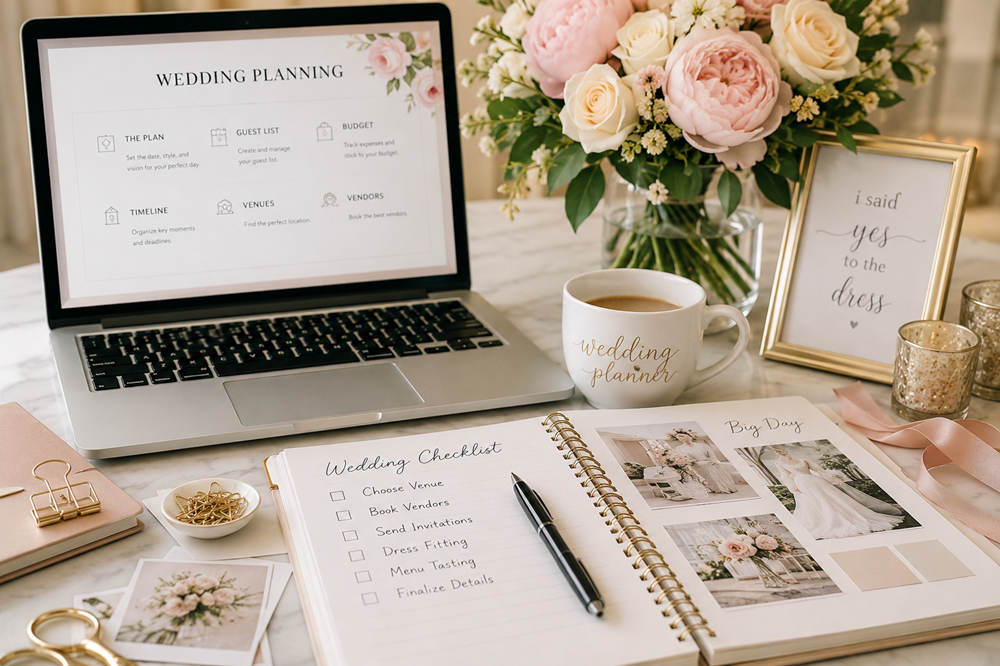
A wedding planner helps organize the people, decisions, deadlines, and logistics that bring a wedding together. Depending on the service you hire, a planner might help with the budget and vendors months in advance, coordinate final details as the date approaches, and manage the wedding day itself. The exact responsibilities vary, but the goal is the same: to turn your plans into an event that can run smoothly in real life.
What Does a Wedding Planner Do?
A wedding planner oversees the practical side of planning a wedding. They help connect decisions that might otherwise feel separate, from the venue and vendors to the schedule, transportation, setup, and guest experience.
Professional event planners commonly coordinate budgets, locations, service providers, contracts, transportation, food service, and event logistics, according to the U.S. Bureau of Labor Statistics. Wedding planners apply many of those same skills to an event that also involves personal traditions, family considerations, ceremony details, and a highly specific timeline.
A planner can also serve as a central point of communication. Rather than leaving the couple to keep track of every question from the venue, florist, caterer, photographer, rental company, and other professionals, the planner helps keep everyone working from the same information.
What a Wedding Planner Handles Before the Wedding
The months before the wedding are about building a workable plan. For couples who hire full-service planning, this is often where the planner has the greatest involvement.
Budget and Priorities
A planner can help organize the wedding budget and show how different decisions affect the total cost.
That may begin with identifying the couple’s priorities. One couple might care most about photography and food, while another wants to devote more of the budget to a particular venue, live music, or elaborate floral design. Knowing those priorities makes it easier to decide where to spend more and where to simplify.
Depending on the planner’s services, they may also keep track of estimates, deposits, payment schedules, and expenses that are easy to overlook. Delivery charges, staffing, rentals, transportation, taxes, and setup fees can all affect the final total.
The planner does not decide how the couple should spend their money. Their role is to help make the numbers and tradeoffs easier to understand.
Venue and Vendor Coordination
Wedding planners may help research venues and vendors that fit the couple’s needs, style, budget, location, and wedding size.
That can involve gathering proposals, arranging meetings, comparing services, and checking practical details such as availability, capacity, access times, rental requirements, and what is actually included in each package.
Once vendors are booked, the planner helps connect their work. The photographer may need to know when hair and makeup will finish. The florist may need a venue access time. The caterer needs an accurate reception schedule. Transportation may depend on when the ceremony ends.
Keeping those details connected is a large part of planning a wedding successfully.
Couples should still read every agreement themselves and understand what they are signing. A planner can organize contracts and raise practical questions, but the couple remains responsible for the agreements they enter into.
Planning the Logistics
A beautiful idea still needs a practical plan behind it. This is where a planner starts thinking through how the wedding will actually work.
They may consider when vendors can enter the venue, how long setup requires, where deliveries should arrive, how guests will move between spaces, when transportation is needed, and whether enough time has been allowed between major parts of the day.
An outdoor ceremony is a simple example. Choosing the setting and décor is only part of the decision. Someone also needs to consider weather alternatives, chair delivery, vendor access, guest arrival, ceremony timing, and what happens if the space has to be changed at the last minute.
Planning these details early makes it easier to identify conflicts while there is still time to fix them.
What a Wedding Planner Does in the Final Weeks
As the wedding gets closer, the job changes from building the plan to confirming it.
The planner may check in with vendors to verify arrival times, contact information, delivery instructions, final quantities, setup requirements, and any details that have changed since the original booking.
This information is then brought together in the wedding-day timeline.
A useful timeline goes well beyond the ceremony start time. It may include hair and makeup, photography, transportation, vendor arrivals, setup, the processional, cocktail hour, dinner service, speeches, entertainment, cake cutting, and the end-of-night breakdown.
The planner checks whether those pieces fit together realistically. If photography is expected to continue after the couple needs to leave for the ceremony, or a rental delivery is scheduled before the venue allows access, the conflict can be addressed before the wedding day.
Depending on the package, the planner may also coordinate the rehearsal or make sure the wedding party understands the basic ceremony timing and where they need to be.
What a Wedding Planner Does on the Wedding Day
On the wedding day, the emphasis shifts again. The plan already exists; now the planner helps execute it.
They may arrive early to check setup, meet vendors, confirm that deliveries are reaching the right locations, and make sure the venue is preparing according to the agreed schedule.
Once the celebration begins, the planner becomes a point of contact for practical questions. Vendors can go to the planner about timing, access, setup, or changes rather than repeatedly interrupting the couple or their families.
The planner also watches the flow of the day. This does not mean forcing every moment to happen at an exact minute. Weddings are live events, and small delays are normal. The planner needs to know which parts of the schedule can move and which affect other vendors or services.
If portraits take longer than planned, for example, dinner service may need to shift slightly. If rain changes an outdoor ceremony, several vendors may need new instructions at once. If transportation is late, the ceremony timeline may have to be adjusted.
The Association of Bridal Consultants describes communication, timelines, contingency planning, and problem-solving as central parts of professional wedding planning. Much of that work is intentionally behind the scenes so the couple can remain focused on the celebration rather than becoming the event-management team.
Full-Service Planner, Partial Planner, or Wedding Coordinator?
“Wedding planner” can describe several levels of service. The titles are not perfectly standardized, so it is more useful to compare what each professional actually includes in their contract.
Full-Service Wedding Planner
A full-service planner is generally involved through most or all of the planning process.
They may help establish the budget, research venues and vendors, organize planning decisions, coordinate logistics, develop timelines, communicate with vendors, and manage the wedding day.
This option is designed for couples who want substantial support from the early planning stages through the celebration itself.
Partial Wedding Planner
Partial planning is useful when the couple has already completed some of the work but still wants professional help with the remaining pieces.
For example, the venue and major vendors may already be booked, while rentals, logistics, schedules, or several other decisions still need to be organized. The planner steps into the process at an agreed point rather than managing everything from the beginning.
Because partial-planning packages vary widely, couples should look closely at the specific tasks included.
Wedding Coordinator
A wedding coordinator generally focuses on taking a plan that has largely been created already and making sure it is ready to be carried out.
They may review vendor information, confirm final details, refine the timeline, organize wedding-day logistics, and coordinate the event itself.
You may also hear terms such as “day-of coordinator” or “month-of coordinator.” Despite the first name, meaningful coordination normally begins before the actual wedding day. The coordinator needs time to understand the schedule, venue, vendors, and arrangements before being expected to manage them.
What About a Venue Coordinator?
A venue coordinator and an independent wedding planner are not necessarily doing the same job.
A venue coordinator primarily manages the details connected to their venue. That can include room setup, catering arrangements, guest counts, venue schedules, furniture, and communication with the property’s staff.
An independent planner generally looks at the wedding more broadly, including outside vendors, the overall timeline, transportation, ceremony logistics, and other details that extend beyond the venue itself.
The Association of Bridal Consultants explains this distinction by noting that the venue coordinator works primarily on the venue’s responsibilities, while a wedding planner works directly with the couple on the overall organization of the wedding.
If your venue provides a coordinator, ask exactly what that person will and will not handle before assuming additional planning help is unnecessary.
What a Wedding Planner Does Not Necessarily Do
Hiring a wedding planner does not automatically mean one person takes care of every wedding-related task.
A planner is not necessarily your florist, invitation designer, calligrapher, photographer, caterer, decorator, or venue manager. Those professionals have their own responsibilities, even when the planner coordinates closely with them.
Wedding design also varies by planner. Some professionals offer extensive creative direction and styling, while others specialize primarily in organization and logistics.
The same applies to hands-on setup. A planner might oversee where rentals and décor belong without personally arranging every centerpiece, moving furniture, or handling cleanup. RSVP management, guest accommodations, invitation assembly, transportation booking, rehearsal coordination, and post-wedding tasks may also be separate services.
Before signing a contract, look for a clear description of what is included, what costs extra, and which responsibilities remain with you or another vendor.
Do You Need a Wedding Planner?
Not every couple needs a full-service planner. The right amount of help depends on the complexity of the wedding, the amount of time you have, and how much planning you genuinely want to handle yourselves.
Professional planning can be particularly useful when a wedding involves many vendors, multiple locations, complicated transportation, extensive rentals, a short setup window, or a destination that is unfamiliar to the couple.
It can also make sense when both partners have limited time to manage months of emails, appointments, deadlines, and logistical decisions.
A smaller wedding at a venue that already provides much of the infrastructure may need less outside help. Couples who enjoy planning may choose to organize most of the celebration themselves and bring in a coordinator toward the end.
The best question is not simply, “Do we need a wedding planner?” It is, “Which parts of this wedding do we want to be responsible for ourselves?” Once that is clear, it becomes much easier to choose the appropriate level of support.
Final Thoughts
A wedding planner’s job is ultimately to make sure the many separate parts of a wedding work together. Early in the process, that means building an organized plan. As the date approaches, it means confirming the details. On the wedding day, it means putting that plan into action and adapting when something changes.
Because services vary from one professional to another, do not rely on the job title alone. Read the scope of services carefully and choose the planner or coordinator whose responsibilities match the kind of help you actually want.