How Far in Advance Should You Send Wedding Invitations?
For most weddings, invitations should be mailed six to eight weeks before the wedding date. This gives guests enough time to review the details, make ordinary arrangements, and respond without receiving the invitation so early that it is set aside and forgotten.
Some celebrations require a longer window. Destination weddings, international travel, busy holiday weekends, and weddings without save-the-dates may call for invitations to be sent closer to 10 or 12 weeks ahead.
When to Send Wedding Invitations
The traditional wedding invitation timeline works well when most guests live nearby and have already received a save-the-date. Before mailing the invitations, confirm that the ceremony time, venue address, RSVP instructions, dress code, and other essential details are final.
- Standard or local wedding: Six to eight weeks before the wedding
- Wedding with many traveling guests: Use the earlier end of the standard window or allow up to 10 weeks
- Destination wedding: About 10 to 12 weeks before the wedding
- Wedding without save-the-dates: Approximately eight to 12 weeks ahead, depending on how much travel is involved
Sending invitations earlier is not always better. Guests may not know their schedules several months in advance, and important wedding details may still change. According to traditional invitation timing guidance, invitations should arrive early enough for guests to plan but not so early that they are misplaced or forgotten.
Most domestic invitations can be mailed together. However, invitations traveling internationally may need to be posted sooner because delivery can take longer. You can also share the confirmed date and location directly with international guests before their formal invitations arrive.
When Should Wedding RSVPs Be Due?
Set the RSVP deadline about four weeks before the wedding, unless your venue or caterer needs the final guest count sooner. This creates time to contact guests who have not responded, complete the seating plan, organize meal choices, and submit accurate information to vendors.
Start by checking your contracts. If the caterer requires final numbers two weeks before the wedding, an RSVP deadline four weeks ahead gives you approximately two weeks to follow up with missing guests.
For example, suppose your wedding is on October 17 and the venue needs the final count by October 3. An RSVP deadline of September 19 would leave two weeks to collect late responses and organize the details before submitting the headcount.
The response method also matters. Online RSVPs arrive immediately, while paper response cards need time to travel through the mail. Guests should therefore receive their invitations early enough to make a decision and return the card before the printed date.
A very long response period can make timely replies less likely because guests may put the invitation aside. A clear wedding RSVP deadline within a manageable window makes the process easier for everyone.
When You Should Send Invitations Earlier
The amount of preparation required from guests should guide any adjustment to the standard timeline. Travel costs, hotel availability, passports, childcare, and time away from work can all make earlier notice necessary.
Destination or International Weddings
Mail destination wedding invitations about 10 to 12 weeks before the celebration. By this point, guests should already know the wedding date and destination through a save-the-date, personal communication, or the wedding website.
The formal invitation provides the confirmed ceremony information, RSVP instructions, accommodation details, and any schedule guests need to finalize their plans. It should not be the first time they learn that international or long-distance travel will be required.
For international guests, account for postal delivery as well as travel planning. Online RSVPs can be especially helpful because guests do not need to return a response card through international mail.
Holiday and Peak-Travel Weddings
Use the earlier end of your invitation window when the wedding falls near a major holiday, school break, festival, or popular vacation weekend. Flights and accommodations may fill quickly, and guests may be choosing between several commitments.
Early save-the-dates are more useful than extremely early formal invitations in this situation. They allow guests to reserve the weekend while you continue finalizing the schedule, accommodations, and other details.
Weddings Without Save-the-Dates
When save-the-dates are skipped, the formal invitation also becomes the guest’s first official notice of the celebration. Mailing it eight to 12 weeks ahead provides more time than the traditional window, with the exact date depending on the location and travel required.
Guests who need flights, passports, childcare, or several days away from work can be told the date and city as soon as those details are confirmed. This informal notice does not replace the invitation, but it gives them an opportunity to begin planning.
A Simple Wedding Invitation Timeline
Choosing a mailing date is easier when you work backward from the wedding and allow enough time for design, printing, delivery, addressing, and assembly.
- Six to nine months before: Send save-the-dates for most local weddings.
- Nine to 12 months before: Send save-the-dates for destination weddings or celebrations requiring significant travel.
- Four to six months before: Choose the invitation design, finalize the wording, collect addresses, and place the order.
- Ten to 12 weeks before: Mail destination wedding invitations and invitations for events involving extensive travel.
- Six to eight weeks before: Mail invitations for most standard or local weddings.
- About four weeks before: Reach the RSVP deadline and contact guests who have not replied.
- After the RSVP deadline: Complete the seating plan and submit the final guest information by each vendor’s required date.
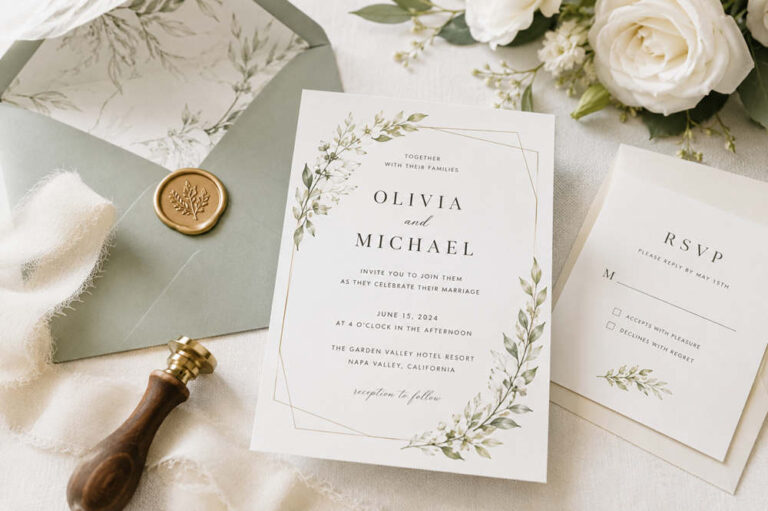
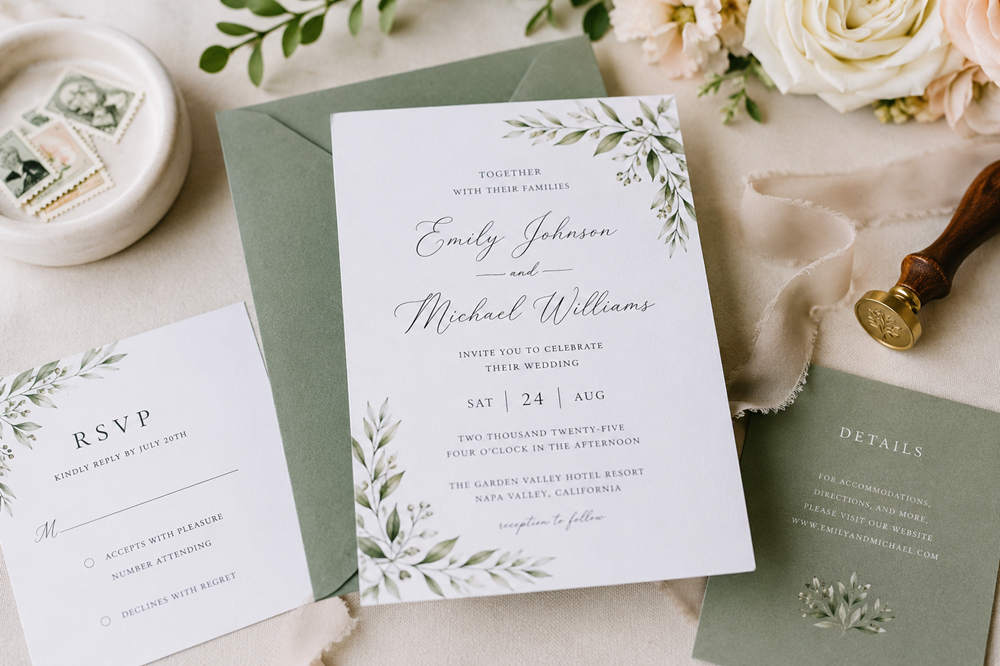
Begin earlier if your invitation suite includes custom artwork, specialty printing, hand calligraphy, envelope liners, wax seals, or several enclosure cards. These details may require additional design, production, and assembly time.
Before purchasing stamps, take one fully assembled invitation to the post office. Postage can vary based on the envelope’s weight, size, thickness, and shape, and square or unusual envelopes may cost more to mail. Current USPS postage information can help you understand which formats may require additional postage.
Final Thoughts
Six to eight weeks before the wedding is the right mailing window for most invitations. Move closer to 10 or 12 weeks when guests need to arrange substantial travel or when no save-the-dates were sent. Once you know your vendors’ final headcount deadlines, work backward to set the RSVP date and invitation mailing date without creating unnecessary extra time.