How to Write Wedding Vows: A Simple Structure, Examples, and Helpful Tips
Writing wedding vows can feel intimidating. You may have years of memories, private jokes, and shared experiences to draw from, but only a few minutes to express what your partner means to you.
Meaningful vows do not need elaborate language. They need a few carefully chosen personal details, sincere promises, and words that sound natural when you say them aloud. The goal is not to impress everyone at the ceremony. It is to speak honestly to the person you are marrying.
What to Include in Your Wedding Vows
There is no single correct formula for personal vows, but most complete vows contain five essential elements:
- A direct expression of love: Say clearly how you feel about your partner.
- A personal detail: Include one memory, habit, or observation that makes the vows unmistakably yours.
- Words of appreciation: Name the qualities you most respect in your partner.
- Meaningful promises: Explain how you intend to care for the relationship throughout your marriage.
- A lasting commitment: Close by looking toward the life you are choosing together.
You do not need to include every important moment in your relationship. One revealing story and a few thoughtful promises will usually say more than a complete history of how you met and fell in love.
Do not become so focused on originality that you forget to say “I love you.” Simple words can carry the greatest emotional weight when they are spoken sincerely.
A Simple Wedding Vow Structure
A clear order makes your vows easier to write, follow, and deliver. You can adapt the following structure to suit a romantic, humorous, spiritual, or understated style.
1. Begin by Addressing Your Partner
Use your partner’s name or speak directly to them. Your opening line should bring both of you into the moment rather than explain the relationship to the guests.
You might begin with:
- “Mia, today I get to marry my favorite person.”
- “You have brought more warmth and joy into my life than I knew was possible.”
- “Standing here with you feels extraordinary and completely natural at the same time.”
- “I love you, and I am grateful that we found our way to this moment.”
Choose an opening you can say comfortably. If a sentence feels too formal or dramatic when spoken aloud, simplify it.
2. Explain What Your Partner Means to You
Describe the role your partner has in your life. They may help you feel understood, encourage you to take risks, bring calm to difficult situations, or make everyday life more enjoyable.
Instead of relying on broad statements, explain how the relationship has affected you. For example:
You have taught me that love can feel both exciting and safe. With you, I have learned to be more patient, more hopeful, and more willing to let someone truly know me.
This part establishes why you are choosing your partner before you move into the promises of marriage.
3. Share One Brief Story or Personal Detail
Choose a moment that reveals something meaningful about your relationship. It could be a major turning point, but it does not have to be. Everyday memories often feel more intimate because they show what life together is really like.
You might mention:
- The first time you realized you could depend on your partner
- A difficult experience you handled as a team
- A quiet habit that makes you feel cared for
- A trip or mistake that still makes you laugh
- A moment when your partner encouraged you
Keep the story brief and connect it to a larger meaning. If you mention getting lost together on an early trip, for example, the important point may be how calmly your partner handled the problem or how easily the two of you found humor in it.
4. Describe What You Love and Respect
Name two or three qualities you genuinely appreciate. Specific observations will feel more personal than a long list of flattering adjectives.
Instead of saying, “You are kind,” you might write:
I love the way you notice when someone feels left out and quietly make room for them. Your kindness is not something you talk about; it is something you practice every day.
Focus on characteristics you have witnessed repeatedly and hope to continue valuing throughout your marriage.
5. Make Your Promises
The promises are the center of your wedding vows. Introduce them clearly with phrases such as “I promise,” “I vow,” “I will,” or “I choose to.”
Include commitments that reflect real married life, such as:
- Listening before reacting during disagreements
- Speaking honestly and respectfully
- Supporting your partner’s personal ambitions
- Sharing responsibilities at home
- Protecting time for the relationship
- Offering patience during stressful seasons
- Apologizing and repairing the connection after conflict
- Continuing to have fun together
A lighthearted promise can add personality. You might promise to make coffee on difficult mornings or avoid watching the next episode without your partner. Keep playful promises beside deeper commitments so the emotional meaning remains clear.
6. Look Toward Your Future Together
Describe the kind of marriage you hope to build. Focus on the character of your shared life rather than trying to predict every milestone.
You might express a desire to create a peaceful home, welcome change with curiosity, support a future family, keep encouraging each other’s independence, or remain a team through uncertainty.
This part could sound like:
I look forward to building a life where we both feel safe enough to grow, brave enough to change, and loved enough to be fully ourselves.
7. End With a Clear Commitment
Your final line should bring the vows to a natural conclusion. Do not introduce a new story or idea at the end.
Possible closing lines include:
- “Whatever comes next, I will face it beside you.”
- “Today and every day ahead, I choose you.”
- “You are my partner, my home, and my favorite part of the life ahead.”
- “I give you my love, my honesty, and my whole heart.”
- “This is my promise to you for all the days we are given.”
Wedding Vow Examples
The following original examples demonstrate different tones and approaches. Use them to understand how complete vows can flow, but replace the details and promises with language that reflects your own relationship.
Simple Wedding Vow Example
Alex, I love the life we have created together. You bring steadiness to difficult days, joy to ordinary moments, and kindness to every person you meet.
I promise to listen to you, speak honestly, and support the dreams that matter to you. I will celebrate your successes and stay close when life feels uncertain. I promise to keep learning from you and growing beside you.
Today, I choose you as my partner and my family. I will continue choosing you for the rest of my life.
Romantic Wedding Vow Example
Morgan, before I met you, I imagined love would arrive as one unmistakable moment. Instead, I found it slowly—in long conversations, shared meals, quiet mornings, and the way you reach for my hand without thinking.
You know my fears and still encourage me to be brave. You see my flaws without making me feel smaller because of them. With you, I feel understood, challenged, and completely at home.
I promise to protect the trust we have created. I will encourage your dreams, tell you the truth with kindness, and stand beside you through every version of the future. I will love you when life feels effortless and when loving each other requires patience and courage.
I choose you with gratitude, certainty, and my whole heart.
Lighthearted Wedding Vow Example
Taylor, I knew we made a good team when our first weekend trip included a missed exit, a nearly empty gas tank, and somehow one of the best days of my life.
You make me laugh when I take myself too seriously, and you remain calm when I am convinced everything is falling apart. Life with you is not always organized, but it is always interesting.
I promise to be your teammate, even when we disagree about directions. I promise to share the unglamorous responsibilities, make room for your dreams, and warn you before I use all the hot water. Most importantly, I promise to love you with honesty, loyalty, and patience.
I choose this joyful and wonderfully imperfect adventure with you.
Short Wedding Vow Example
Sam, you are the person I trust with my fears, my hopes, and my truest self.
I promise to listen with patience, speak with honesty, and support you through change. I will celebrate who you are and encourage who you are becoming.
I love you, and I choose you today and every day ahead.
Faith-Centered Wedding Vow Example
Jordan, I am grateful that our paths brought us here and that our faith has become part of the foundation of our relationship.
I promise to love you with patience, humility, and grace. I will pray with you, encourage your purpose, and remain beside you through joy and hardship. I will seek forgiveness when I am wrong and offer forgiveness with an open heart.
Today, I choose you as my spouse and promise to honor the commitment we are making before God, our families, and the people we love.
Religious traditions may have established wording or limits on how vows can be personalized. Speak with your officiant or faith leader before replacing or changing traditional vows.
Secular Wedding Vow Example
Casey, we are here because we have chosen to build a life based on love, respect, and shared responsibility.
I admire your open mind, your steady kindness, and the care you bring to our relationship. You challenge me to grow without asking me to become someone else.
I promise to treat our partnership as something we continue creating together. I will communicate openly, support your independence, and face difficulties with you rather than against you. I will keep making room for curiosity, laughter, and change.
I choose you freely and wholeheartedly as my partner in the life ahead.
Humanist wedding ceremonies commonly center on the couple’s story, shared values, and personally chosen commitments. Other secular ceremonies may use different formats, so couples can adapt their vows to match their beliefs and celebration.
Tips for Writing and Delivering Wedding Vows
Once you understand the content and structure, you can turn your ideas into a polished ceremony copy. Work through the process in stages rather than trying to write perfect vows in one sitting.
Confirm the Ceremony Format
Ask your officiant where personal vows will appear and whether any formal wording must also be included. Personalized promises may be separate from the ceremony’s declaration of intent, and legal requirements differ by location.
Your officiant can also explain whether your religious or cultural tradition uses established vows that should remain unchanged.
Agree on Expectations With Your Partner
You can keep the actual wording private while still agreeing on the general approach. Discuss:
- Approximate length
- Romantic, serious, humorous, or mixed tone
- How much humor feels appropriate
- Whether religious language will be included
- Subjects that should remain private
- Whether you will follow a similar structure
This prevents one person from preparing a short, playful message while the other arrives with a lengthy and deeply emotional speech.
Start Earlier Than You Think You Need To
Begin collecting ideas several weeks before the wedding. You do not need to write the finished version immediately, but starting early gives meaningful memories and promises time to surface naturally.
It also allows you to step away between drafts. Editing becomes easier when you can return to the words with fresh attention rather than trying to finish them the night before the ceremony.
Brainstorm Before Writing Complete Sentences
Make separate lists of memories, admired qualities, difficult experiences, everyday routines, future hopes, and promises. Write down everything that comes to mind without worrying about order or elegant wording.
Once you have enough material, highlight the details that feel most revealing. A small number of strong ideas will give the final vows greater focus.
Create a Rough Draft in Your Natural Voice
Follow the structure without trying to make every sentence beautiful. Imagine that you are speaking privately to your partner rather than performing for a room full of people.
Avoid vocabulary you would not ordinarily use. Your partner should be able to recognize your personality in the wording.
Edit for Focus
After completing the first draft, remove anything that does not support the central message. Look for:
- More than one story serving the same purpose
- Compliments that repeat an earlier idea
- Long explanations guests do not need
- Promises that are vague or unrealistic
- Jokes that distract from the commitment
- Formal phrases that feel uncomfortable to say
Keep the most personal details and strongest promises. Everything else can be saved for a private wedding-morning letter.
Avoid Promising Perfection
You cannot honestly promise that you will never disagree, never become impatient, or always know what your partner needs.
You can promise to return to difficult conversations, apologize when necessary, listen with care, and continue working toward understanding. Commitments based on effort and respect are more believable than promises that leave no room for human mistakes.
Be Careful With Private Stories and Humor
Leave out unresolved disagreements, references to former relationships, embarrassing stories, and information your partner would not want shared publicly.
Inside jokes are fine when the wider meaning remains clear. Guests do not need to understand every detail, but they should be able to recognize whether the moment is affectionate, grateful, or playful.
Time the Vows Aloud
Many couples aim for approximately one to two minutes each. Treat this as a flexible guide rather than a strict rule, and agree on comparable lengths with your partner.
Time the vows while reading at a calm ceremony pace. Emotion, laughter, eye contact, and natural pauses will make the delivery longer than a quick private reading. Current wedding-vow guidance also emphasizes practicing aloud to check clarity, pacing, and flow.
Ask One Trusted Person for Feedback
Choose someone discreet who knows you well and can provide thoughtful criticism. Ask whether the vows sound like you, whether the meaning is clear, and whether any section feels confusing or unnecessarily long.
A single careful reader is usually more helpful than collecting opinions from several people with different tastes.
Practice Without Forcing Memorization
Read the final version aloud several times so the progression feels familiar. Mark places where you want to breathe, pause for a reaction, or look at your partner.
You do not need to memorize every word. Trying to perform from memory can add pressure and distract you from the moment.
Prepare a Readable Ceremony Copy
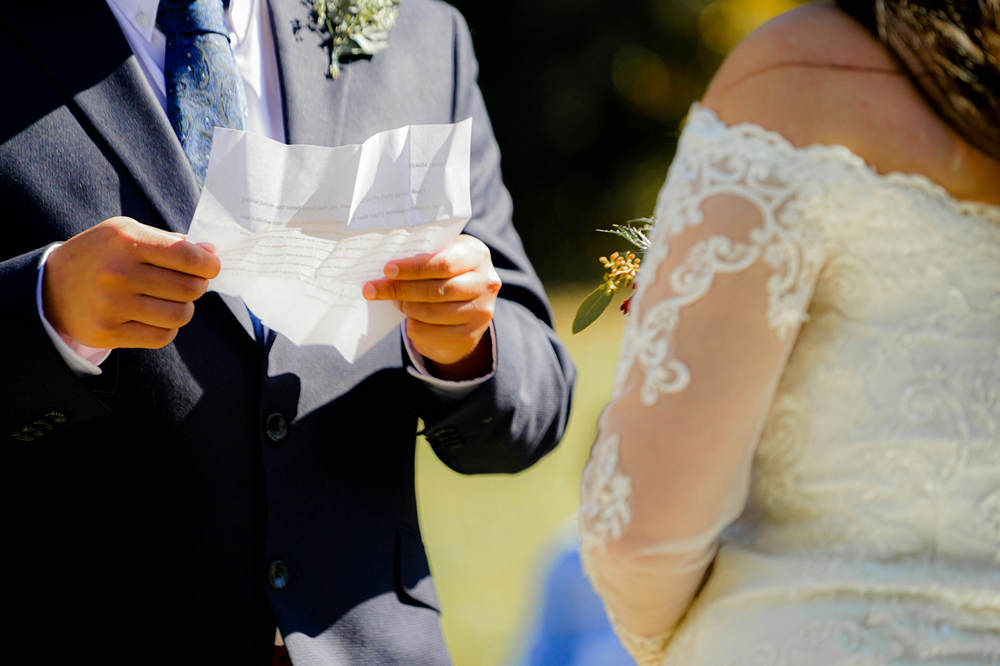
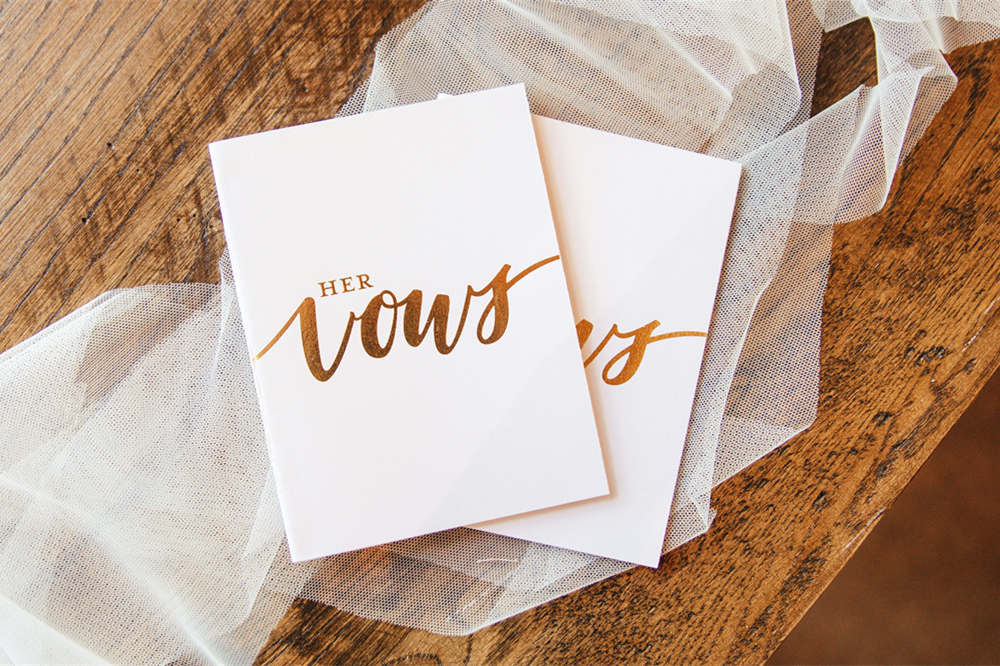
Print the vows in a large, clear font or place them in a vow booklet. Avoid reading from your phone, which may lock, display notifications, or be difficult to handle when you are emotional.
Give a backup copy to the officiant, planner, or a trusted member of the wedding party. On the wedding day, you should not have to worry about finding the only copy.
Final Wedding Vow Checklist
- Do the vows sound like your natural speaking voice?
- Have you said “I love you” clearly?
- Did you include one meaningful personal detail?
- Are your words of appreciation specific?
- Have you made realistic promises?
- Does each paragraph contribute a different idea?
- Is any humor affectionate and respectful?
- Have you removed private or potentially embarrassing details?
- Are your vows close to the length agreed upon with your partner?
- Have you timed and practiced them aloud?
- Has your officiant confirmed the ceremony format?
- Do you have a clean ceremony copy and a backup?
Make the Words Your Own
Your wedding vows do not need to contain every memory or explain every reason you love your partner. Choose a few details that reveal your relationship, make promises you intend to live by, and speak in a voice your partner knows. Honest words delivered with care will always feel more meaningful than a perfect speech that does not sound like you.