Justin Thomas and Jillian Wisniewski’s Wedding: Details and Ideas to Borrow
Justin Thomas and Jillian Wisniewski kept their wedding unusually private for a couple connected to professional sports. The details that have emerged suggest an elegant autumn celebration shaped by classic fashion, close friendships, and a desire for guests to enjoy the occasion without digital distractions.
The couple did not release a complete look at their venue or reception design. Even so, the choices they made public offer useful inspiration for couples who want a polished wedding that feels personal rather than overly staged.
Who Is Justin Thomas’s Wife?
Justin Thomas’s wife is Jillian Wisniewski, a University of Kentucky graduate who studied journalism and later worked in advertising.
Thomas publicly announced their engagement in November 2021 during an appearance on the No Laying Up podcast. At the time, the couple had been together for about five years. They married the following year.
What We Know About Justin Thomas and Jillian Wisniewski’s Wedding
Thomas and Wisniewski married in Franklin, Tennessee, in November 2022. Their friend Jason Kennedy officiated the ceremony, while professional golfer Jordan Spieth served as Thomas’s best man.
The exact venue, guest count, decorative details, and vendor team were not widely disclosed. Only a small number of wedding photographs appeared publicly after the celebration, allowing the couple to keep most of the day private.
One decision Thomas discussed before the wedding was his request for a phone-free celebration. He wanted guests to enjoy the evening and the wider wedding weekend without filming one another or worrying about appearing in someone else’s video.
Thomas later praised Spieth’s performance as best man, giving him an “A+” for his speech and for successfully keeping track of the wedding rings.
The Quietly Elegant Style of the Wedding
Because only a few photographs were released, it would be misleading to describe an unconfirmed reception theme or complete color palette. What can be seen points to a clean, timeless visual direction built around formal clothing and autumn scenery.
Classic Formal Attire
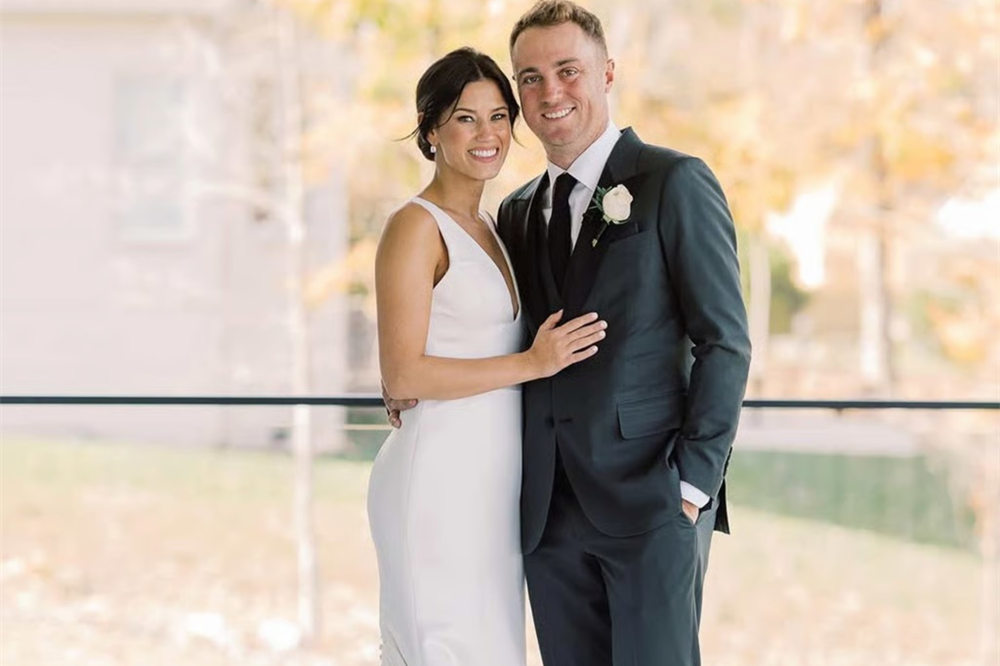
Jillian wore a sleek, fitted white gown with a deep neckline and minimal visible embellishment. The smooth fabric and defined silhouette gave the dress a modern appearance without making it dependent on a passing trend.
Her softly styled hair and restrained accessories kept the focus on the gown. Thomas complemented her look in a dark tailored suit with a white shirt, dark tie, and white boutonniere.
Their clothing demonstrates why simple formalwear can be so effective in wedding photographs. Precise tailoring, quality fabric, and a limited number of accessories often create a more lasting impression than an outfit crowded with decorative details.
An Autumn Tennessee Setting
The photographs shared after the wedding show the couple surrounded by warm foliage and wooded scenery. The natural background provides color and texture without competing with their formal clothing.
Couples hoping to create a similar mood could consider a historic home, garden venue, private estate, or countryside property with mature trees. The goal is not to copy an undisclosed venue, but to find a setting that already has enough character to require relatively little additional decoration.
A Celebration Centered on Personal Connections
Close friends held meaningful roles in the ceremony, and the limited release of photographs protected the couple’s privacy. These choices suggest a wedding focused more on the people in the room than on producing content for a wider audience.
A wedding does not have to be secretive or extremely small to feel personal. Couples can create the same effect by deciding which moments should remain private and giving guests permission to experience the day before sharing it online.
Wedding Ideas to Borrow From Their Celebration
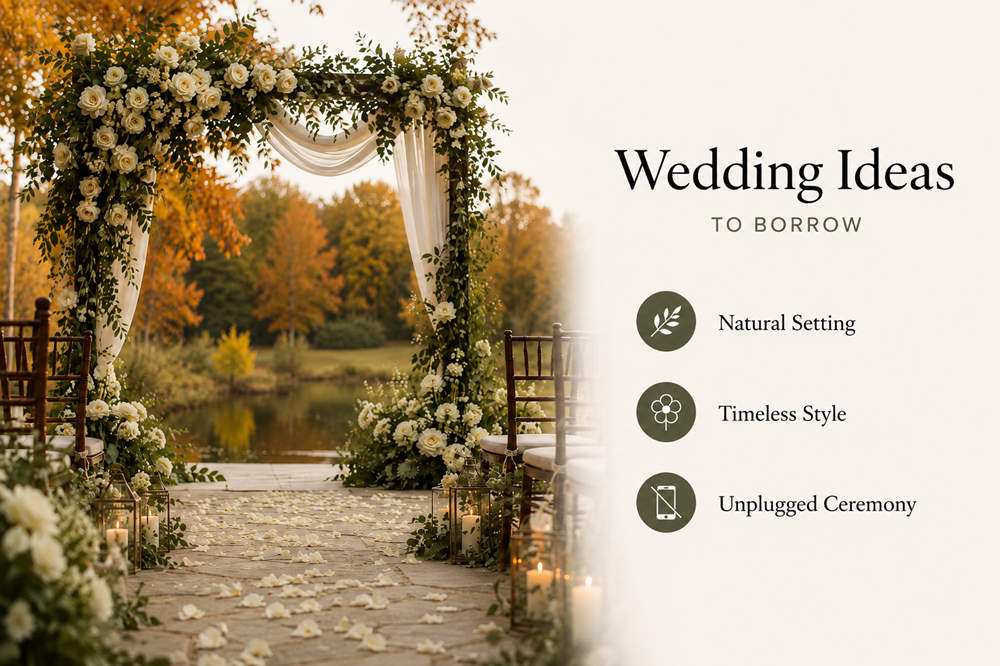
The most useful ideas from the wedding do not depend on celebrity connections or an extravagant budget. They come from choosing a clear atmosphere and carrying it consistently through the venue, clothing, ceremony, and guest experience.
Choose a Setting With Natural Seasonal Character
Look for a venue that already feels visually complete before flowers and rentals are added. Mature trees, landscaped grounds, stone walls, warm woodwork, or large windows can provide much of the texture that would otherwise need to be created temporarily.
When considering an autumn wedding, try to visit the property during the same season in which the celebration will take place. A venue that looks bright and lush in spring may feel very different in late October or November.
Ask to see photographs from weddings held during your preferred month, including images taken near sunset and after dark. This will give you a clearer idea of the foliage, lighting, and atmosphere guests will actually experience.
Seasonal beauty should be balanced with practical planning. Confirm that the venue has:
- A comfortable indoor ceremony alternative
- Adequate heating in every guest area
- Covered routes between important spaces
- Safe paths for guests wearing formal shoes
If the property is rural or parking is distant, organized transportation can make the experience more comfortable and reduce late arrivals.
Build a Restrained Autumn Color Palette
An autumn wedding does not have to use bright orange, burgundy, and yellow throughout every detail. Neutral shades can create a calmer atmosphere while allowing the landscape to supply the strongest seasonal colors.
Suitable combinations include:
- Ivory, black, and muted greenery
- Cream, taupe, and warm brown
- Forest green, ivory, and brushed gold
Choose two main colors and one supporting accent. Repeat them through the invitations, linens, flowers, and wedding-party clothing rather than introducing a separate palette in each part of the event.
White roses, lisianthus, ranunculus, and seasonal greenery would support this understated direction. Branches and textured foliage can add an autumn quality without turning every arrangement into a display of bright harvest colors.
Keep the Wedding Fashion Timeless
For a bridal look inspired by Jillian’s, concentrate on silhouette and fit rather than extensive decoration. Crepe and satin are well suited to clean designs because their drape and structure create visual impact without heavy beading.
A fitted column gown or gently flared silhouette can be paired with a simple veil and understated earrings. Because minimalist dresses reveal every seam and proportion, careful alterations are especially important.
For the groom, a black, charcoal, or midnight-navy suit creates a classic foundation. A dark tie, white pocket square, and single white boutonniere provide enough detail without distracting from the overall look.
The wedding party can follow the same principle. Bridesmaids might wear one neutral shade in several complementary silhouettes, while groomsmen wear matching dark suits. This creates coordination without making the group appear overly rigid.
Give Close Friends Meaningful Roles
Having Jason Kennedy officiate and Jordan Spieth serve as best man made the couple’s friendships part of the wedding itself.
A close friend or relative might:
- Officiate the ceremony
- Give a meaningful reading
- Serve as a legal witness
- Lead the rehearsal
- Offer a reception toast
Choose a role that fits the person’s personality. Someone who is uncomfortable delivering a full ceremony may be perfectly suited to a reading or private role behind the scenes.
Before asking a friend to officiate, confirm the legal requirements in the place where the marriage will occur. Registration, ordination, witness, and marriage-license rules vary by location.
A first-time officiant should receive the ceremony structure well in advance. Give the person clear guidance about the desired tone, the correct pronunciation of names, and the expected length. A rehearsal will help everyone feel more confident.
Create a Phone-Free Experience
Thomas and Wisniewski did not publicly explain exactly how their phone rule was managed. Other couples can adapt the idea in a way that suits their event and guest list.
The easiest option is an unplugged ceremony. Guests silence and put away their devices during the processional, vows, and recessional, but may use them later at the reception.
Introduce the request on the wedding website so it does not surprise guests when they arrive. At the venue, one discreet sign and a short announcement from the officiant are usually enough.
A simple announcement could read:
The couple invites you to be fully present with them today. Please silence and put away all phones and cameras until the ceremony has ended.
Guests who need to remain reachable because of children, health concerns, or other responsibilities can be given a designated emergency contact number.
It also helps to tell guests when professional photographs will be available. The request is easier to accept when people know they will have access to thoughtfully captured images later.
The purpose of an unplugged ceremony is not to control guests. It is to create an atmosphere in which everyone can listen, respond, and celebrate without watching the moment through a screen.
How to Recreate the Look on Different Budgets
A wedding with this quietly elegant character can be adapted to several spending levels. The strongest results come from investing in the few elements that shape the atmosphere most clearly.
Lower-Budget Approach
Prioritize a naturally attractive venue, professional clothing alterations, and a few floral focal points. A restaurant garden, historic community building, or intimate inn may already include furniture, lighting, and decorative surroundings.
Place flowers where they will have the greatest effect, such as the ceremony backdrop, bridal bouquet, and reception entrance. Candles and seasonal foliage can complete the tables without requiring large centerpieces throughout the room.
Keep printed materials simple. One coordinated invitation design, plain place cards, and a welcome sign are usually sufficient for a wedding centered on understated details.
Midrange Approach
A midrange budget may support a historic home, countryside venue, or private club with several usable spaces. Give preference to properties that include tables, chairs, and basic lighting, since separate rentals can quickly increase the total cost.
Professional floral design can be concentrated around the ceremony and the most visible reception areas. Ask whether ceremony arrangements can be moved after the vows and reused near the sweetheart table, bar, or entrance.
Coordinated linens, printed stationery, and guest transportation can create a more complete experience while preserving the restrained aesthetic.
Higher-Budget Approach
With a larger budget, focus on privacy, convenience, and continuity rather than simply adding more decoration. A full venue buyout may allow the rehearsal dinner, wedding, and farewell brunch to take place on one property.
Private transportation, coordinated accommodations, and custom lighting can make the weekend easier for guests while strengthening the secluded atmosphere. Floral installations can highlight selected architectural features rather than covering every room.
Couples who need greater privacy might also arrange staffed phone storage, secure device pouches, or additional event security. Explain these measures before the wedding so they feel like part of a thoughtful hospitality plan rather than an unexpected restriction.
Featured Image Source: scmp