What Happens If Someone Objects at a Wedding?
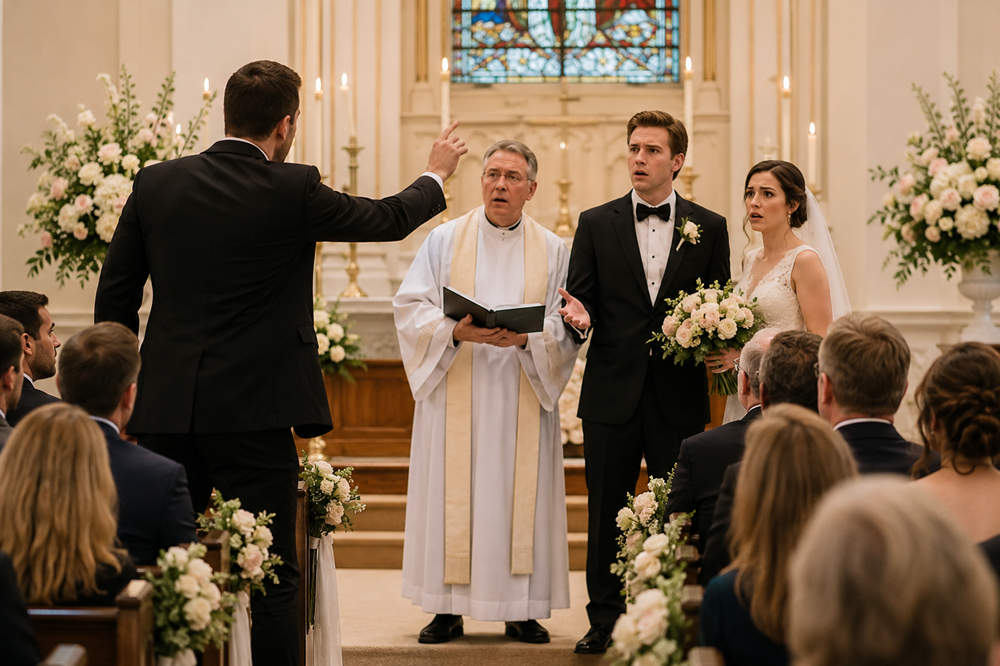
Movie weddings often turn an objection into a dramatic final attempt to stop the couple from marrying. At a real wedding, an interruption is more likely to cause a brief pause while the officiant finds out why the person spoke up.
An objection does not automatically cancel the wedding. Personal disapproval generally has no legal effect, while a credible concern about consent or the couple’s legal eligibility may need to be resolved before the ceremony continues. The exact response depends on local marriage law and, for a religious wedding, the rules of the faith community conducting the service.
Why Do Officiants Ask for Wedding Objections?
The traditional objection question was intended to reveal a lawful reason the couple could not marry. It was not an invitation for guests to comment on the relationship, announce lingering romantic feelings, or say that they disliked one of the partners.
The question is related to older practices designed to uncover legal impediments before a marriage took place. One example is the reading of marriage banns, in which an intended marriage is publicly announced before the wedding. The Church of England still uses banns as a legal preliminary for many church weddings.
Banns and objections during a ceremony are not the same process, but both reflect the historical importance of confirming that the couple is lawfully free to marry.
Modern marriage records, license applications, identity checks, and pre-wedding notice requirements now address many of these questions before the couple reaches the altar. As a result, the public objection question is absent from many contemporary ceremonies.
What Happens Immediately After Someone Objects?
There is no universal procedure that every officiant must follow. The response depends on the ceremony, the reason given, and the rules that apply where the wedding is taking place.
In most situations, the officiant will pause and ask the person to explain the objection. A lengthy or sensitive discussion should be moved away from the guests rather than conducted publicly at the altar.
The officiant may then:
- Determine whether the objection concerns a possible legal impediment.
- Speak privately with the person who objected and, when necessary, the couple.
- Ask a coordinator, family member, or venue employee to handle a disruptive guest.
- Resume the ceremony if no legitimate barrier has been raised.
- Delay the legal ceremony if a serious claim cannot be resolved immediately.
An obvious joke or emotional outburst may be handled within a few minutes. A specific allegation involving an existing marriage, coercion, or false documents may require a more cautious response.
Does an Objection Legally Stop the Wedding?
Simply saying “I object” does not give a guest the legal authority to cancel a wedding. Marriage laws generally focus on whether the couple satisfies the requirements of the place where they are marrying.
Those requirements may include a valid marriage license, legal eligibility, free consent, an authorized officiant, witnesses, required declarations, and proper completion of the marriage record. The details vary among states and countries.
For example, California Family Code Section 420 states that no particular ceremony format is required. The couple must declare in the physical presence of the officiant and necessary witnesses that they take each other as spouses. Guest approval is not listed as a requirement.
That California rule should not be treated as a universal standard. Other jurisdictions and religious institutions may have different procedures. In the traditional Church of England marriage service, a formally alleged impediment can cause the ceremony to be deferred until the claim is examined.
The important distinction is that the words of objection do not stop the wedding by themselves. The issue matters only when the reason behind them could affect the legality or validity of the marriage.
What Counts as a Legally Significant Objection?
A legally significant objection concerns the couple’s ability to enter a valid marriage. The precise rules depend on the jurisdiction, but an officiant may need to take the following concerns seriously.
One Partner May Already Be Married
A person generally cannot enter a new marriage while a previous legal marriage remains in effect. A specific claim that a divorce was never finalized or that a spouse is still living could justify delaying the ceremony until the facts are confirmed.
This is different from an ex-partner appearing because they still have feelings for the bride or groom. A former relationship is not a legal barrier unless a previous marriage remains legally unresolved.
One Partner Is Not Freely Consenting
Each person must be entering the marriage voluntarily. A claim involving threats, pressure, fraud, or coercion should not be dismissed as ordinary wedding drama.
The USCIS explanation of forced marriage describes it as a marriage involving force, fraud, or coercion in which one or both people do not or cannot consent. When coercion is suspected, the officiant should speak privately with the person whose consent is in question.
The Couple May Not Meet Local Eligibility Rules
Marriage laws may impose requirements involving age, mental capacity, or prohibited family relationships. Exceptions and definitions differ considerably by location, so the officiant may need to consult the office that issued the marriage license rather than attempting to settle the issue during the ceremony.
There Is a Serious Identity or Document Concern
An allegation involving a false identity, altered marriage license, or fraudulent application may also require verification. The officiant does not need to investigate the entire matter in front of the guests, but should avoid completing or signing records that may contain false information.
What If the Objection Is Personal?
Most objections portrayed in movies are personal rather than legal. Someone may oppose the marriage because they dislike one of the partners, disapprove of the relationship, or believe the couple is making a poor decision.
Personal objections might include:
- A former partner saying they are still in love with the bride or groom.
- A parent or relative refusing to accept the relationship.
- A guest believing the couple is incompatible.
- A family member objecting on cultural or religious grounds.
- Someone claiming that the relationship will not last.
These comments may be hurtful and disruptive, but they do not normally establish a legal reason the couple cannot marry. Once the officiant confirms that no lawful impediment has been raised, the ceremony can usually resume.
The couple is not required to defend their relationship or debate the guest at the altar. A coordinator, relative, or member of the venue staff can take the person aside while the officiant redirects attention to the ceremony.
What Happens If Someone Objects as a Joke?
A joking objection can create more disruption than the guest expects. The officiant may not immediately know whether the comment is playful or whether the person is attempting to raise a genuine concern.
Even a brief interruption can embarrass the couple and make the room uncomfortable. The officiant may need to pause, confirm that there is no real objection, and allow everyone to settle before continuing.
A guest who keeps interrupting after being asked to stop may be escorted out. For that reason, recreating the familiar movie scene is inappropriate even when the person assumes the couple will find it funny.
Can the Couple Still Continue the Ceremony?
The ceremony can usually continue when the objection is a personal opinion, an emotional declaration, or an obvious joke. The officiant may briefly acknowledge that no legal barrier has been identified and return to the planned ceremony.
Continuing immediately may not be appropriate when the allegation is specific, credible, and related to legal eligibility or consent. In that situation, the officiant may postpone the legal solemnization until the relevant documents or circumstances can be checked.
A delay does not necessarily mean the relationship or wedding is over. It means the legal portion should not be completed while a serious unanswered question remains. Once the issue has been resolved, the couple can arrange another time to complete the marriage ceremony and paperwork.
Is “Speak Now or Forever Hold Your Peace” Required?
The familiar phrase is not required at every wedding. Many civil, secular, and personalized ceremonies omit the objection question entirely.
Legal requirements usually center on the declarations made by the couple rather than a request for approval from the guests. However, a religious institution may prescribe particular wording or procedures for its marriage service.
Couples should therefore discuss the script with their officiant before removing or changing any traditional language. When the ceremony format is flexible, the objection question can often be replaced with a more positive request for guests to support the couple’s marriage.
How Couples and Officiants Can Prepare for a Possible Objection
Most couples have no reason to expect an interruption. When someone has threatened to disrupt the wedding, however, a simple plan can prevent confusion.
- Tell the officiant in advance. Explain who may interrupt and what they have threatened to do.
- Inform the venue coordinator. Staff can decide who will approach the person if a problem occurs.
- Remove the objection question when permitted. This avoids giving a disruptive guest an obvious opening.
- Choose one person to respond. A calm relative, coordinator, or security employee can escort the guest away from the ceremony.
- Plan a brief transition. The officiant can prepare one neutral sentence that returns attention to the couple once the interruption has been handled.
If a person has made a direct or credible threat to ruin the ceremony, the couple may decide not to invite them. Addressing the risk beforehand is easier than trying to manage it from the altar.
Final Takeaway
If someone objects at a wedding, the officiant will usually pause to find out whether the person has raised a real legal concern. Personal disapproval and dramatic declarations do not ordinarily stop a marriage. A credible issue involving consent, an existing marriage, legal eligibility, or fraudulent documents may require a delay, but the objection itself does not automatically cancel the wedding.