What Is a Bridal Party? Roles, Responsibilities, Traditions, and Modern Wedding Etiquette
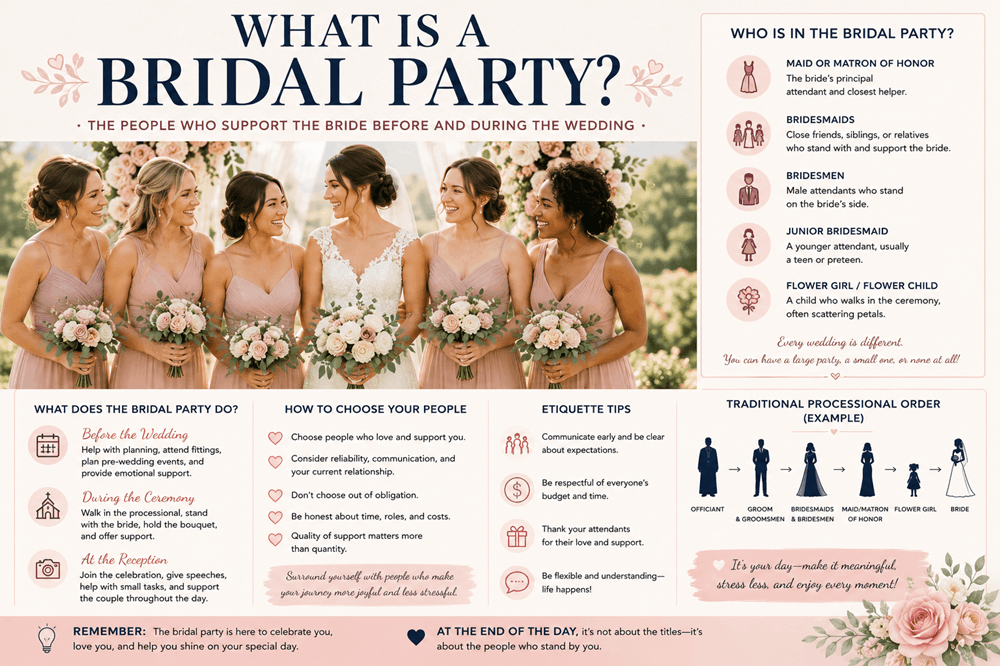
A bridal party is the group of people chosen to support the bride before and during the wedding. It traditionally includes the maid or matron of honor, bridesmaids, junior bridesmaids, and sometimes a flower girl. In modern weddings, the term may also include bridesmen, attendants of any gender, close relatives, and friends who take part in the ceremony or wedding preparations.
The bridal party helps with practical tasks, offers emotional support, attends important events, and stands near the bride during the ceremony. However, every wedding is different. A bride may have a large group of attendants, one trusted person, a mixed-gender party, or no bridal party at all.
What Does “Bridal Party” Mean?
The phrase bridal party usually refers to the attendants supporting the bride. These are the people who may walk in the processional, stand beside her during the ceremony, participate in photographs, and help with selected wedding-related responsibilities.
The bridal party is different from the broader wedding party. The wedding party can include attendants supporting both partners, along with other ceremony participants such as:
- The maid or matron of honor
- Bridesmaids
- The best man
- Groomsmen
- Bridesmen and groomswomen
- Junior attendants
- Flower children
- Ring bearers
- Ushers
- Readers
- The officiant
People sometimes use “bridal party” and “wedding party” interchangeably. Traditionally, however, the bridal party refers specifically to the bride’s attendants, while the wedding party includes attendants from both sides.
Who Is Included in a Bridal Party?
The size and structure of a bridal party depend on the bride’s relationships, the formality of the wedding, and the couple’s preferences.
Maid of Honor
The maid of honor is traditionally the bride’s principal attendant. The title is generally used when the person is unmarried, although many couples no longer follow that distinction closely.
Common responsibilities may include:
- Helping the bride communicate with the other attendants
- Assisting with bridal shower or bachelorette party planning
- Providing emotional support
- Helping with the dress or veil
- Holding the bouquet during parts of the ceremony
- Signing the marriage license when permitted
- Giving a speech or toast
- Helping resolve small problems on the wedding day
The maid of honor is not automatically responsible for planning the entire wedding or paying for every pre-wedding event. Her responsibilities should be discussed clearly rather than assumed.
Matron of Honor
A matron of honor performs the same general role as a maid of honor. Traditionally, “matron” indicates that the attendant is married.
A bride may have:
- One maid of honor
- One matron of honor
- Both a maid and matron of honor
- Two people sharing the honor role
- A man of honor
- An honor attendant using another preferred title
The title matters less than the relationship and the support the person provides.
Bridesmaids
Bridesmaids are close friends, siblings, relatives, or other important people chosen to stand with the bride.
They may help with:
- Attending dress appointments when invited
- Participating in the bridal shower
- Joining the bachelorette celebration
- Helping with simple planning tasks
- Attending the rehearsal
- Getting ready with the bride
- Walking in the processional
- Taking formal photographs
- Supporting the bride throughout the wedding day
Bridesmaids are not unpaid wedding planners. Their main role is to support and celebrate the bride, not to take over major vendor coordination, financial management, or event production.
Bridesmen
A bridesman is a male attendant who stands on the bride’s side. He may be a brother, cousin, close friend, or another important person in her life.
A bridesman can perform the same responsibilities as any other attendant. His clothing may coordinate with the bridesmaids, the groomsmen, or the broader wedding color palette.
Some couples use gender-neutral titles such as:
- Bridal attendant
- Honor attendant
- Wedding attendant
- Person of honor
- Member of the wedding party
Junior Bridesmaid
A junior bridesmaid is generally too old to serve as a flower girl but younger than the adult attendants. The role often suits a younger sibling, niece, cousin, or family friend.
Junior bridesmaids may:
- Walk in the ceremony processional
- Wear clothing that coordinates with the adult attendants
- Join suitable pre-wedding activities
- Participate in photographs
- Stand with the bridal party during the ceremony
They should not be expected to participate in adult-centered activities or pay the same expenses as adult attendants.
Flower Girl or Flower Child
A flower girl or flower child usually walks near the end of the processional, shortly before the bride. The child may scatter petals where permitted, carry flowers, hold a small sign, or simply walk down the aisle.
This role is optional. Some venues do not permit petals, while some young children may feel uncomfortable walking in front of guests. A basket, small bouquet, ribbon wand, or decorative hoop can be used instead.
What Does the Bridal Party Do?
The bridal party’s responsibilities can be divided into three stages: before the wedding, during the ceremony, and at the reception.
Before the Wedding
Before the wedding, attendants may help the bride stay organized and emotionally supported.
Possible tasks include:
- Listening to ideas and concerns
- Helping compare attire options
- Attending fittings
- Assisting with invitations or simple crafts
- Helping plan pre-wedding celebrations
- Confirming schedules
- Practicing the ceremony processional
- Preparing personal items for the wedding day
Not every attendant needs to attend every appointment. Work schedules, travel, childcare, health, finances, and family responsibilities may limit participation.
A considerate bride shares important dates early and distinguishes between required events and optional gatherings.
During the Ceremony
During the ceremony, the bridal party may:
- Walk in the processional
- Stand or sit near the bride
- Hold the bouquet
- Adjust the veil or train
- Carry the wedding rings if assigned
- Participate in readings or rituals
- Sign the marriage license when required
- Walk in the recessional
The exact order depends on the ceremony style, religious tradition, venue, and couple’s preferences.
Attendants do not always have to stand for the entire ceremony. They may sit in the front row after walking in, particularly during long religious services or when standing would be uncomfortable.
During the Reception
At the reception, members of the bridal party may:
- Participate in the grand entrance
- Give speeches or toasts
- Encourage guests to join the dance floor
- Help the bride manage personal belongings
- Assist elderly relatives or young attendants
- Help with an outfit change
- Make sure the bride eats and drinks water
- Support the couple during important moments
They are still guests and should be able to enjoy the celebration. A professional planner, venue coordinator, or designated helper should handle major emergencies and vendor communication whenever possible.
How Many People Should Be in a Bridal Party?
There is no required number.
A bridal party may include:
- One honor attendant
- Two or three close friends
- Six or more attendants
- A large group of relatives and friends
- No formal attendants
The right size depends on:
- The number of close relationships
- The ceremony space
- The wedding budget
- The desired level of formality
- Photography arrangements
- How much coordination the group requires
A larger bridal party can create a lively atmosphere, but it also increases costs, communication, scheduling, transportation, and rehearsal needs.
A small group may feel more intimate and easier to organize. Couples should choose attendants because the relationships matter, not because they are trying to create equal sides or meet an expected number.
Do Both Sides Need the Same Number of Attendants?
No. The bridal party and the other partner’s attendants do not need to be equal in number.
Uneven sides can be handled by:
- Having one person escort two attendants
- Allowing attendants to walk individually
- Pairing people without regard to side
- Having everyone enter separately
- Arranging the group naturally around the couple
Photographers regularly work with uneven groups. Balance can be created through spacing and posing rather than identical numbers.
How Do You Choose Your Bridal Party?
Choose people who are dependable, supportive, and genuinely important to you.
Consider:
- How close the relationship is now
- Whether the person supports your marriage
- Whether you feel comfortable being vulnerable around them
- How they respond to stress
- Whether they can reasonably participate
- Whether you are choosing them from love or obligation
Do not choose someone only because:
- You were in that person’s wedding
- Your families expect it
- You have known the person for many years
- You need equal numbers
- You are afraid of disappointing someone
Being included in someone else’s wedding does not create a permanent obligation to include that person in yours. Relationships and circumstances change.
How Do You Ask Someone to Be in Your Bridal Party?
You can ask in person, by phone, through a handwritten note, or with a small gift. A proposal box is optional.
A simple request may be more meaningful than an elaborate presentation:
You have been such an important part of my life, and I would love to have you beside me on my wedding day. Will you be my bridesmaid?
Before the person agrees, provide basic information about:
- The wedding date
- The location
- Expected travel
- Attire costs
- Required events
- Any major time commitments
Giving practical information allows the person to make an informed decision.
Can Someone Say No?
Yes. Being asked to join a bridal party is an honor, but accepting is not mandatory.
A person may decline because of:
- Financial limitations
- Pregnancy or health concerns
- Work obligations
- Travel difficulties
- Childcare responsibilities
- Family circumstances
- Emotional or personal reasons
A gracious response protects the relationship:
I completely understand. I am grateful that you were honest, and I am still so happy to celebrate with you as a guest.
Declining the role does not necessarily mean the person does not care about the bride.
Who Pays for Bridal Party Expenses?
Financial expectations vary by culture, family, and location. In many weddings, attendants pay for some of their own clothing, alterations, travel, and pre-wedding activities. In others, the couple covers most or all of those expenses.
Potential costs include:
- Dresses, suits, or other attire
- Alterations
- Shoes
- Hair and makeup
- Travel
- Hotel accommodations
- Bridal shower expenses
- Bachelorette activities
- Gifts
The couple should explain costs early and avoid surprising attendants with expensive requirements.
When possible, consider:
- Allowing attendants to choose their own shoes
- Providing several attire price options
- Making professional hair and makeup optional
- Choosing affordable pre-wedding activities
- Paying for required accessories
- Covering expenses for attendants facing financial difficulty
No one should be pressured to go into debt to participate in a wedding.
Does the Bridal Party Have to Wear Matching Outfits?
No. Matching dresses are traditional, but modern bridal parties often wear coordinated rather than identical clothing.
Options include:
- The same dress in one color
- Different dresses in the same color
- Several shades from one palette
- Different outfits in one fabric
- Mixed prints with a consistent color scheme
- Jumpsuits, suits, dresses, or separates
- Clothing chosen individually within clear guidelines
Clear instructions are important. Instead of simply saying “wear blue,” provide examples of acceptable shades, lengths, fabrics, and formality.
Can You Have a Mixed-Gender Bridal Party?
Yes. A bridal party can include people of any gender.
Modern couples often organize attendants according to relationships rather than traditional gender roles. A bride may have brothers, male friends, nonbinary friends, sisters, cousins, and other loved ones standing together.
Attendants can wear clothing that suits their identity while remaining coordinated with the overall wedding style.
Do You Need a Bridal Party?
No. A bridal party is completely optional.
A bride may choose not to have one because:
- She wants a simple ceremony
- The wedding is small
- She does not want to rank friendships
- She wants to reduce expenses
- The couple is eloping
- She prefers family members to sit as guests
- She wants fewer logistical responsibilities
Friends and relatives can still participate without formal titles. They may give readings, help the bride get ready, attend pre-wedding events, or sit in reserved seats near the front.
Bridal Party Etiquette for the Bride
Good bridal party etiquette is based on respect, communication, and realistic expectations.
The bride should:
- Share important dates early
- Explain expected costs honestly
- Respect personal budgets
- Avoid demanding attendance at every event
- Give clear attire instructions
- Thank attendants for their support
- Respect health, family, and work limitations
- Avoid comparing attendants
- Handle disagreements privately
A thoughtful gift or handwritten note is a common way to thank attendants, but appreciation should also be expressed throughout the planning process.
Frequently Asked Questions
Is the bride part of the bridal party?
In casual conversation, people may include the bride when referring to the bridal party as a group. Technically, the phrase most often refers to the attendants supporting her.
Is the mother of the bride part of the bridal party?
Usually not. The mother of the bride has an honored family role but is not normally considered a bridesmaid or bridal attendant unless the bride specifically chooses her for that position.
Are flower girls part of the bridal party?
They are often considered junior members of the bridal party or broader wedding party.
Can you have two maids of honor?
Yes. Two people can share the honor role, or the bride can choose both a maid and matron of honor.
Can a married woman be a bridesmaid?
Yes. Marital status does not prevent anyone from serving as a bridesmaid.
Does the bridal party plan the bridal shower?
The bridal party may help, but it is not automatically responsible for hosting or paying for the shower. The event may be organized by relatives, friends, attendants, or a combination of people.
Does every bridesmaid have to attend the bachelorette party?
No. Travel, cost, health, work, and personal comfort may prevent attendance. Participation should not be treated as a test of loyalty.
The Bridal Party Should Make the Wedding Feel More Supported
A bridal party is the group chosen to support the bride through the wedding experience. It may include a maid or matron of honor, bridesmaids, bridesmen, junior attendants, and flower children.
The group can help with selected planning tasks, participate in pre-wedding celebrations, walk in the ceremony, pose for photographs, and offer emotional support. However, attendants are not required to manage the entire wedding or accept unlimited expenses.
The strongest bridal parties are not necessarily the largest or most perfectly coordinated. They are made up of people who communicate honestly, respect one another’s limits, and genuinely want to celebrate the couple.
Whether the bride chooses ten attendants, one person of honor, a mixed-gender group, or no formal party at all, the decision should reflect her real relationships rather than a wedding tradition she feels pressured to follow.