When to Send Wedding Invitations: A Complete Mailing Timeline
Most wedding invitations should be mailed six to eight weeks before the ceremony. This gives guests time to check their schedules, review the details, and make any necessary arrangements without receiving the invitation so early that it is set aside and forgotten.
Destination weddings, holiday weekends, and celebrations involving substantial travel may need a longer timeline. The best mailing date depends on where the wedding is taking place, how far guests must travel, and whether save-the-dates have already been sent.
When Should You Send Wedding Invitations?
Traditional wedding invitation guidance recommends mailing invitations six to eight weeks before most weddings. Choose a date closer to eight weeks when many guests are traveling, the wedding falls during a busy season, or attendees need additional time to arrange childcare or time away from work.
These recommendations refer to when you should mail or release the invitations. Printing, addressing, assembly, and postage should all be completed before that date.
| Wedding Type | Suggested Mailing Time |
|---|---|
| Local wedding | Six to eight weeks before |
| Wedding with many out-of-town guests | About eight weeks before |
| Destination wedding | About 12 weeks before |
| Digital wedding invitation | Six to eight weeks before |
Invitation Timing for Different Types of Weddings
The standard timeline works well for many celebrations, but travel requirements and seasonal demand can affect how much notice guests need.
Local Weddings
For a wedding where most guests live nearby, six to eight weeks is usually enough notice. Guests are unlikely to need flights, lengthy hotel stays, or several days away from work.
The eight-week point is a sensible choice for larger or more formal weddings. A date closer to six weeks may work for an intimate celebration where guests already know the plans and live within a short drive of the venue.
Mail the full set of invitations together rather than sending separate groups based on where guests live. A coordinated mailing keeps communication consistent and reduces the chance that guests compare delivery dates and assume an invitation was late.
Destination Weddings
Formal invitations for a destination wedding are generally sent about 12 weeks before the celebration. This longer window is helpful when guests need to confirm flights, accommodations, passports, or several days away from home.
The invitation should not be the first notice guests receive. Save-the-dates and the wedding website should communicate the date, general location, and initial travel information months earlier. The formal invitation can then confirm the ceremony details and direct guests to updated information about hotels, transportation, and additional events.
Current destination wedding guidance also places formal invitations around the 12-week mark, particularly when save-the-dates were not sent.
Holiday Weekends and Busy Travel Seasons
Weddings held near major holidays, school breaks, local festivals, or popular vacation periods require careful planning. Flights and hotel rooms may fill quickly, and guests may already be considering other commitments.
For a local holiday-weekend wedding, use the earlier end of the standard mailing window. When the celebration also involves significant travel, follow the destination timeline and provide accommodation information well in advance.
Early notice matters more than sending the formal invitation many months ahead. A timely save-the-date allows guests to reserve the weekend while the couple continues finalizing invitation wording and event details.
Weddings Planned on a Short Timeline
A brief engagement may not leave enough time for a traditional stationery schedule. Once the date, venue, and guest list are confirmed, begin preparing the invitations immediately.
Digital invitations can be useful when printing and postal delivery would cause a serious delay. Couples can also contact close relatives and guests who must travel before the formal invitation is ready.
Keep the wording clear and the response process simple. Guests should be able to find the ceremony date, time, location, dress expectations, and wedding website without searching through several cards or messages.
How Save-the-Dates Affect the Timeline
A save-the-date gives guests early notice, while the wedding invitation formally asks them to attend and confirms the event details. One does not replace the other.
Save-the-dates are commonly sent six to nine months before a local wedding and approximately nine to twelve months before a destination celebration. They are especially valuable when guests need to book travel, request time away from work, or reserve rooms during a busy season.
When save-the-dates have already been sent, the formal invitations can follow the usual mailing schedule. Guests know when and generally where the wedding will take place, so the invitation can focus on the final ceremony and reception information.
Without save-the-dates, consider mailing invitations toward the earlier end of the appropriate window. This gives guests more time to make arrangements, although an invitation sent only a few weeks earlier cannot fully replace months of advance travel notice.
Only send a save-the-date to someone who will receive a wedding invitation. Once a person is asked to reserve the date, they will reasonably expect to remain on the guest list.
When to Send Printed and Digital Invitations
Printed and digital invitations require different preparation, but guests need approximately the same amount of planning time. The delivery method should not determine how much notice attendees receive.
Printed Invitations
Printed invitations require time for design approval, production, shipping, addressing, and assembly. Custom paper, letterpress printing, foil, envelope liners, calligraphy, or hand-finished details may lengthen the process.
Build extra time into the schedule for proofreading and corrections. Invitations should arrive early enough for you to inspect the printing, organize the inserts, and address the envelopes without rushing.
Digital Invitations
Digital invitations can be delivered almost instantly, but they should still be sent six to eight weeks before most weddings. Faster delivery does not reduce the time guests need to review their calendars and make plans.
Before releasing them, test the design on both a phone and a computer. Check the wedding website, map, registry, and response links, and confirm that every email address has been entered correctly.
Watch for delivery errors after sending. Important messages can occasionally be filtered into spam or promotional folders, so guests who do not open the invitation may need a discreet follow-up.
Using Both Formats
Some couples use printed invitations for most guests and digital versions for international attendees or people whose mailing addresses are uncertain. When both formats are part of the original plan, release them at approximately the same time.
This creates one clear invitation date and ensures that guests receive the confirmed information together, regardless of delivery method.
A Work-Backward Wedding Invitation Timeline
Starting several months ahead leaves room for design decisions, corrections, and production delays. The following timeline can be adjusted for the complexity of the invitation suite.
| Time Before the Wedding | What to Do |
|---|---|
| Four to five months | Choose the invitation style, confirm the guest list, collect addresses, and place the stationery order. |
| Three to four months | Finalize the wording and carefully review the design proof. |
| Ten to twelve weeks | Inspect the finished stationery, address envelopes, and begin assembling the suites. |
| About twelve weeks | Mail invitations for destination or travel-heavy weddings. |
| Eight to ten weeks | Complete assembly, weigh a finished envelope, and purchase the correct postage. |
| Six to eight weeks | Mail invitations for most local weddings or release digital invitations. |
Couples ordering highly customized stationery may need to begin earlier. Before placing an order, ask the stationer how long design revisions, production, and shipping are expected to take.
Preparing Printed Invitations for Mailing
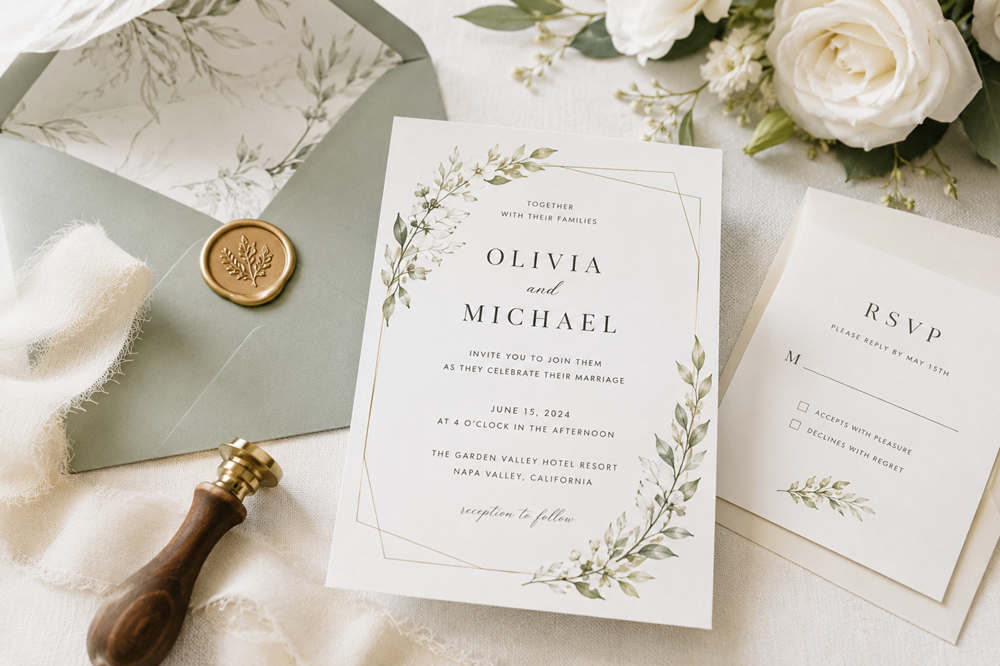
Postal details can affect both the budget and the mailing schedule. Assemble one complete invitation with every card, envelope, liner, seal, and decorative element included, then have it weighed before purchasing stamps.
According to USPS mailing guidance, square, rigid, lumpy, vertical, or unusually shaped envelopes may require additional postage because they cannot move through standard processing equipment in the same way as ordinary letters.
International invitations should be checked separately because postage and delivery times vary by destination. It may also be helpful to send international guests the essential information digitally so they are not relying entirely on postal delivery.
When a suite includes wax seals, ribbons, clasps, or thick embellishments, take a finished envelope to a staffed postal counter. Confirming the requirements before mailing the full batch is easier than replacing invitations that are returned for insufficient postage.
Final Wedding Invitation Timing Checklist
Before placing the invitations in the mail or releasing them online, confirm that:
- The ceremony date, time, and location are finalized.
- Guest names and mailing or email addresses are complete.
- The invitation wording and website links have been proofread.
- Enough time has been allowed for production and assembly.
- Travel, holiday, and destination requirements have been considered.
- A complete printed invitation has been weighed and checked for postage.
- The mailing or release date has been added to the planning calendar.
For most weddings, the standard six-to-eight-week timeline offers the right amount of notice. Move closer to 12 weeks when guests face significant travel, and use save-the-dates to provide the much earlier notice needed for destination or holiday celebrations. By working backward from the wedding date, couples can prepare their stationery carefully without leaving guests too little time to plan.