Can You Wear Black to a Wedding? Modern Etiquette for Every Dress Code
Yes, you can wear black to most weddings. Black is now widely accepted as an elegant and versatile wedding guest color, especially for formal and evening celebrations.
Whether a particular outfit is appropriate depends on more than its color. The invitation, dress code, venue, season, and cultural traditions should all influence what you choose. A polished black outfit can suit almost any wedding when its fabric and formality match the occasion.
What Determines Whether a Black Outfit Is Appropriate?
Begin with the invitation and wedding website. A stated dress code is the clearest indication of how formal your outfit should be, while color instructions should be followed whenever the couple provides them.
The setting offers additional clues. Black feels natural in ballrooms, hotels, restaurants, museums, historic venues, and other polished spaces. It can also work at outdoor celebrations, although lightweight fabrics and relaxed tailoring may suit those environments better.
Time and season matter as well. Darker colors often feel especially fitting at evening, fall, and winter weddings. For a daytime or warm-weather celebration, black can still be appropriate when the outfit is breathable and does not look too heavy for the surroundings.
Finally, consider any cultural or religious customs connected with the event. Color meanings are not universal, and expectations may differ among families and communities. Follow the couple’s guidance rather than relying on broad assumptions.
When Black Works Particularly Well
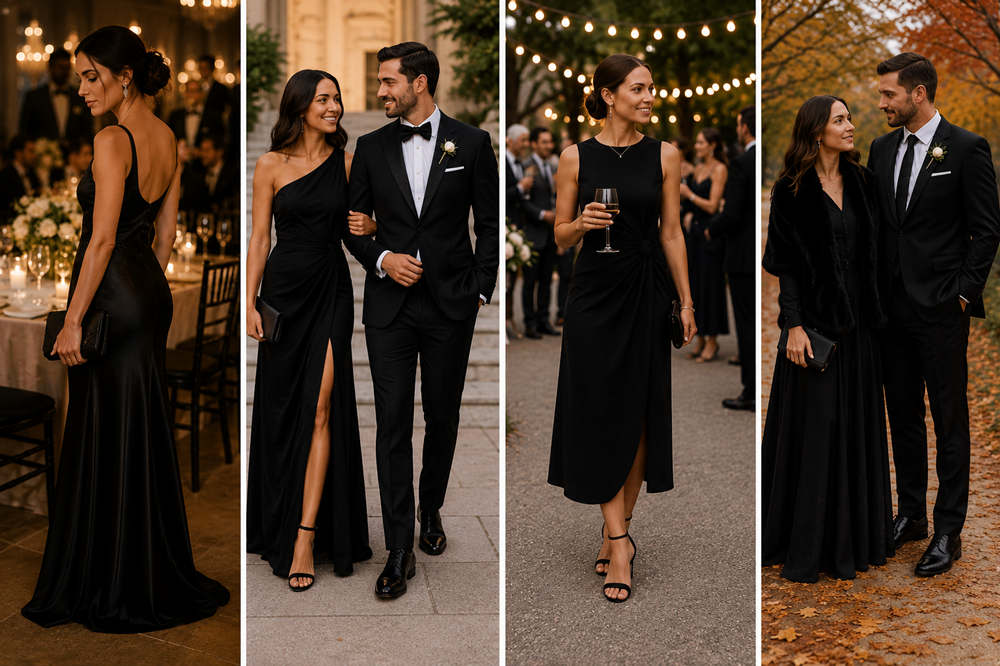
Black is especially well suited to weddings with a formal, evening, or sophisticated atmosphere. It complements candlelit receptions, upscale dinner venues, city celebrations, and black-tie events without drawing attention away from the couple.
It also works naturally during fall and winter, when deeper colors and richer textures reflect the season. At cocktail receptions, black offers an easy foundation for an outfit that feels refined without becoming overly elaborate.
These are not the only occasions when black is acceptable. They are simply the settings in which the color tends to blend most naturally with the mood of the event.
When You May Want to Choose Another Color
Black is acceptable at most weddings, but the following situations may make another color a more thoughtful choice.
The Invitation Requests Other Colors
Some couples ask guests to wear a particular range of colors, such as pastels, jewel tones, florals, or bright shades. Others may explicitly ask guests not to wear black.
Follow those instructions even when they differ from your usual preferences. A color request is generally intended to create a particular atmosphere or appearance for the celebration.
Cultural or Religious Traditions Affect the Meaning of Black
Black can carry different associations across cultures, religions, regions, and individual families. In some settings, it may be connected with mourning or considered less suitable for a joyful ceremony.
There is no single rule that applies to every cultural wedding. The couple’s instructions are more reliable than generalizations. When no guidance is provided and you are unfamiliar with the customs, ask the designated wedding contact or someone close to the couple.
The Wedding Party Is Wearing Black
Guests are not normally required to avoid the wedding party’s color. However, if you already know that all the attendants will be wearing black, choosing another shade may help you avoid looking unintentionally coordinated with them.
This is a matter of consideration rather than a strict etiquette rule, unless the couple has specifically asked guests to wear something different.
The Outfit Feels Too Heavy for the Setting
A severe all-black outfit may look out of place at a relaxed beach ceremony, daytime garden party, or casual summer wedding. The issue is usually not the color itself, but the combination of dark fabric, formal construction, and heavy accessories.
Black can still work in these settings when it appears lighter and more relaxed. Breathable materials, flowing shapes, subtle prints, or softly colored accessories can change the overall impression.
What to Wear for Each Wedding Dress Code
The dress code determines the formality of the outfit. Current wedding guest attire guidance also treats the time and setting of the celebration as useful clues when the invitation is not highly specific.
| Dress Code | Suitable Black Outfit Ideas | What to Avoid |
|---|---|---|
| Black Tie | A formal evening gown, elegant cocktail dress, dressy separates, refined jumpsuit, or tuxedo | Ordinary businesswear, casual materials, daytime shoes, or clothing that looks noticeably informal |
| Formal or Black-Tie Optional | A long or elevated midi dress, formal jumpsuit, polished pantsuit, tuxedo, or dark suit | Casual sundresses, everyday office clothing, sneakers, or relaxed separates |
| Cocktail or Semi-Formal | A refined knee-length or midi dress, tailored jumpsuit, dressy separates, or well-fitted suit | Ball gowns, jeans, casual shirts, or outfits intended mainly for a nightlife setting |
| Casual or Daytime | A lightweight dress, linen-blend suit, relaxed jumpsuit, or polished separates | Heavy evening fabrics, excessive embellishment, or clothing that feels too formal for the venue |
Black tie refers to the level of formality, not merely the color of the clothing. The Emily Post Institute’s black-tie dress code includes formal evening gowns, shorter dressy cocktail dresses, and elegant separates, while tuxedos remain the traditional tailored option.
For less formal weddings, the clothing should become lighter and more relaxed. The same color can appear dramatically different in velvet, chiffon, linen, cotton, satin, or wool, so choose a material that suits the season and venue.
How to Make a Black Outfit Feel Festive
Choose an Interesting Fabric and Silhouette
Fabric has a strong influence on whether black feels celebratory or somber. Satin, silk, chiffon, lace, crepe, velvet, and jacquard can create a polished evening look. Linen blends, light cotton, and airy woven fabrics are better suited to casual or warm-weather celebrations.
Details such as pleating, draping, embroidery, ruching, wide-leg tailoring, or an asymmetric neckline can add visual interest without making the outfit excessive. A comfortable, well-fitting silhouette will also look more confident and intentional than clothing that requires constant adjustment.
Add Occasion-Appropriate Accessories
Accessories can soften or elevate black depending on the event. Metallic jewelry, a colorful bag, a patterned tie, a decorative pocket square, or an elegant pair of shoes can make the outfit feel more festive.
Soft neutrals such as champagne, blush, silver, gold, tan, and pearl tones also work well. For a daytime wedding, woven textures or lighter accessories may feel more natural than dark formal pieces.
An entirely black outfit can still be appropriate. Simply avoid styling it in a way that appears intentionally suited to a somber occasion, particularly when the wedding itself is bright and informal.
A Quick Checklist Before You Get Dressed
- Read the dress code and color instructions. Check both the invitation and wedding website.
- Consider the time, season, and venue. These details indicate whether the outfit should feel formal, relaxed, light, or dramatic.
- Account for cultural or religious customs. Follow guidance from the couple rather than making assumptions.
- Evaluate the complete outfit. Make sure the fabric, silhouette, shoes, and accessories match the occasion.
- Ask when the instructions remain unclear. Contact the couple or the person designated to answer guest questions.
Final Takeaway
Black is appropriate for most modern weddings as long as the outfit respects the stated dress code, setting, and cultural traditions. Choose materials and accessories that suit the occasion, and always follow any specific color instructions provided by the couple.