Celebration of Life vs. Funeral: What Is the Difference?
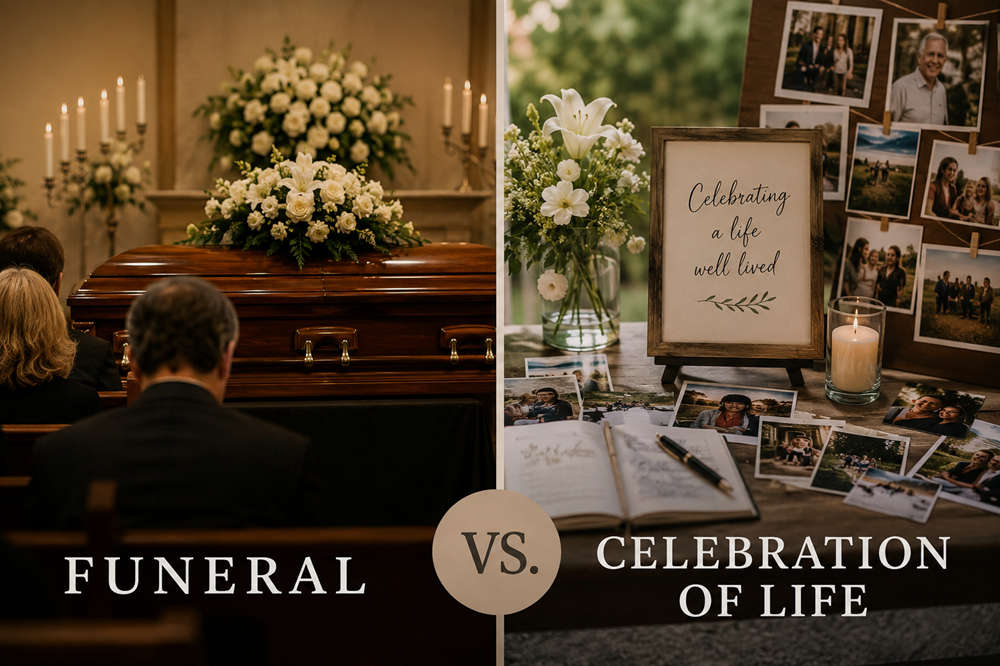
A funeral and a celebration of life both give people a way to honor someone who has died, support one another, and acknowledge the loss. The main difference is usually how the gathering is organized. A funeral often follows an established ceremonial structure, while a celebration of life is generally shaped more freely around the person’s memories, interests, and relationships.
These labels do not have one fixed meaning. Research from the National Funeral Directors Association found that families and funeral professionals do not always understand terms such as “funeral,” “memorial service,” and “celebration of life” in the same way. It is therefore more useful to ask what a service will include than to rely on its name alone.
What Is a Funeral?
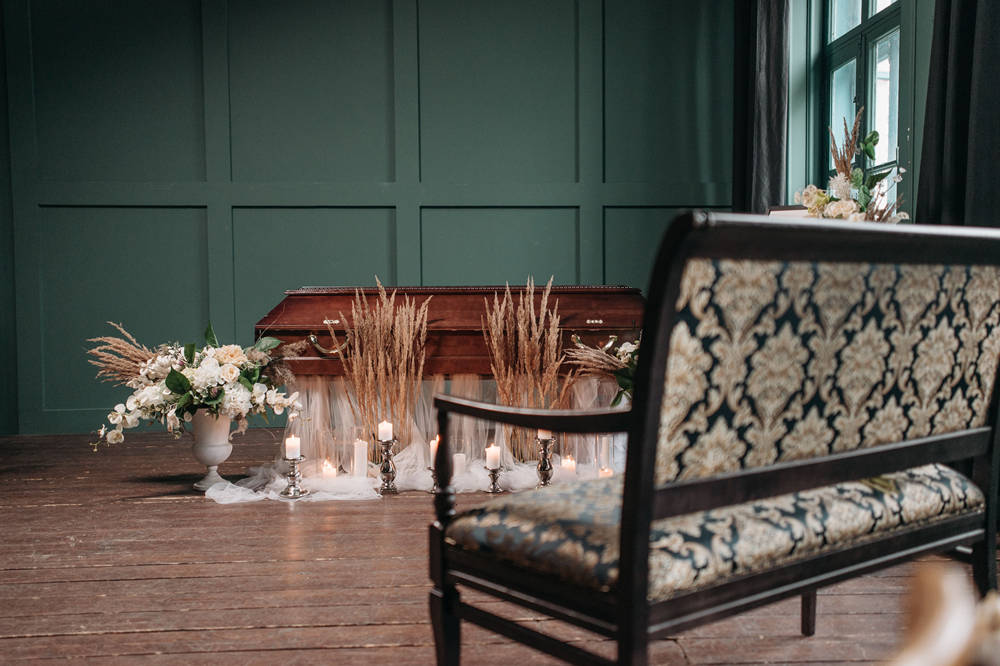
A funeral is a ceremony held after a death to honor the person, recognize the reality of the loss, and allow family and friends to say goodbye. It commonly takes place within several days of the death, although religious customs, legal requirements, travel, and family circumstances can affect the timing.
A casket or urn may be present during the service, depending on whether the person will be buried or cremated and how the family has arranged the ceremony. A viewing or visitation may take place beforehand, but neither is required for an event to be considered a funeral.
Funerals are often held at a funeral home, place of worship, cemetery chapel, or graveside. A typical service may include:
- Opening words or prayers
- Religious, spiritual, or literary readings
- Music or hymns
- A eulogy
- Remarks from relatives or friends
- A closing blessing or committal
The structure may be guided by a faith tradition, cultural custom, funeral director, clergy member, or officiant. Following a familiar order can give mourners a clear way to participate when the days after a death feel overwhelming.
A funeral does not have to feel impersonal. Photographs, favorite songs, flowers, personal belongings, meaningful readings, and stories can all reflect the person’s character while remaining within a traditional ceremony.
What Is a Celebration of Life?

A celebration of life is a personalized memorial gathering focused on the person’s life, character, relationships, and legacy. The phrase describes an approach rather than a ceremony governed by a fixed set of rules.
Celebrations of life often take place after burial or cremation, when the body is no longer present. An urn, photograph, memory table, or other memorial display may still serve as a focal point.
Because the gathering is usually separate from the immediate burial or cremation arrangements, it may be scheduled weeks or months later. This flexibility can give distant guests more time to travel and allow the family to collect photographs, prepare a tribute video, or reserve a meaningful venue. Memorial gatherings may be held at almost any suitable time or place, according to AARP’s guidance on planning memorial services.
A celebration of life might take place in a family home, garden, restaurant, park, community hall, beach, or another location connected to the person being remembered. Its contents may include:
- Photographs and personal keepsakes
- Favorite music
- Shared stories
- A tribute film or slideshow
- Letters from family and friends
- Favorite foods or family recipes
- A memory book for guests
- An activity related to a hobby or meaningful cause
The word “celebration” does not mean the event must be cheerful throughout. Guests may cry, laugh, sit quietly, and share difficult emotions. The goal is not to minimize grief but to remember the person as fully as possible.
Celebration of Life vs. Funeral: Key Differences
The following comparison describes common patterns rather than strict rules. Families may adapt either type of gathering to suit their beliefs and circumstances.
| Feature | Funeral | Celebration of Life |
|---|---|---|
| Main emphasis | A ceremonial farewell that acknowledges the death | The person’s memories, personality, relationships, and legacy |
| Timing | Usually held relatively soon after death | May take place weeks or months later |
| Body or remains | A casket or urn may be present | The body is usually not present, although an urn or memorial display may be included |
| Structure | Often follows an established order | Usually arranged more freely around the individual |
| Location | Commonly held at a funeral home, place of worship, or cemetery | Can be held at almost any appropriate or meaningful venue |
| Atmosphere | Often formal, reflective, or solemn | Often personal, conversational, or uplifting |
| Leadership | May be led by clergy, an officiant, or a funeral director | May be led by a celebrant, friend, relative, or several speakers |
| Connection to burial or cremation | May occur before or alongside burial or cremation | Often takes place separately, especially when scheduled later |
A particular service may not fit neatly into either column. The available forms of funeral and memorial services can be adapted in many ways, including different choices about viewings, locations, religious content, and personalization.
Can a Celebration of Life Be Religious?
A celebration of life can be religious, spiritual, secular, or a combination of these approaches. Its flexible structure does not require the family to leave out faith or cultural tradition.
Religious elements might include:
- Prayers or blessings
- Scripture or spiritual readings
- Hymns or sacred music
- Remarks from a clergy member
- Rituals connected to the family’s faith
Some families hold a gathering that includes religious content without following the complete order of a traditional funeral. For example, a relative may offer an opening prayer before guests share stories and listen to meaningful music.
When a faith requires particular rites or burial practices, the family should speak with a clergy member or knowledgeable community leader before making plans. This can help ensure that personalization does not unintentionally conflict with an important tradition.
Can You Have Both a Funeral and a Celebration of Life?
Families do not always have to choose one type of gathering. A funeral and a celebration of life can serve different purposes and be held at different times.
A funeral may take place shortly after the death so that religious rites, viewing, burial, or cremation can proceed. A broader celebration of life can then be arranged later for relatives, friends, neighbors, and colleagues who were unable to attend the first service.
Possible arrangements include:
- A private family funeral followed by a public celebration of life
- A religious service followed by an informal memorial reception
- A graveside ceremony followed by a gathering at home
- Burial or cremation followed by a later commemorative event
- A structured funeral that includes personal stories, photographs, and favorite music
Holding two gatherings can be helpful when close relatives value traditional rituals but the person also had a large community of friends who want to share memories.
How to Choose Between a Funeral and a Celebration of Life
The best choice depends on the person being honored, the beliefs of the family, and the kind of farewell that feels most appropriate. Several practical questions can guide the decision.
Begin With the Person’s Wishes
Look for instructions in a funeral plan, prearrangement agreement, will, letter of instruction, or notes shared with family members. Previous conversations may also reveal preferences about burial, cremation, viewing, music, religious observance, or the size and tone of the gathering.
Even when there is no detailed plan, comments made during the person’s lifetime may offer direction. A request for a small service, a particular song, or an informal gathering can help the family create an event that feels true to them.
Respect Religious and Cultural Responsibilities
Some traditions set expectations for how the body is cared for, how soon burial occurs, which prayers are said, and who participates. A funeral may be necessary to fulfill those responsibilities.
A separate celebration of life can still take place later, provided it works respectfully alongside the customs the family considers essential.
Consider What Kind of Goodbye Is Needed
Some mourners find comfort in viewing the body, attending a familiar ceremony, or witnessing the burial. These actions can provide a defined moment of farewell and make the death feel more real.
Others connect more strongly through photographs, music, food, and conversation. An informal gathering may make it easier for guests to contribute memories instead of listening to a ceremony led mainly by one person.
The family should consider what will help those closest to the person acknowledge the loss, rather than choosing an event solely because it appears more formal or convenient.
Think About Timing and Attendance
A funeral held soon after death may not leave enough time for everyone to travel. A later celebration of life can accommodate guests who live far away and give the family more time to prepare meaningful details.
Livestreaming may help people attend remotely, particularly when illness, cost, or distance makes travel difficult. The family should tell speakers before recording or broadcasting the event so that everyone understands how their remarks may be shared.
Decide on the Setting and Level of Formality
The venue can influence the mood of the gathering. A place of worship or funeral home may suit a structured ceremony, while a garden, restaurant, or family home may support a more conversational event.
Guests may also need clear information about clothing. The invitation or announcement can mention whether the gathering is formal, casual, outdoors, or connected to a particular color or theme. A separate guide to what to wear to a celebration of life can help guests choose respectful attire when the expectations are not obvious.
Review the Costs and Arrangements
Consider the venue, number of guests, transportation, flowers, printed materials, food, audiovisual equipment, burial or cremation arrangements, and professional fees. A celebration of life is not automatically inexpensive; catering, venue rental, musicians, or elaborate displays can add considerably to the total.
In the United States, the Federal Trade Commission’s Funeral Rule generally allows consumers to choose the funeral goods and services they want rather than purchase an entire package. Funeral homes must provide price information and an itemized statement, although a basic services fee and certain legally required charges may still apply. The rule covers funeral homes but does not apply in the same way to third-party sellers or cemeteries without an on-site funeral home.
Neither Choice Is More Respectful Than the Other
A formal funeral is not inherently more dignified, and a celebration of life is not inherently more loving. Respect comes from honoring the person honestly while giving family and friends an appropriate way to acknowledge the death.
The most meaningful choice is the one that reflects the person’s wishes, beliefs, relationships, and cultural traditions while leaving room for mourners to grieve together.