How to Politely Decline an Invitation: 6 Steps and Helpful Examples
Receiving an invitation is flattering, but accepting may not always be practical. You might have another commitment, face travel or financial limitations, or simply be unavailable.
Declining does not have to sound cold or awkward. A polite response acknowledges the invitation, gives the host a definite answer, and ends on a warm note. In most cases, a few thoughtful sentences are all you need.
How to Politely Decline an Invitation in 6 Steps
Step 1: Decide Whether You Can Attend
Before replying, check the date, location, travel requirements, cost, childcare needs, and other commitments. Make an honest decision rather than accepting because you feel pressured or guilty.
For a casual invitation, it is reasonable to ask for a short amount of time when you genuinely need to check your schedule. Tell the host exactly when you will respond, and then follow through.
Example:
“Thanks for inviting me. I need to check one commitment, but I’ll give you a definite answer tomorrow.”
Formal occasions require a firmer response. When an unresolved conflict may prevent you from attending, it is generally more considerate to decline than to leave the host waiting, as a delayed reply can complicate plans for a formal event.
Step 2: Reply Promptly and Through the Requested Method
Once you know your answer, respond without unnecessary delay. The host may need your reply to finalize a reservation, seating arrangement, meal count, or supply order.
Follow the instructions on the invitation. That might mean mailing a response card, using an event website, replying to an email, sending a text, or calling a specified number. Aim to reply promptly and no later than the stated RSVP deadline.
It is also thoughtful to contact the host even when no formal RSVP has been requested. This prevents uncertainty and gives the host a more accurate idea of who will attend.
Example:
“Thank you for thinking of me. Unfortunately, I won’t be able to attend.”
Step 3: Start With Appreciation
Begin by recognizing the kindness behind the invitation. Your opening can be formal, affectionate, or casual depending on the occasion and your relationship with the host.
Useful phrases include:
- “Thank you so much for inviting me.”
- “I really appreciate you including me.”
- “It was thoughtful of you to think of me.”
- “Thank you for the kind invitation.”
- “I’m honored to have been invited.”
Keep the appreciation sincere. One natural sentence is usually more effective than several lines of exaggerated praise.
Example:
“Thank you for including us in your anniversary celebration.”
Step 4: State Your Decision Clearly
After expressing appreciation, make it clear that you will not attend. Avoid wording that could be interpreted as a possible yes when you have already made your decision.
Clear phrases include:
- “Unfortunately, I won’t be able to attend.”
- “I’m sorry, but I’ll have to decline.”
- “I won’t be able to join you this time.”
- “Regrettably, we are unable to attend.”
- “I’m not available that evening.”
Phrases such as “I’ll try,” “maybe,” or “I might stop by” leave the host uncertain. A gentle but definite no is more useful.
Example:
“I’m sorry, but I won’t be able to join you for dinner on Saturday.”
Step 5: Add a Brief Reason if It Feels Appropriate
You are not obligated to explain why you cannot attend. For many invitations, a simple statement of regret is enough.
When you choose to give a reason, keep it short. You might mention a previous commitment, work obligation, family responsibility, travel difficulty, or personal matter. There is no need to describe private circumstances in detail.
With a reason:
“I already have a family commitment that evening, so I won’t be able to come.”
Without a reason:
“I’m unable to attend, but I truly appreciate the invitation.”
If someone asks for details you do not want to share, you can maintain your privacy politely:
“It’s a personal matter, but thank you for understanding.”
Step 6: Close With a Warm Wish
End by wishing the host or guests well. The closing should reflect the event without making your decision sound uncertain.
Possible closing lines include:
- “I hope you have a wonderful celebration.”
- “I’ll be thinking of you on the day.”
- “I hope everyone has a lovely time.”
- “Please pass along my congratulations.”
- “Thank you again for including me.”
Complete example:
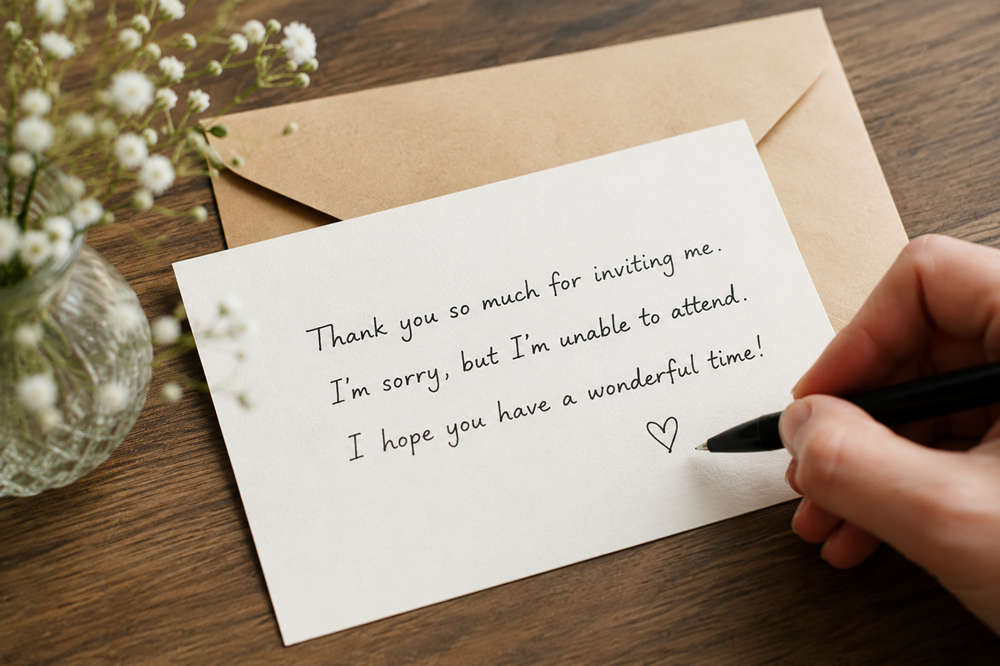
“Thank you so much for inviting me. Unfortunately, I won’t be able to attend, but I hope you have a wonderful evening.”
Polite Ways to Decline Different Invitations
The best wording depends on the occasion and how well you know the host. These examples can be adapted with the relevant names, dates, and details.
Formal Event
“I’m grateful for the kind invitation. Regrettably, I will not be able to attend. Please accept my best wishes for a successful evening.”
Wedding Invitation
For a couple you do not know closely:
“Thank you for inviting us to celebrate with you. We are unable to attend, but we wish you both a beautiful wedding day and every happiness together.”
For a close friend or relative:
“I’m so sorry that I won’t be able to be there on your wedding day. Thank you for including me. I’ll be thinking of you both and sending all my love.”
Birthday Party
“I’m sorry to miss it—I already have plans on Saturday. I hope you have an amazing birthday!”
Dinner Invitation
“Thank you for inviting us. We won’t be able to join you for dinner that evening, but we hope you all have a lovely time.”
Family Gathering
“Thank you for including us. We won’t be able to come this year, and we’ll miss seeing everyone. Please give the family our love.”
Work or Networking Event
“I appreciate the invitation. I’m unavailable that evening, but thank you for including me.”
Invitation Involving Expensive Travel
“Thank you so much for inviting me. I’m not able to make the trip work this time, but I hope you have a wonderful celebration.”
When speaking with someone close to you, you may prefer to be slightly more direct:
“I would love to be there, but the travel costs are more than I can manage right now. I’m sorry to miss it, and I hope you have an incredible time.”
Invitation You Do Not Want to Explain
“Thank you for thinking of me. I’m unable to attend, but I hope the event goes beautifully.”
Invitation From a Close Friend
“I hate that I’ll miss this, but I won’t be able to be there. Thank you for thinking of me, and I’m truly sorry to miss such an important day.”
Last-Minute Invitation
“Thanks for inviting me. I’m not available tonight, but I really appreciate you thinking of me. Have a great time!”
How to Decline After You Have Already Accepted
Once you have said yes, treat your accepted RSVP as a commitment. Illness, an emergency, an unavoidable work conflict, or another serious circumstance may make canceling necessary, but receiving a more appealing invitation is not a considerate reason to change your response.
If you must withdraw, contact the host personally and as soon as possible.
1. Contact the Host Immediately
Tell the host as soon as you know you cannot attend. Do not wait in the hope that the situation will become less awkward.
2. Apologize for Changing Your Response
Recognize that you previously committed to attending. A direct apology shows that you understand the change may create inconvenience.
3. Give a Concise Explanation
Because you are withdrawing an acceptance, a brief reason is helpful. You can still protect sensitive personal details.
4. Acknowledge the Host’s Arrangements
If the event is approaching, recognize that plans may already have been finalized. Do not ask the host to reassure you or minimize the effect of the cancellation.
Example:
“I’m very sorry, but an unexpected family matter has come up and I can no longer attend on Saturday. I know you may have already finalized the arrangements, and I sincerely apologize for the late change.”
Final Thoughts
Politely declining an invitation comes down to four things: thank the host, give a clear answer, offer a brief explanation only when appropriate, and end with a warm wish. A prompt and sincere no is more considerate than silence, uncertainty, or an acceptance you are unlikely to honor.