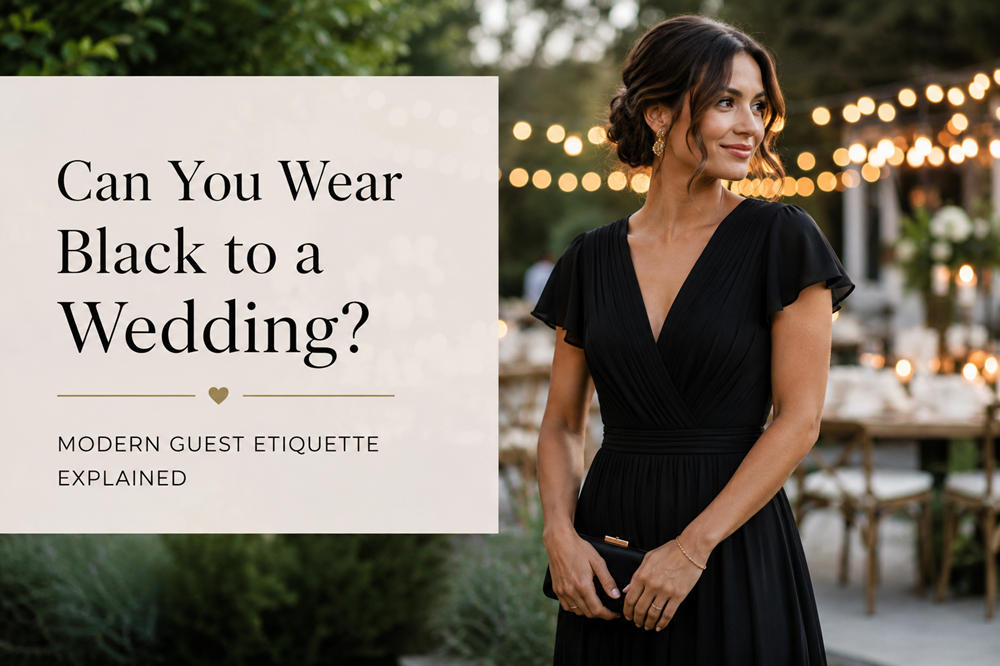
Can I Wear Black to a Wedding? Modern Guest Etiquette Explained
Black is elegant, versatile, and easy to dress up, but its traditional connection with mourning still makes some wedding guests hesitate.
In most cases, you can wear black to a wedding. The color is widely accepted at modern celebrations, provided your outfit suits the dress code, setting, season, and couple’s preferences.
Can You Wear Black to a Wedding?
Yes, black is appropriate for most weddings. Black dresses, suits, jumpsuits, and tailored separates are common at everything from cocktail receptions to formal evening celebrations.
The color itself is rarely the deciding factor. A carefully styled black outfit can be more appropriate than a colorful look that is too casual, revealing, or formal for the event.
Start by checking the invitation and wedding website. The stated dress code should guide the outfit’s length, fabric, silhouette, and accessories. The time of day, ceremony style, and local customs can also help you interpret the expected wedding guest attire.
If the couple requests a particular color palette or specifically asks guests not to wear black, follow that guidance rather than relying on general etiquette.
Why Was Black Traditionally Avoided at Weddings?
The old hesitation around black comes mainly from its association with mourning in Western culture. Because weddings are joyful occasions, black was once considered too somber for the celebration.
Wedding attire rules have become much less rigid, and black is now regularly seen on guests, attendants, and sometimes even the people getting married. Modern etiquette generally treats it as a polished neutral rather than an inherently gloomy color.
That change does not mean tradition should be ignored completely. Some families and ceremonies still attach a strong meaning to particular colors, so the couple’s guidance should always take priority.
When Black Works Particularly Well
Black can work in many settings, but it feels especially natural at celebrations with a formal, evening, or modern atmosphere.
Evening Celebrations
Black fits easily into evening receptions, candlelit dinners, cocktail hours, and celebrations with dancing. It looks polished under evening lighting and can be styled formally without becoming distracting.
Formal and Urban Venues
Hotels, ballrooms, museums, restaurants, historic buildings, and city rooftops often suit the clean appearance of black clothing. It can complement the venue without competing with elaborate décor.
Fall and Winter Weddings
Black naturally works with the deeper colors and richer textures commonly worn during cooler seasons. It pairs particularly well with velvet, satin, crepe, brocade, and tailored wool.
Modern or Minimalist Weddings
A simple black outfit can feel especially appropriate at a contemporary, industrial, glamorous, or minimalist celebration. Clean lines and restrained accessories often suit these settings better than busy prints or highly decorative clothing.
When You May Want to Wear Another Color
Although black is generally acceptable, there are occasions when a different color may fit the celebration more naturally.
The Couple Requests Something Else
Some couples give guests a specific palette, such as pastels, jewel tones, florals, tropical colors, or all-white attire. Others may ask guests to avoid black or reserve it for a coordinated group.
These instructions are part of the dress code and should be followed even when black would normally be acceptable.
Black Has a Particular Meaning for the Ceremony
Black may carry a strong association with mourning in certain religious ceremonies, regional traditions, or individual families. Customs can vary widely, even among people who share the same cultural background.
Avoid making broad assumptions. Follow any information provided by the couple, and ask someone close to them when you have a genuine reason to think the color may be sensitive.
The Setting Is Especially Bright or Relaxed
A heavy black gown or structured dark suit may feel out of place at a casual garden lunch, tropical resort, or relaxed beach ceremony. In these situations, the weight and formality of the outfit are often more important than the color itself.
Black can still work when it appears in a floral print or a lightweight, flowing design. However, a softer or brighter color may blend more naturally with the mood of the event.
How to Match a Black Outfit to the Dress Code
Choosing black does not remove the need to follow the dress code. The outfit must still match the event’s expected level of formality.
Black-Tie or Formal Weddings
A floor-length gown is a dependable choice for a traditional black-tie wedding. Depending on the venue and local customs, a highly polished cocktail dress, formal jumpsuit, or dressy separates may also be acceptable. Tuxedos are standard, while a dark tailored suit may be suitable when the invitation says black-tie optional.
The black-tie dress code allows more than one interpretation, but every option should look clearly more elevated than ordinary business or cocktail clothing.
Choose refined fabrics such as silk, satin, velvet, lace, jacquard, or crepe. Formal shoes, careful tailoring, and understated jewelry will complete the look.
Cocktail or Semi-Formal Weddings
For cocktail attire, consider a polished knee-length or midi dress, tailored suit, elegant jumpsuit, or dressy separates. Embellishment, statement shoes, and evening accessories can add personality without pushing the outfit into full black-tie territory.
Semi-formal clothing is generally quieter. A simple midi dress, wrap dress, pantsuit, or well-tailored suit can work well, especially when the fabric and fit feel intentional.
Dressy-Casual or Daytime Weddings
Black can feel lighter during the day when it is worn in an airy fabric or relaxed silhouette. Consider chiffon, linen blends, soft crepe, cotton blends, or a print that incorporates black.
A flowing dress, unstructured suit, skirt with a polished top, or tailored trousers can suit a daytime celebration. Avoid clothing that looks like office wear simply because it is black and neatly tailored.
Beach or Destination Weddings
Comfort and climate should guide your choice at a beach or destination wedding. Heavy, dark fabrics can feel uncomfortable during an outdoor ceremony in direct sun, so look for breathable materials and looser shapes.
A lightweight jumpsuit, linen suit, flowing dress, or black-and-floral outfit can look elegant without feeling overly formal. Choose footwear that works with sand, grass, stone paths, or other surfaces at the venue.
How to Make Black Look Festive Rather Than Somber
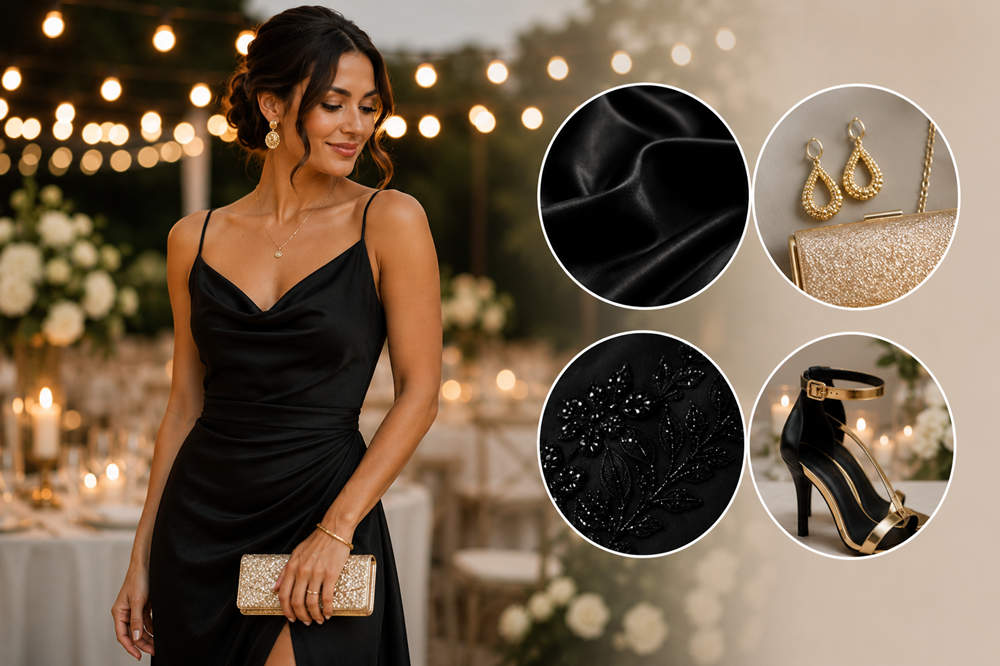
You do not need to cover a black outfit with bright colors to make it wedding-appropriate. An all-black look can feel celebratory when the fabric, cut, and styling clearly belong at a special occasion.
Choose a Special-Occasion Fabric and Silhouette
Fabric makes a significant difference. Satin, lace, velvet, chiffon, silk, beading, pleating, and embroidery can give black depth and movement.
Look for a silhouette with an elegant neckline, graceful draping, interesting sleeves, or refined tailoring. These details help distinguish wedding attire from clothing you might wear to work or a more somber event.
Add Texture, Pattern, or Thoughtful Accessories
A floral pattern, metallic finish, embellished bag, colorful earrings, or patterned tie can bring personality to black. Gold, silver, jewel tones, soft pastels, and natural textures can all work depending on the season and venue.
Accessories do not need to be bold. A few carefully selected details are often more effective than adding color everywhere.
Dress for the Setting and Your Comfort
Consider how long you will be standing, sitting, walking, and dancing. Shoes should suit the venue, while the outfit should allow you to move comfortably throughout the ceremony and reception.
A well-fitted black outfit that lets you enjoy the celebration will look more polished than an elaborate ensemble that requires constant adjusting.