Another Word for Event: Clear Alternatives for Different Situations
Finding another word for event depends on what you are describing. A wedding, company dinner, family reunion, and unexpected situation all require different language. A more precise term can make an invitation, announcement, or everyday sentence clearer.
Words for Social and Organized Events
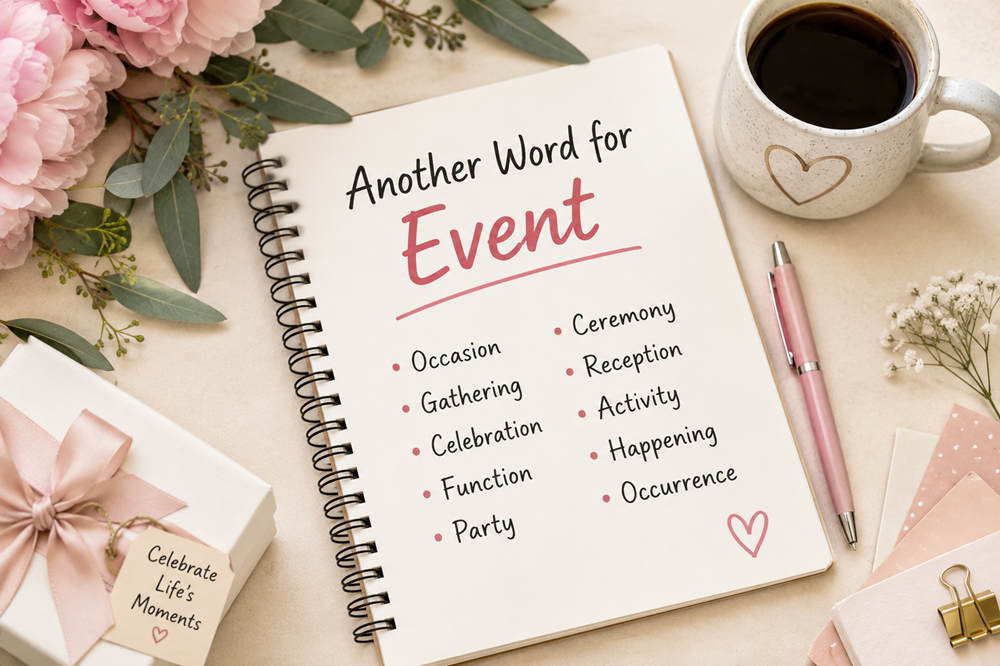
1. Occasion
A polished, flexible choice for an important or memorable time. It works particularly well in invitations, anniversary messages, graduation announcements, and formal correspondence.
Example: We look forward to sharing this special day with you.
2. Gathering
A warm and welcoming option that emphasizes people coming together. It suits family meals, reunions, neighborhood activities, and smaller social plans.
Example: Friends and relatives will come together at our home on Sunday.
3. Celebration
Best when the purpose is to recognize a happy moment or personal achievement. It is a natural fit for birthdays, weddings, retirements, promotions, and anniversaries.
Example: Please join us as we honor Mia’s graduation.
4. Function
A professional or institutional term for an organized social engagement. It may describe a company dinner, school banquet, charity evening, or official presentation.
Example: Employees and their guests are invited to attend the annual dinner.
5. Affair
An elegant but slightly ambiguous choice. It sounds most natural when paired with a description such as formal, private, or evening.
Example: The dress code for the formal evening is black tie.
6. Ceremony
Appropriate when the proceedings follow an official, traditional, or symbolic order. Weddings, graduations, memorials, and award presentations commonly fall into this category.
Example: Guests should be seated before the processional begins.
7. Party
A familiar, informal option for plans centered on enjoyment and socializing. It works well for birthdays, holidays, engagements, and casual evenings with friends.
Example: Come enjoy music, refreshments, and good company.
8. Reception
A hosted social period that welcomes or honors particular people. It often follows a wedding service, award presentation, graduation, or official introduction.
Example: Dinner and dancing will follow at the Lakeside Room.
9. Activity
Useful when the focus is on something participants will do. It fits school calendars, recreational schedules, children’s programs, and community timetables better than formal invitations.
Example: Families can take part in crafts, games, and outdoor challenges.
10. Happening
A lively, informal term for something interesting taking place. It can add energy to entertainment listings, local promotions, or casual descriptions.
Example: Live music and street food will fill the town square this weekend.
Words for Something That Happened
In some sentences, event refers to a situation or change rather than an organized plan. These alternatives better express that meaning.
11. Occurrence
A neutral choice for something that takes place. It is especially useful in factual, scientific, technical, or formal writing.
Example: Staff members recorded the unusual situation in the daily report.
12. Incident
Usually describes a specific situation that was unexpected, disruptive, or serious enough to document. It is common in workplace, safety, and news contexts.
Example: No one was injured during the disruption.
13. Episode
Refers to a distinct experience or period within a longer story. It may describe a brief difficulty, emotional moment, or memorable stage.
Example: The difficult period changed how the team approached future decisions.
14. Development
Suitable for a new change or piece of information in an unfolding situation. It often appears in business updates, reports, journalism, and project summaries.
Example: The latest change could affect the planned opening date.
15. Milestone
Identifies an important point in a person’s life, career, or progress. It usually carries a positive sense of achievement or transition.
Example: Completing the first year marked an important step for the organization.
How to Choose the Right Alternative
Begin with the meaning of the sentence. For invitations, consider what guests will experience and how formal the plans will be. For reports or storytelling, decide whether you are describing a neutral action, a serious situation, a new change, or an important achievement.
Specific language is usually more helpful than a broad label. It can tell readers why people are meeting, what will happen, and what tone they should expect without requiring a long explanation.
Final Thoughts
The best replacement is not necessarily the most sophisticated one. It is the term that describes the situation accurately and sounds natural within the sentence. Choosing carefully can make even a short invitation or announcement feel clearer and more thoughtful.