What Hand Do You Wear Your Wedding Ring On? Traditions and Ring Order
In the United States, a wedding ring is traditionally worn on the ring finger of the left hand—the finger directly beside the pinky. However, this is not a universal rule. Some cultures and religious traditions place wedding rings on the right hand instead.
The appropriate hand often depends on family customs, faith, cultural background, and personal comfort. Whichever side you choose, the ring carries the same central meaning: a visible symbol of marriage and commitment.
What Hand Does a Wedding Ring Traditionally Go On?
For most married people in the United States, the traditional position is the fourth finger of the left hand. This finger is commonly called the ring finger, even when no ring is being worn.
The custom applies to any spouse. A bride, groom, or partner may wear a wedding band in this position regardless of the ring’s design, width, metal, or gemstones.
In everyday American culture, a band on the left ring finger is widely recognized as a sign that someone is married. Engagement rings are often worn on the same finger before the ceremony, which is why many people later arrange the engagement ring and wedding band together.
Still, wedding-ring placement is a tradition rather than a legal or formal requirement. A marriage does not become more or less valid based on which hand holds the ring.
Why Are Wedding Rings Worn on the Left Hand?
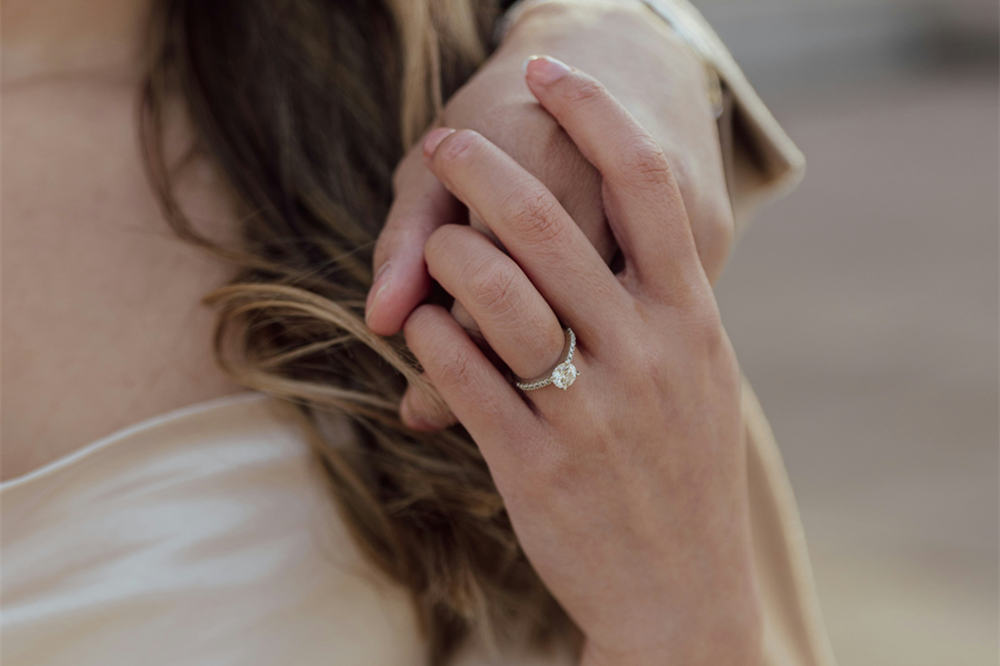
The left-hand tradition is often explained through the romantic story of the vena amoris, a Latin phrase meaning “vein of love.” According to the old belief, a special vein ran from the fourth finger of the left hand directly to the heart.
Placing a ring on that finger therefore created a symbolic connection between marriage and the heart. The idea became associated with ancient Egyptian and Roman ring customs and continued to influence later European traditions.
The supposed vein is not anatomically unique. Every finger contains blood vessels, and the left ring finger does not have a special vein that bypasses the others on its way to the heart. The custom survived because the story was meaningful, not because it was medically accurate.
The history of wedding rings described by GIA traces this belief through ancient traditions and explains how the ring finger remained connected with marriage long after the anatomy behind the story was disproved.
Today, many couples follow the left-hand custom simply because it is familiar. It has been repeated through wedding ceremonies, family traditions, and social expectations for generations, even when the wearer has never heard of the “vein of love.”
Why Do Some People Wear Wedding Rings on the Right Hand?
Wedding-ring customs developed differently across countries and faiths. Wearing a wedding band on the right hand is common among many people in Russia, Germany, Poland, and Greece, as well as within some communities in India. Practices may vary by region and family, so no country follows one placement without exception.
The right hand is also traditional in Orthodox Christianity. The Orthodox Church in America explains that Orthodox Christians traditionally wear wedding rings on their right hands, although some American Orthodox couples later choose the left.
For someone raised with a right-hand tradition, that placement is not a modern alternative to the usual rule. It is the usual rule within that person’s culture or religious community.
Couples from different backgrounds may decide to follow one shared custom, keep their individual traditions, or use the hand chosen during their wedding ceremony. They do not have to wear their rings on the same side for the bands to carry equal meaning.
A person may also change hands over time. Moving to another country, reconnecting with family heritage, converting to a faith, or simply reconsidering what feels meaningful can all influence where a wedding ring is worn.
How Do You Wear a Wedding Ring With an Engagement Ring?
When an engagement ring and wedding band are worn on the same finger, the order of the rings creates a small stack. The traditional arrangement is widely recognized, but it is not the only comfortable or attractive option.
The Traditional Ring Order
Traditionally, the wedding band goes on the finger first, with the engagement ring placed above it. The band sits closer to the base of the finger, while the engagement ring rests nearer the knuckle.
This order is often described as keeping the wedding band closest to the heart. It also places the ring exchanged during the marriage ceremony at the foundation of the set.
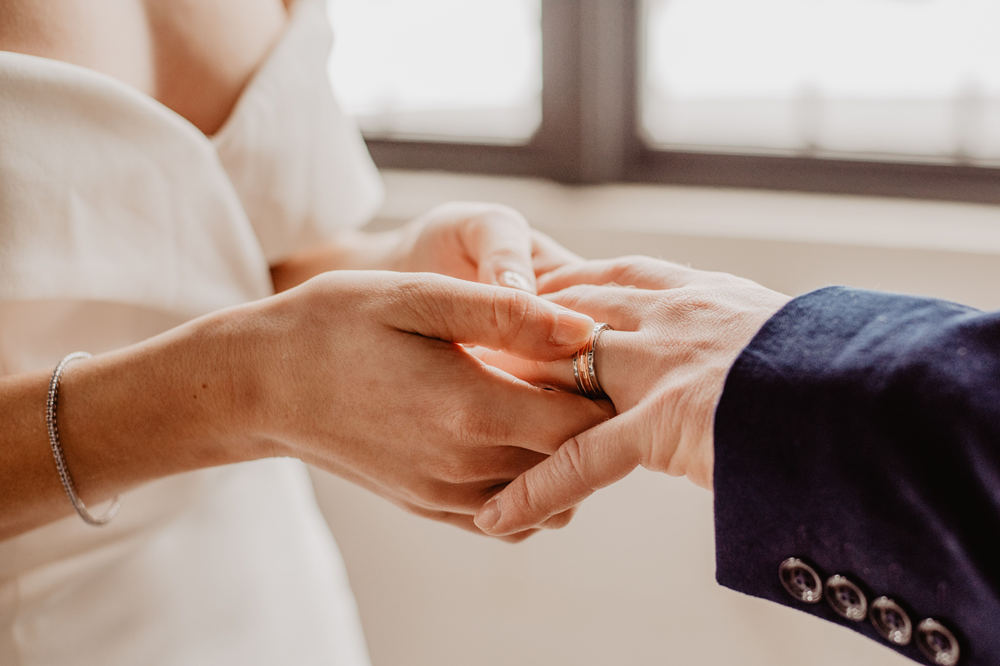
Before the ceremony, someone wearing an engagement ring may temporarily move it to the right hand or leave it with a trusted person. The wedding band can then be placed directly on the left ring finger during the vows. Afterward, the engagement ring is returned to the finger above the band.
GIA identifies this wedding-band-first arrangement as the traditional method, but it also recognizes that couples may choose a different order based on meaning, style, or comfort.
Other Ways to Arrange the Rings
Some people wear the engagement ring first and place the wedding band above it. This arrangement follows the order in which the rings were received: engagement first, followed by marriage.
Others separate the rings. The wedding band may remain on the left ring finger while the engagement ring moves to the right hand. This can give each piece more space and may work better when the shapes of the rings do not sit neatly together.
Ring design often affects the final arrangement. A curved or contoured band may be made to fit around a particular engagement ring, while a wide band or raised stone may feel more comfortable when the rings are separated. A jeweler can check whether two rings are rubbing against each other or putting pressure on a setting.
It is also perfectly normal to wear only the wedding band on most days. A simple band may be more practical for work, exercise, travel, or daily tasks, while the engagement ring can be saved for occasions when it is easier to wear safely.
What Matters More Than the Hand You Choose
A wedding ring does not lose its meaning when it is worn on the right hand, moved to another finger, or temporarily removed. Its significance comes from the commitment it represents rather than its exact position.
Culture and faith may provide a meaningful starting point, but practical needs matter too. Someone may choose a particular hand because it is less dominant, because the ring fits more comfortably there, or because an injury or change in finger size makes the usual placement difficult.
Certain jobs and activities may also require rings to be removed for safety. People who work with machinery, chemicals, medical gloves, food, or heavy equipment may keep their wedding rings in a secure place or wear them only outside of work.
The best choice is one that honors the wearer’s traditions while remaining comfortable and practical. Whether the ring rests on the left hand or the right, it can carry the same promise every day.