Black Tie Event Meaning: What to Expect and What to Wear
A black-tie event is a formal evening occasion where guests are expected to wear tuxedos, gowns, or comparably polished evening attire. Although the dress code can sound intimidating, it is simply a signal to dress more elegantly than you would for a typical dinner, party, or wedding.
What Does a Black Tie Event Mean?
Black tie is one of the most formal dress codes guests are likely to encounter. It is more elevated than cocktail, semi-formal, or business attire, but less ceremonial than white tie.
For guests wearing traditionally masculine formalwear, black tie generally means a tuxedo with a bow tie. For guests wearing dresses or other eveningwear, it usually means a floor-length gown, an exceptionally elegant cocktail dress, a formal jumpsuit, or sophisticated separates.
The phrase does not mean everyone must wear black. The name comes from the black bow tie traditionally worn with a dinner jacket. Guests can choose other colors as long as the outfit maintains the expected level of formality.
According to the Emily Post Institute’s black-tie guidance, the dress code commonly appears at weddings, proms, formal dinners, and theater events. It may also be used for:
- Charity galas and fundraising dinners
- Awards ceremonies
- Formal dances and balls
- Anniversary celebrations
- Premieres and cultural events
- Elegant holiday or milestone parties
Whatever the occasion, the dress code tells guests that the hosts are creating an elevated atmosphere and would like clothing to reflect it.
What Is a Black Tie Event Like?
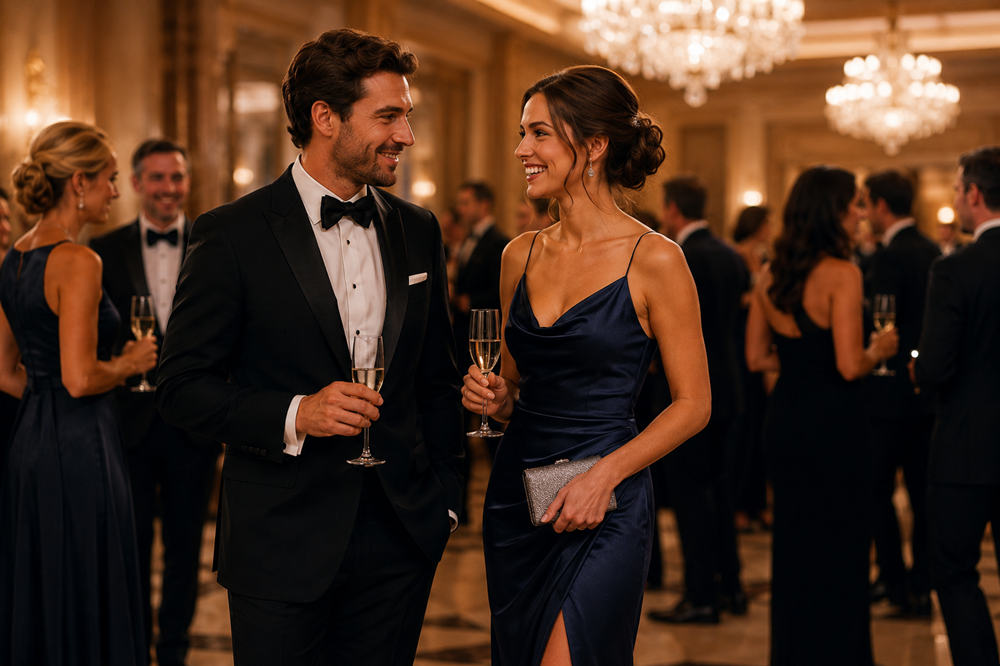
Black-tie events are usually held in the late afternoon or evening. Common settings include ballrooms, hotels, estates, museums, historic buildings, country clubs, and formal restaurants.
Depending on the occasion, the evening may include a cocktail reception, seated dinner, speeches, dancing, performances, an auction, or an awards presentation. A wedding and a charity gala may share the same dress code without following the same schedule.
Debrett’s describes black tie as formal eveningwear traditionally worn for dinners, parties, and balls. The setting may feel elegant and carefully planned, but it does not have to be stiff or overly serious. Many black-tie occasions are lively, social, and celebratory.
Guests may encounter assigned seating, a coat check, professional photography, or a timed program, but these details depend on the event itself. Black tie defines the expected clothing rather than guaranteeing a particular type of entertainment or service.
What to Wear to a Black Tie Event
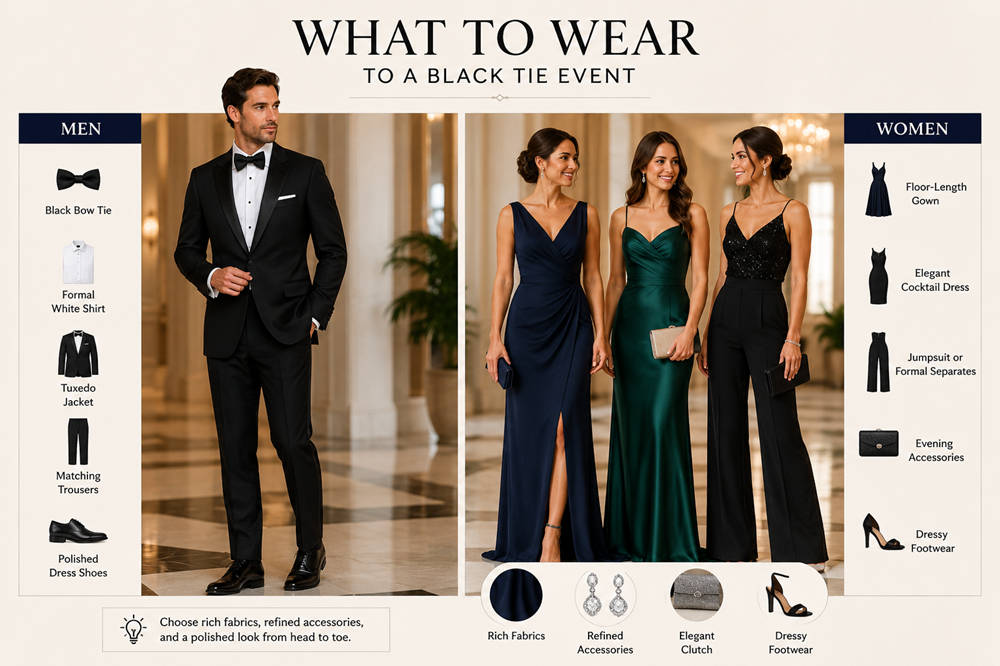
The safest approach is to choose clothing designed for an evening occasion rather than an outfit that could also be worn to work or a casual restaurant. The complete look should feel intentional, with appropriate shoes, accessories, and grooming.
Traditional Tuxedo Attire
A tuxedo is the traditional black-tie choice for guests wearing suits. A classic outfit includes:
- A black or midnight-blue dinner jacket
- Matching formal trousers
- A white dress shirt
- A black bow tie
- Black formal shoes
- Dark dress socks
- An optional waistcoat or cummerbund
A dinner jacket normally has satin or grosgrain details that distinguish it from an ordinary business suit. Midnight blue is also a traditional option and often appears nearly black under evening lighting.
A standard dark suit may look polished, but it is not the conventional response to an invitation that states simply “black tie.” Renting a tuxedo is entirely acceptable when you do not own one. Proper fit and neat presentation matter more than whether the clothing is purchased, rented, vintage, or custom-made.
Gowns, Dresses, and Formal Alternatives
A floor-length evening gown is the safest traditional choice for a black-tie event. It naturally matches the formality of a tuxedo and is especially suitable for grand venues, ceremonial weddings, and traditional galas.
Other appropriate options may include:
- A formal maxi dress
- An elegant cocktail or midi dress
- A tailored evening jumpsuit
- A dressy skirt with a refined top
- A coordinated formal trouser set
- Formal cultural or traditional attire
A cocktail or midi dress can work when its fabric, structure, and styling make it unmistakably formal. A simple daytime dress that happens to be dark or knee-length will usually feel too casual.
Fabrics such as silk, satin, velvet, chiffon, lace, crepe, brocade, and tulle naturally suit evening settings. Structured or beautifully draped jersey may also be appropriate; the overall finish is more important than the fabric name alone.
Black remains a classic choice, but it is not required. Navy, burgundy, emerald, plum, silver, chocolate, and other rich shades can look equally elegant. Lighter colors and subtle patterns may also work when the design is formal enough for the occasion.
At a wedding, avoid clothing that could be mistaken for bridal attire unless the couple has specifically requested white or pale colors. Religious, cultural, or venue-specific expectations should also guide choices about coverage and styling.
Accessories and Grooming
Accessories should complement the outfit without making it feel crowded. A clutch, evening bag, or small structured handbag generally suits the setting better than a backpack or large daytime tote.
Jewelry can be understated or expressive. A simple gown may work well with statement earrings or a necklace, while an embellished outfit may need only a few restrained pieces.
Suitable footwear includes polished dress shoes, pumps, refined sandals, formal flats, elegant loafers, or low heels. Heels are not required. Comfort is worth considering when the event includes several hours of standing or dancing.
Hair and makeup do not need to be elaborate, but the overall presentation should feel finished. Clean shoes, wrinkle-free clothing, neat hair, and a well-fitted outfit usually make a greater impression than labels or expensive accessories.
For cooler weather, choose outerwear that works with the formality of the clothing, such as a tailored wool coat, evening wrap, cape, or refined jacket.
What Not to Wear to a Black Tie Event
The most common mistake is interpreting black tie as simply “dressy.” Clothing that works for an office party, date night, or casual wedding may still fall below the expected level of formality.
Items that are generally too casual include:
- Jeans, khakis, or chinos
- T-shirts, polo shirts, or sweatshirts
- Everyday office suits and work dresses
- Casual sundresses
- Sneakers, flip-flops, or rugged boots
- Backpacks and large practical totes
- Denim, fleece, sweatshirt fabric, or plain daytime cotton
- Wrinkled, damaged, or poorly fitting garments
Adding a bow tie to an ordinary suit does not turn it into a tuxedo. A tuxedo has a formal dinner jacket, coordinated trousers, a suitable shirt, and evening accessories designed to be worn together.
Guests should also consider the nature of the gathering. Clothing that feels appropriate for a fashion-focused gala may not suit a traditional wedding ceremony, religious venue, or professional awards dinner. The goal is not to hide your personal style, but to express it at a level that respects the setting.
Black Tie Event Etiquette
Good black-tie etiquette is less about obscure rules and more about respecting the effort behind the occasion.
- Respond by the deadline. Formal events often require accurate meal counts, seating plans, place cards, and security lists.
- Do not bring an uninvited guest. A plus-one should only attend when the invitation clearly includes one.
- Arrive on time. Allow enough time for parking, registration, venue security, or coat check.
- Follow seating instructions. Use the table assignment or place card provided rather than changing seats without asking.
- Keep phone use discreet. Silence your device during ceremonies, speeches, performances, and awards.
- Respect photography requests. Some hosts welcome guest photos, while others prefer an unplugged ceremony or restricted posting.
- Treat staff courteously. Servers, coordinators, photographers, security personnel, and coat-check attendants all help the event run smoothly.
- Remain considerate when alcohol is served. Keep the formality and purpose of the gathering in mind throughout the evening.
Guests do not need to act stiff or overly restrained. They can socialize, dance, and enjoy themselves while still paying attention during important moments and avoiding behavior that distracts from the hosts or honorees.
Final Thoughts
Black tie signals an elegant evening and asks guests to meet the occasion with formal clothing and thoughtful behavior. Choose an outfit that feels polished, fits comfortably, and reflects your personal style without becoming too casual for the setting. Once the dress code is understood, the event becomes an opportunity to enjoy dressing up rather than a reason to worry about getting every detail perfect.