Canon Event Meaning: What the Viral Phrase Really Means
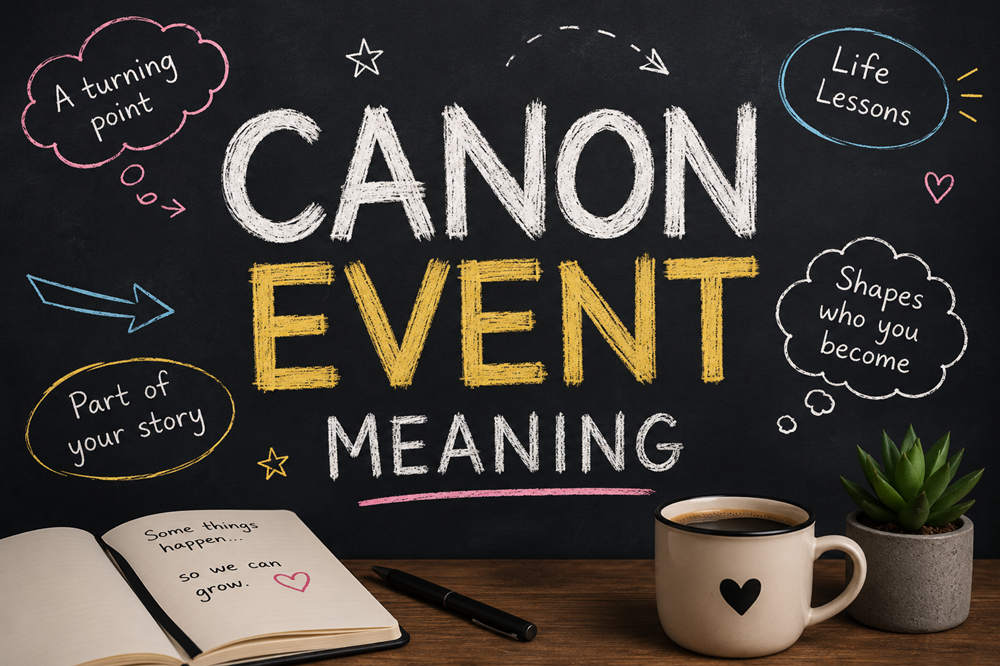
A “canon event” is an experience that becomes an important part of someone’s personal story. It may be a painful lesson, an embarrassing phase, a positive discovery, or another turning point that influences who the person becomes.
The phrase was popularized by Spider-Man: Across the Spider-Verse and later became widespread internet slang. Online, people often use it humorously for moments that seem unavoidable in hindsight.
What Does “Canon Event” Mean?
In everyday slang, a canon event is a formative life experience. It changes someone’s outlook, identity, relationships, or future choices in a lasting way.
A first breakup, an unsuccessful exam, a regrettable haircut, or an unexpected career opportunity might all be called canon events. The event does not need to be dramatic. It simply needs to become a meaningful chapter in the person’s life.
Merriam-Webster describes a canon event as a formative experience involving good fortune or hardship. The expression is usually playful rather than a serious claim that every event is predetermined.
Where Did the Phrase “Canon Event” Come From?
The phrase gained widespread attention through the 2023 animated film Spider-Man: Across the Spider-Verse.
In fiction, canon refers to the officially accepted events, characters, and background of a story. A canon detail belongs to the recognized version of a fictional world rather than a fan theory, unofficial adaptation, or alternate interpretation.
In the film, Miguel O’Hara describes canon events as important experiences that recur in the lives of different Spider-People. These moments help shape their identities and connect their stories across the multiverse.
Miguel believes that disrupting these events could have serious consequences. The movie also leaves room to question whether apparently fixed moments must always unfold as expected, making the idea more complicated than simply saying that something bad must happen.
How “Canon Event” Became an Internet Meme
After the film’s release, social-media users began applying the phrase to ordinary life. Memes and videos described awkward decisions, failed relationships, unusual fashion phases, and other experiences as necessary parts of someone’s development.
A common version of the joke involves seeing a friend make a predictable mistake and saying, “I can’t interfere. It’s a canon event.” The humor comes from treating an everyday choice as though it were a fixed point in an epic superhero story.
The meme also reflects how difficult it can be to learn solely from advice. Someone may understand a lesson only after making the decision and experiencing its results personally.
The joke is best reserved for harmless situations. It should not be used to dismiss circumstances in which someone may be unsafe or seriously harmed.
Examples of Canon Events in Real Life
Almost any experience can become a canon event if it has a lasting influence. The following examples show how the expression is commonly used.
A Regrettable Haircut
Someone insists on cutting their own bangs despite several warnings. The result is disappointing, but it eventually becomes a funny story and a lesson in thinking before making an impulsive change.
A First Breakup
A first serious breakup can reshape how someone understands trust, communication, boundaries, and compatibility. Although painful at the time, it may influence healthier choices in later relationships.
An Awkward Fashion Phase
Many people experiment with clothes, makeup, or accessories that later look unusual in old photographs. The phase may still have helped them build confidence or develop a personal sense of style.
Failing an Important Test
A disappointing result may expose ineffective study habits or poor time management. It can prompt someone to seek help, prepare differently, or reconsider which academic path suits them.
Making a Mistake at a First Job
Missing a deadline or misunderstanding instructions can feel humiliating to a new employee. The mistake may later become the reason they learn to communicate sooner, ask clearer questions, or organize their work more carefully.
Discovering a Lasting Interest
Canon events can also be positive. Joining a club, attending a performance, taking an unexpected class, or reading a particular book might introduce someone to an interest that eventually shapes their career or relationships.
Is a Canon Event Always Something Bad?
No. Although canon-event memes often focus on heartbreak, embarrassment, and poor decisions, the phrase can also describe happy or rewarding experiences.
Meeting a lifelong friend, traveling alone for the first time, receiving meaningful encouragement, or discovering a talent can all influence the direction of someone’s life. Some moments may not seem important when they happen, but their significance becomes clear later.
An event can also contain both positive and difficult elements. Moving to a new city may bring exciting opportunities alongside loneliness. Ending an unhealthy relationship may create relief while still involving grief. What matters is the lasting effect rather than whether the experience was entirely good or bad.
How to Use “Canon Event” Naturally
“Canon event” is mainly used in casual conversation, social-media posts, captions, and humorous commentary. Here are a few natural examples:
- “That terrible haircut was a canon event.”
- “I wanted to warn him, but it was clearly his canon event.”
- “Failing my first exam became a canon event because it changed how I studied.”
- “Joining the school play was a canon event that led me to study theater.”
- “Those early jobs were important canon events in my career.”
The phrase can refer to one moment or a longer period. Its plural form is “canon events.”
It is also important to distinguish canon from cannon. A cannon is a large weapon, so “cannon event” is normally a spelling error when discussing the movie or internet slang.
Whether it describes an embarrassing phase, a difficult lesson, or a welcome turning point, a canon event is an experience that becomes a memorable part of someone’s story.