10 Live Event Production Companies for Corporate, Entertainment, and Private Events
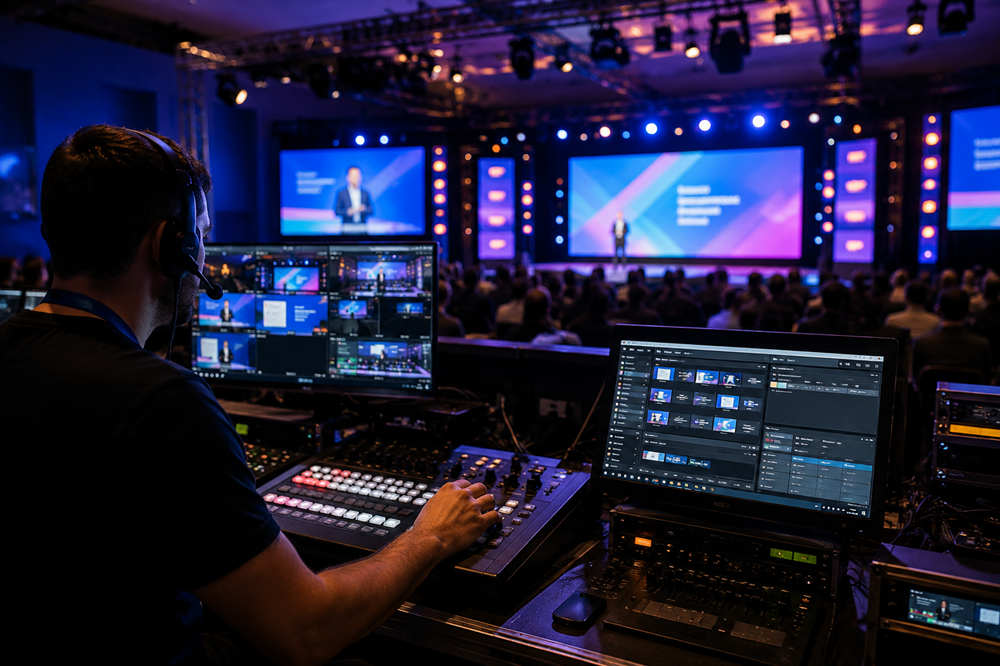
Great live production often goes unnoticed. The audience hears every speaker clearly, sees the presentation from anywhere in the room, and experiences each lighting or video cue at the right moment. Behind that smooth result is a production team coordinating equipment, crews, schedules, rehearsals, and technical decisions.
The companies below represent different specialties, geographic markets, and event formats. Some support global conferences and touring productions, while others are better suited to exhibitions, brand experiences, corporate meetings, or regional celebrations. The order does not indicate a ranking.
What Does a Live Event Production Company Do?
A live event production company plans and operates the technical systems needed to present an event. Its work may begin with a venue survey and production design, then continue through equipment installation, rehearsals, show operation, and load-out.
Services can include:
- Sound systems and audio engineering
- Stage and room lighting
- LED screens, projection, and video playback
- Cameras, recording, and livestreaming
- Staging, rigging, flooring, and scenic elements
- Technical direction and show calling
- Equipment transportation and installation
- Onsite technicians and stage crews
- Production schedules and rehearsals
Not every provider handles the same scope. One company may supply only equipment and operators, while another may manage creative design, fabrication, technical planning, content, labor, and the complete show.
Live Event Production Companies at a Glance
| Company | Main Strength | Coverage | Common Event Types |
|---|---|---|---|
| Encore | Integrated venue and event production | Global | Conferences, conventions, galas, weddings |
| Freeman | Exhibitions and large business events | Global | Trade shows, conferences, corporate programs |
| Production Resource Group | Complex entertainment technology | Global | Concerts, theater, broadcasts, major corporate events |
| Creative Technology | Large-scale video and technical systems | Global | Festivals, sports, launches, experiential events |
| LMG | Corporate shows, touring, and conventions | National and international support | Meetings, concerts, broadcasts, venue events |
| ON Services | AV production combined with scenic design | United States | Conferences, trade shows, executive meetings |
| satis&fy | Experiential and spatial production | International | Brand activations, roadshows, fairs, festivals |
| Wizard Studios | Custom creative production and fabrication | New York, Los Angeles, and beyond | Galas, activations, concerts, corporate events |
| 3G Productions | Touring, festivals, and equipment resources | Nationwide | Concerts, tours, festivals, televised productions |
| LIV Technical | Regional full-service production | California and surrounding states | Corporate events, weddings, concerts, private parties |
10 Live Event Production Companies to Know
1. Encore
Encore designs and produces live, hybrid, and virtual events through a combination of event technology, production management, creative services, and custom fabrication. Its extensive venue presence is particularly useful for programs held in hotels, resorts, and convention centers.
The company supports meetings, association conferences, trade shows, receptions, galas, and weddings. Its international reach also gives organizations a way to maintain similar production processes across events in different cities or countries.
2. Freeman
Freeman is strongly associated with exhibitions, conferences, trade shows, and large corporate experiences. It can coordinate audiovisual production alongside exhibit design, show-floor services, logistics, event technology, and attendee environments.
This combined approach is valuable when the main stage, exhibition floor, sponsor areas, signage, and branded installations need to function as parts of one event. Freeman is most relevant to associations, exhibitors, corporations, and organizers managing complex business gatherings.
3. Production Resource Group
Production Resource Group, commonly known as PRG, provides technical production for music, theater, television, film, corporate events, brand experiences, and major public programs.
Its capabilities span lighting, audio, video, broadcast systems, staging, rigging, automation, and digital services. This breadth makes PRG particularly suited to productions with complex engineering requirements, moving scenic elements, demanding broadcast workflows, or several technical departments operating together.
4. Creative Technology
Creative Technology specializes in the technology behind large visual and immersive experiences. Its teams provide video, cameras, projection, LED displays, audio, lighting, media servers, networking, and show-control systems.
The company works across music festivals, sports, corporate presentations, product launches, experiential marketing, and broadcast productions. Its international network is useful for projects that require consistent technical systems across several venues or markets.
5. LMG
LMG supports corporate events, convention programs, touring entertainment, venue productions, and virtual or broadcast experiences. Its technical resources include audio, video, lighting, LED displays, cameras, graphics, and interactive media.
The company’s divisions allow it to serve distinct production environments, from executive presentations and convention general sessions to concerts and touring shows. It is a practical option for clients that have an established creative concept but need a technical team to engineer and operate it.
6. ON Services
ON Services is a national event-production company focused on audiovisual technology, creative staging, projection, and scenic design. It supports corporate meetings, association programs, medical conferences, exhibitions, trade shows, and entertainment events.
Its distinguishing feature is the close connection between technical production and the physical appearance of the stage. Clients can coordinate screens, lighting, scenic structures, branded surfaces, and presentation systems through the same production partner.
7. satis&fy
satis&fy develops live communication, brand experiences, trade-fair environments, touring productions, and experiential spaces. Its work can include creative planning, technical design, custom construction, logistics, digital elements, and onsite implementation.
That combination is well suited to international roadshows, product launches, employee events, concerts, temporary brand spaces, and installations that depend as much on the surrounding environment as on the stage itself.
8. Wizard Studios
Wizard Studios operates from New York and Los Angeles, producing corporate events, nonprofit galas, concerts, brand activations, political programs, and other customized experiences.
Its team handles design, scenic fabrication, staging, lighting, audio, video, livestreaming, and production management. This in-house creative and technical range is useful for events that require original scenery or a highly tailored visual identity rather than a standard stage package.
9. 3G Productions
3G Productions is a nationwide production, equipment-rental, and systems-integration company serving concerts, tours, festivals, corporate events, and broadcast projects.
Its background in touring and live music gives it particular strength in audio, lighting, video, rigging, intercom systems, and equipment logistics. It is a relevant choice for multi-stage festivals, national tours, arena programs, and other projects that require substantial technical inventories in several locations.
10. LIV Technical
LIV Technical is a Los Angeles-based company providing event planning, audiovisual equipment, staging, rigging, flooring, special effects, and livestreaming throughout California and surrounding states.
Its portfolio includes corporate functions, weddings, concerts, festivals, red-carpet events, and private celebrations. As a regional provider, it offers an alternative for clients who need several production services under one contract without the scale of a large international operation.
How to Compare Live Event Production Companies
Look for Relevant Event Experience
Focus on projects that resemble your own in audience size, venue type, schedule, and technical demands. A company known for arena concerts may not be the natural choice for a small leadership meeting, just as a hotel AV team may not have the touring infrastructure required for a multi-city music production.
Ask to see examples that demonstrate the work you actually need. Famous clients are less useful than evidence of successful projects with similar conditions.
Define the Production Scope
Before requesting proposals, prepare a basic production brief covering:
- The event date and venue
- Expected attendance
- The number of rooms or stages
- Speakers, performers, and presentations
- Recording or streaming requirements
- Scenic and branding needs
- Venue access and setup times
- Rehearsal requirements
- Existing equipment at the location
This information gives each company the same foundation for its estimate and makes the resulting proposals easier to compare.
Examine the Entire Proposal
The quoted price may cover more than equipment. It can also include design, project management, transportation, installation, programming, technicians, rehearsals, show operation, and removal.
Check separately for overtime, union labor, internet service, power, permits, parking, crew travel, meals, security, venue charges, and last-minute changes. These costs can materially alter an initially attractive estimate.
Know Who Will Run the Project
Identify the producer, project manager, or technical director who will become the main contact after the contract is signed. That person should understand the schedule, venue requirements, equipment plan, crew structure, and approval process.
It is also worth asking which responsibilities will be fulfilled internally. Event companies regularly hire local labor or specialized subcontractors, but the proposal should make clear who is accountable for each part of the production.
Evaluate the Planning Process
A capable production team should ask detailed questions before prescribing a solution. It needs to understand how the audience will use the space, what presenters will do onstage, where content will come from, and how one program segment will transition into the next.
Clear schedules, technical drawings, equipment lists, cue documents, contact sheets, and approval deadlines are signs of a structured process. They reduce the chance that important decisions will be left until setup day.
Include a Complete Rehearsal
A production run-through should test presentations, performances, lighting, sound, video, technical cues, and transitions. It should also confirm microphone changes, camera framing, speaker entrances, media playback, and communication among crew members.
The rehearsal does not need to reproduce every minute of a long program, but it should test every type of action the team will perform during the event.
Review Backup and Risk Plans
Ask what will happen if a microphone stops working, a presentation file fails, the internet connection drops, or the program runs late. Outdoor events also require plans for weather, power, equipment protection, and audience safety.
The appropriate level of redundancy depends on the consequences of failure. A global broadcast requires more backup systems than a small reception, but every production should address its most likely risks. The Events Industry Council’s risk-management guidance emphasizes assessing threats to attendees, the event, organizers, and suppliers before selecting suitable controls.
Questions to Ask Before Signing a Contract
- Which recent projects are most similar to this event?
- What services, equipment, and labor are included in the proposal?
- Which responsibilities will be handled by subcontractors?
- Who will manage planning and onsite production?
- Are venue surveys, rehearsals, setup, and removal included?
- What charges apply to overtime or schedule changes?
- Which backup systems and spare equipment will be onsite?
- What insurance, safety, or rigging documents can the company provide?
- What information and approvals are required from the client?
- Which costs or responsibilities are specifically excluded?
Final Thoughts
Choosing a production company begins with understanding the event rather than searching for the largest provider. The right team should have experience with the format, enough technical capacity for the venue, a clear planning process, and a proposal that assigns every important responsibility.
A global production group can offer extensive resources and geographic consistency. A national specialist may bring deeper knowledge of a particular event format, while a regional company can provide local relationships and a scope that better matches a private or midsize event.
When the company’s experience, resources, communication style, and budget align with the project, the production team becomes more than an equipment supplier. It becomes the group responsible for turning the program into a live experience the audience can see, hear, and follow without distraction.