Is Event Tickets Center Legit? What to Know Before Buying Tickets
Event Tickets Center is a legitimate ticket resale marketplace, but it is not the official box office for most events listed on its website. Buyers purchase tickets from third-party sellers, which means prices, delivery times, and refund conditions can differ from those of a venue’s authorized ticket provider.
Many customers receive valid tickets and attend their events without a problem. Still, it is important to understand exactly what you are buying before completing an order.
Is Event Tickets Center Legit?
Yes. Event Tickets Center is an established secondary marketplace where registered businesses and individuals resell tickets to concerts, sporting events, theater performances, and other live events.
The company does not usually own the tickets shown on its website. Instead, it provides the platform through which a buyer places an order with an independent seller. That distinction explains why ticket prices can be higher or lower than the original face value.
The Better Business Bureau profile for Event Tickets Center currently lists the company as accredited with a B+ rating. However, the profile also displays two alerts, including a pattern-of-complaints notice. The BBB states that the rating reflects the company’s failure to resolve the underlying causes of that pattern.
BBB accreditation confirms that Event Tickets Center is an identifiable operating business, but it does not guarantee that every buyer will be satisfied. A legitimate marketplace can still have strict policies, expensive listings, delayed transfers, and difficult customer-service cases.
How the Marketplace Works
Event Tickets Center connects buyers with ticket resellers. Its inventory can come from professional ticket brokers, companies, or fans who have tickets they no longer intend to use.
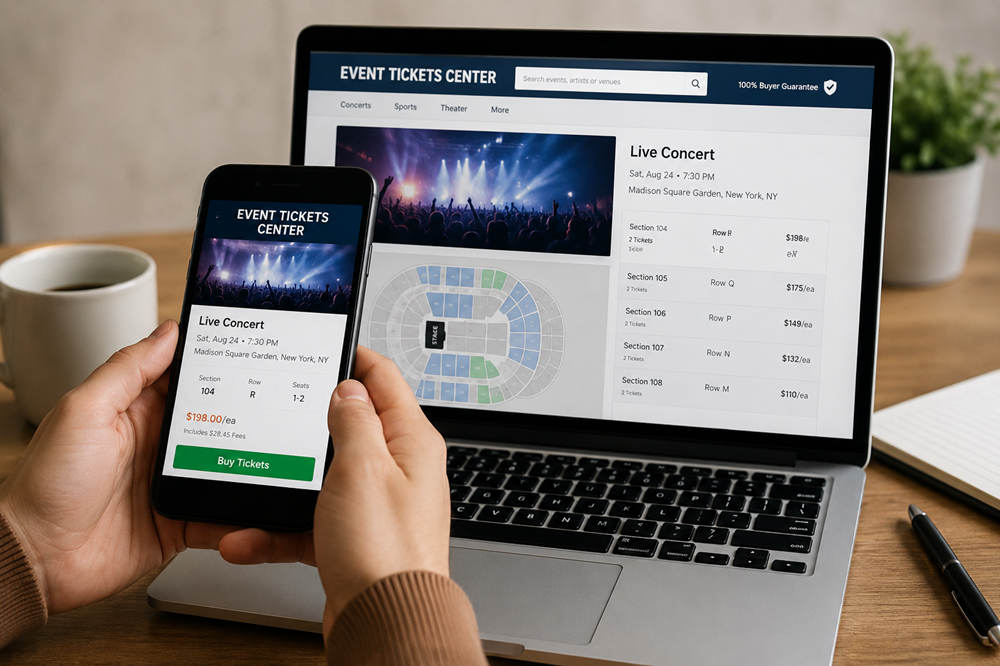
According to the company’s explanation of how Event Tickets Center works, sellers control their own listings and prices. Event Tickets Center processes the transaction, provides customer support, and applies its buyer guarantee, but the individual seller is responsible for supplying the ticket.
After the order is accepted, tickets are commonly delivered through a mobile transfer. The buyer may receive an email directing them to claim the tickets through Ticketmaster, AXS, or another ticketing account. This does not necessarily indicate a problem. The venue’s primary ticketing platform often remains responsible for displaying the final mobile ticket.
Why Your Tickets May Arrive Later
Some venues delay releasing transferable tickets until a few days before the event. This can be intended to reduce fraud or discourage unauthorized resale.
Each order should have an expected delivery or “in-hand” date. A ticket is not necessarily overdue simply because it was not transferred immediately after purchase. Check the date in the confirmation email before assuming the seller has missed the deadline.
If the expected date has passed, contact customer support promptly. Do not wait until you are already traveling to the venue to investigate a missing transfer.
Prices, Fees, and Seating Information
Event Tickets Center sellers can price tickets according to demand rather than their original printed value. A popular concert may be listed for considerably more than face value, while a less popular event may be available at a discount.
This pricing model is legal in many situations, but it can surprise buyers who believe they are shopping through the official box office. Before paying, compare the listing with the ticket link on the venue, team, artist, or promoter’s official website.
Federal rules now require live-event ticket sellers to show the total price, including mandatory fees, prominently when a ticket price is displayed. The FTC’s rule on unfair or deceptive fees took effect on May 12, 2025. Taxes, shipping costs, and genuinely optional additions may still appear separately.
Even with upfront pricing, review the last checkout screen carefully. Check the total cost rather than focusing only on the first number shown.
Seating descriptions also require attention. Some listings provide an exact section and row, while others promise only a general area. Event Tickets Center’s terms state that confirmed tickets should be within the listed area or in a comparable or better location. That does not always mean the buyer can choose a specific seat number.
What Customers Report
Customer experiences vary considerably. Positive reports commonly describe a quick ordering process, tickets arriving by the promised date, straightforward mobile transfers, and successful admission to the event.
Negative experiences tend to involve the conditions surrounding the purchase rather than uncertainty about whether the company exists. Frequent concerns include:
- Paying substantially more than the ticket’s face value
- Believing the website was connected to the venue
- Waiting until shortly before the event for a mobile transfer
- Receiving different seat numbers within the promised area
- Being unable to cancel after finding a better price
- Having difficulty resolving an unusual delivery or admission problem
Online ratings should be read in context. The company publishes reviews associated with verified purchases and support interactions, while the BBB profile includes separate complaints and customer feedback. These systems collect and display information differently, so no single score provides a complete picture.
What the Buyer Guarantee Covers
Every purchase is automatically covered by the Event Tickets Center Buyer Guarantee. The published policy applies when:
- An accepted order is not delivered
- The tickets are delivered too late for the event
- The tickets are invalid for admission
- The event is canceled and not rescheduled
The amount refunded can depend on the type of claim. For a canceled event, Event Tickets Center says delivery charges may be excluded. An approved invalid-ticket claim can include the ticket price, service fees, and shipping charges.
If a Ticket Is Rejected at the Venue
Contact Event Tickets Center immediately while you are still at the venue. Support may be able to investigate or arrange another solution before the event begins.
If entry is ultimately denied, ask the venue for written confirmation explaining that the ticket was invalid. Event Tickets Center requires that evidence, along with a description of what happened, to be submitted within ten days of the event. A screenshot showing an error may not provide the same proof as a written statement from venue staff.
The guarantee does not cover every disappointing experience. It protects against specified fulfillment failures, not an unfavorable resale price, a change of plans, or a seat that meets the listing but is not the buyer’s preferred location.
When Refunds Are Not Usually Available
The company’s terms and conditions state that sales are final except in cases covered by the buyer guarantee. A refund will not normally be available because the buyer:
- Changed their mind
- Can no longer attend
- Purchased tickets for the wrong event or date
- Found cheaper seats after completing the order
- Did not realize the tickets were being resold
- Dislikes the difference between face value and the resale price
A postponed or rescheduled event is generally not treated as a cancellation. When the original tickets remain valid for the new date, the purchase usually does not qualify for a refund.
These restrictions make it especially important to verify the event, date, quantity, seating details, expected delivery date, and final cost before submitting payment.
How to Buy Tickets More Safely
- Visit the official event website first. Follow the ticket link supplied by the venue, performer, team, festival, or promoter to see whether primary tickets remain available.
- Confirm the website address. Make sure you are using EventTicketsCenter.com and not a similarly named ticket website.
- Compare the full price. Look at several established marketplaces and include mandatory fees in the comparison.
- Read the entire seat description. Check whether the listing identifies an exact seat, a row, a section, or only a general area.
- Note the expected delivery date. Do not assume that a mobile ticket will be transferred immediately.
- Check the transfer method. You may need an account with another ticketing service to accept and display the ticket.
- Review the final-sale policy. Complete the purchase only when you are comfortable keeping the order.
- Save your records. Keep screenshots of the listing, order confirmation, delivery commitment, ticket transfer, and correspondence.
- Use a credit card when possible. Credit cards generally provide stronger dispute protections than gift cards, wire transfers, or peer-to-peer payments.
What to Do if Your Tickets Have Not Arrived
Start by checking the expected delivery date in the order confirmation. If it has not passed, the seller may still be within the promised window.
Search your inbox and spam folder for mobile-transfer emails. Then sign in to any Ticketmaster, AXS, or venue account associated with the email address used during checkout. The ticket may already be waiting for acceptance inside that account.
If the deadline has passed, contact Event Tickets Center and provide:
- Your order number
- The name and date of the event
- The expected ticket-delivery date
- The email address used for the order
- Copies of relevant confirmation or transfer messages
Keep a written record of support conversations. If the company does not resolve a missing or invalid order, contact your card issuer to ask about the available dispute process.
Do not allow an extended customer-service process to make you miss your card issuer’s deadline. The FTC’s billing-dispute guidance explains that some formal credit card protections depend on acting within 60 days of the statement containing the disputed charge. Different rules or voluntary protections may apply in other situations, so contact the issuer promptly.
Final Verdict: Should You Buy From Event Tickets Center?
Event Tickets Center is a real secondary ticket marketplace through which buyers can receive valid tickets. However, it should not be confused with an event’s official box office, and its BBB profile shows that some customers have experienced recurring problems.
The website may be useful when primary tickets are sold out or when it has inventory that is unavailable elsewhere. Before ordering, compare the complete price, understand what seating information is guaranteed, confirm the delivery deadline, and remember that most purchases cannot be canceled.
Event Tickets Center can be a workable option, but the quality of a purchase depends on the specific listing and seller. Careful comparison is more useful than treating the word “legit” as a complete measure of price, service, or convenience.