What Is Event Marketing? Definition, Examples, and How It Works
An event can be carefully organized and still struggle to attract the right audience. People need to discover it, understand what it offers, and have a reason to participate.
Event marketing brings those elements together. It connects an event with its intended audience or uses the event itself to support a broader organizational goal.
What Is Event Marketing?
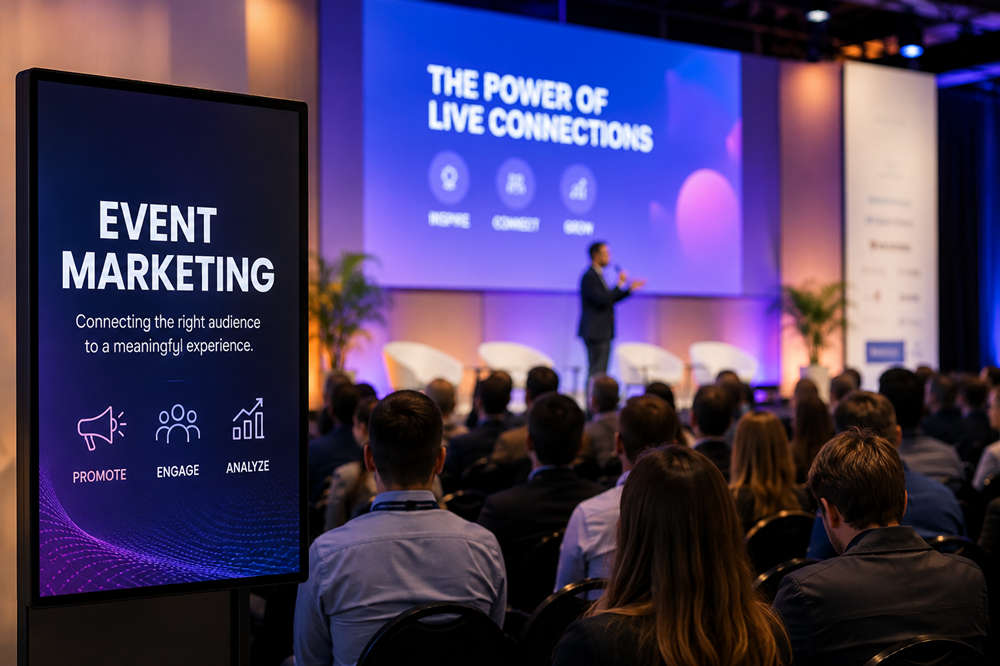
Event marketing is either the promotion of an event to attract attendees or the use of an event to promote a brand, product, service, organization, mission, or cause.
The first meaning focuses on marketing an event. An organizer may promote a conference, festival, fundraiser, workshop, exhibition, or community gathering to increase registrations, ticket sales, or attendance.
The second meaning focuses on marketing through an event. A company might introduce a product through a live demonstration, while a nonprofit could hold a public program to build awareness of its work.
Event marketing can support in-person, virtual, and hybrid experiences. The format may change, but the essential purpose remains the same: connecting a defined audience with a meaningful event-related opportunity.
What Is the Purpose of Event Marketing?
The purpose of event marketing depends on what the organizer wants the occasion to achieve. A concert promoter may focus on ticket sales, while a professional association may be more interested in member engagement and industry connections.
Common objectives include:
- Increasing registrations, ticket sales, or attendance
- Building awareness of an organization or cause
- Introducing a product or service
- Generating qualified customer or partner interest
- Encouraging donations, memberships, or volunteer participation
- Educating a particular audience
- Creating opportunities for networking and direct interaction
- Strengthening relationships with customers or community members
Defining the objective before promotion begins helps organizers make more deliberate decisions about the message, budget, audience, and campaign.
How Does Event Marketing Work?
Event marketing usually follows a sequence that begins with a clear goal and continues through post-event evaluation.
1. Define the Goal
The organizer first determines what the event should accomplish. The goal should be specific enough to guide later decisions, whether it involves revenue, attendance, awareness, education, fundraising, or relationship building.
2. Identify the Audience
The next step is deciding who is most likely to value the experience. Useful audience characteristics may include location, profession, interests, age, community involvement, purchasing needs, or familiarity with the host organization.
3. Develop the Main Message
The marketing message should explain what the event offers and why it is relevant. It might emphasize useful knowledge, entertainment, exclusive access, professional connections, support for a cause, or participation in a shared interest.
4. Choose Suitable Channels
Organizers then select the communication methods most likely to reach that audience. The decision should account for the event type, location, budget, timeline, and the platforms or communities the audience already uses.
5. Build Awareness and Interest
Promotion often begins with an announcement and continues with useful updates. Speaker introductions, program details, deadlines, previews, and practical information can maintain interest without repeating the same message.
6. Communicate With Registered Attendees
Confirmation emails, schedules, directions, access instructions, and reminders help registrants prepare. Clear communication can also reduce confusion and improve the likelihood that registered participants actually attend.
7. Review the Results
After the event, organizers compare the outcome with the original goal. The findings can reveal which messages and channels worked well and what should change before the next campaign.
Common Event Marketing Examples
Event marketing is used by businesses, nonprofits, schools, public organizations, creators, and community groups. Examples include:
- Industry conference: A professional association promotes educational sessions, expert speakers, and networking opportunities to members and industry professionals.
- Fundraising gala: A nonprofit explains how ticket purchases and donations will support a specific program or community need.
- Product launch: A company invites customers, journalists, or industry partners to experience and discuss a new product.
- Community festival: Organizers use local media, neighborhood groups, vendors, and community calendars to reach nearby residents.
- Virtual workshop: An educator promotes an online session to people interested in learning a particular skill.
- Trade show appearance: A business encourages customers and prospects to visit its booth, attend a demonstration, or schedule a meeting.
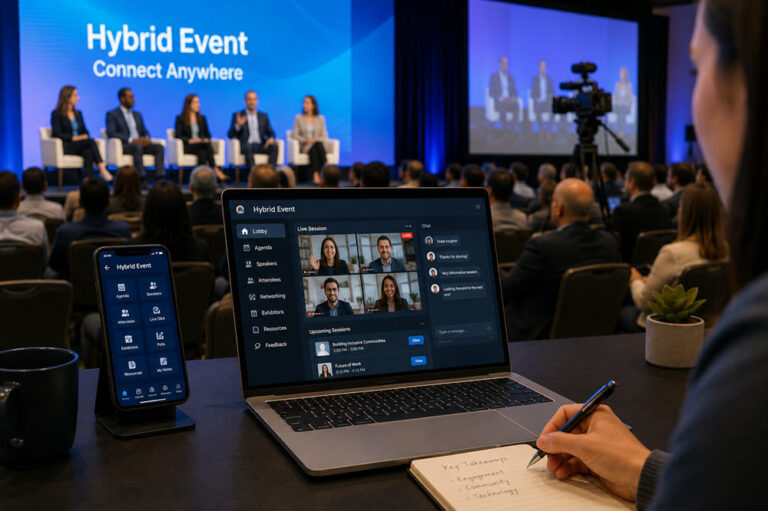
- Hybrid networking event: An organization markets separate but connected experiences for in-person and remote participants.
These examples differ in scale and purpose, but each uses a planned message to connect an occasion with a relevant group of people.
Event Marketing vs. Event Promotion and Event Management
The terms event marketing, event promotion, and event management are related, but they refer to different responsibilities.
Event marketing is the broader strategy. It defines the audience, positioning, message, communication plan, and desired outcome.
Event promotion covers the activities used to generate attention and encourage action. These may include announcements, advertisements, social posts, emails, media coverage, and registration reminders.
Event management concerns the practical delivery of the occasion. It includes budgets, venues, vendors, schedules, staffing, registration systems, safety, and on-site operations.
Promotion is therefore one component of marketing, while management ensures that the promised experience can actually be delivered. One person may perform all three functions at a small event, but the functions themselves remain distinct.
Event marketing can also overlap with experiential marketing. Experiential marketing specifically uses interactive or hands-on experiences to encourage people to engage directly with a brand. Event marketing is broader because it also includes the work required to attract and communicate with attendees.
Main Event Marketing Channels
Organizers do not need to use every available channel. A focused mix based on audience behavior is usually more useful than placing identical messages everywhere.
- Event website or registration page: Provides the date, location, price, program, participation requirements, and sign-up process in one central place.
- Email: Reaches members, previous attendees, customers, subscribers, or invited guests with announcements and timely updates.
- Social media: Shares visual previews, speaker content, practical information, and attendee conversations on relevant platforms.
- Search engines and event listings: Help people discover the event while actively looking for related activities or experiences.
- Editorial content: Uses articles, interviews, videos, or guides to demonstrate the value of the event before registration.
- Speakers, partners, and sponsors: Extend the campaign into established professional, customer, or community networks.
- Public relations: Generates coverage when the event has genuine local, public, cultural, or industry significance.
- Paid advertising: Expands reach through targeted search, social, digital, print, or local campaigns.
- Word of mouth: Encourages attendees and supporters to introduce the event to people they know.
The strongest channels are those that reach suitable potential attendees and make it easy for them to understand the event and take the next step.
How Is Event Marketing Success Measured?
Success should be measured against the event’s original objective. Attendance may be central to a ticketed festival, while qualified inquiries may be more important to a business exhibition.
Relevant measurements may include:
- Event-page traffic: The number of people who visit the main information or registration page
- Conversion rate: The percentage of visitors who register or buy a ticket
- Registrations: The total number of people who sign up
- Attendance rate: The proportion of registrants who participate
- Marketing source: The email, listing, partner, advertisement, or platform that produced a registration
- Engagement: Participation in sessions, discussions, demonstrations, polls, meetings, or other activities
- Qualified inquiries: Relevant sales leads, partnership requests, membership interest, or volunteer applications
- Revenue or donations: Money generated through tickets, purchases, sponsorships, or contributions
- Attendee feedback: Satisfaction, comments, and suggestions collected during or after the experience
- Post-event actions: Purchases, renewals, downloads, follow-up meetings, or other intended responses
Financial return on investment compares measurable financial returns with the total cost of the event and its marketing. It is most useful when the event has a direct commercial or fundraising goal.
Not every worthwhile outcome can be expressed as immediate revenue. Events intended to educate, build awareness, strengthen a community, or improve relationships should also be evaluated through relevant nonfinancial evidence. Broader event-measurement frameworks may therefore consider both countable results and the value created through the experience.
Final Thoughts
Event marketing connects an occasion with its intended audience or uses that occasion to advance a broader goal. Its effectiveness depends on a clear purpose, a relevant message, suitable communication channels, and measurements that reflect what the organizer genuinely wants to achieve.