Event Marketing Plan Template With Timeline, Budget, and Example
A successful event needs more than a date, venue, and registration page. People must hear about it, understand why it is worth attending, and know what to do next.
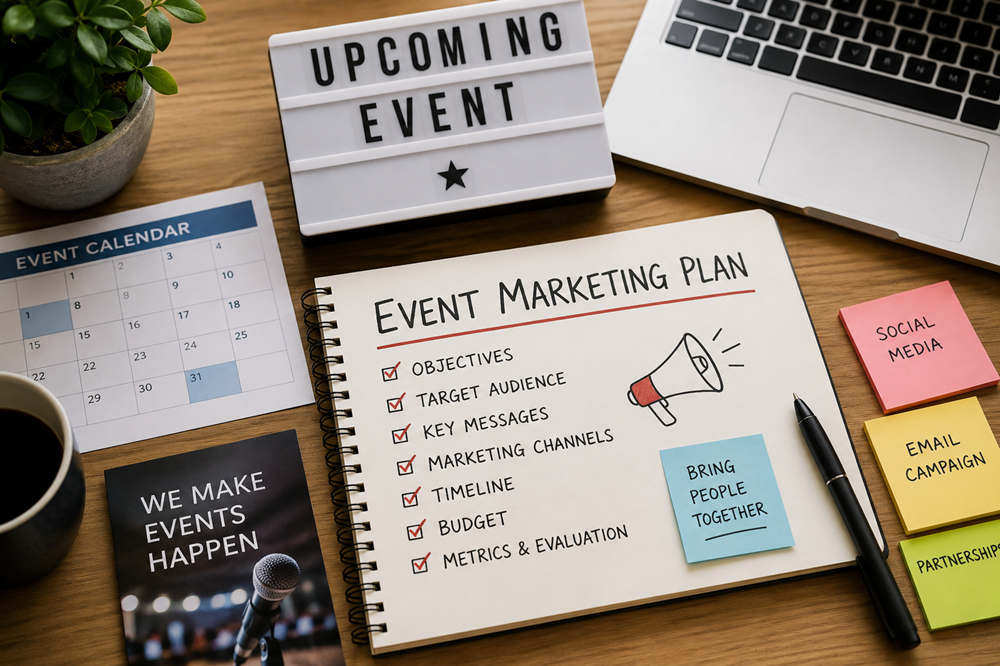
An event marketing plan brings those decisions into one organized document. It defines the audience, campaign message, promotional channels, deadlines, budget, responsibilities, and measurements that will guide the team from the first announcement through post-event follow-up.
The template below can be copied into a document, spreadsheet, or project-management platform and adapted for conferences, workshops, fundraisers, festivals, networking events, virtual sessions, and community gatherings.
What Is an Event Marketing Plan Template?
An event marketing plan template is a reusable framework for planning how an event will be promoted. It keeps the campaign focused by showing what the team wants to achieve, who it needs to reach, what it will communicate, and how each activity will be completed.
It is different from a general event-planning checklist. A general checklist may cover the venue, catering, equipment, guest seating, and vendor arrangements. A marketing plan concentrates on attracting attention, generating registrations or ticket sales, communicating with attendees, and evaluating promotional results.
A complete plan should answer these questions:
- What is the event designed to accomplish?
- Who is most likely to attend?
- What will motivate that audience to respond?
- Which channels can reach them effectively?
- What materials must be created?
- When will each campaign activity happen?
- Who is responsible for completing it?
- How much can the campaign spend?
- How will performance be measured?
Copyable Event Marketing Plan Template
Complete the following fields before launching the campaign. Remove anything that does not apply to your event and add more detail where the team needs it.
1. Event Overview
- Event name: [Official event name]
- Date: [Month, day, and year]
- Time: [Start and finish time, including the time zone if needed]
- Location: [Venue, city, or online platform]
- Format: [In-person, virtual, or hybrid]
- Event type: [Conference, workshop, fundraiser, festival, mixer, webinar, or another format]
- Purpose: [Why the event is being held]
- Capacity: [Maximum number of attendees]
- Registration method: [Ticket page, online form, invitation response, or walk-in]
- Admission details: [Price, packages, discounts, deadlines, or free entry]
- Campaign lead: [Name and contact information]
2. Marketing Goal and Targets
Choose one primary goal for the campaign. Supporting targets can provide additional information, but they should not compete with the main objective.
- Primary goal: [The most important campaign result]
- Registration target: [Number of registrations]
- Attendance target: [Expected number of actual attendees]
- Revenue target: [Ticket sales, donations, sponsorships, or another financial result]
- Lead target: [Number of qualified contacts, if relevant]
- Awareness target: [Event-page visits, local reach, media mentions, or another measure]
- Final registration deadline: [Date]
Add a response plan for changes in demand:
- If registration is below target: [Adjust the message, increase partner outreach, revise advertising, or add another campaign activity]
- If the event is nearly full: [Reduce paid promotion, emphasize limited availability, or prepare a waitlist]
- If the event sells out: [Close registration, open a waitlist, or add another date]
3. Target Audience
Describe the people most likely to value the event. Avoid an audience definition that is so broad that it cannot guide the campaign.
- Primary audience: [Main attendee group]
- Secondary audience: [Additional attendee group, if needed]
- Geographic area: [Local, regional, national, or international]
- Relevant interests: [Topics, industries, causes, hobbies, or activities]
- Main motivation: [What the audience hopes to learn, experience, support, or gain]
- Possible barrier: [Price, schedule, travel, accessibility, relevance, or uncertainty]
- Preferred channels: [Email, social media, community groups, professional networks, local media, or direct invitation]
- Existing relationship: [New audience, customers, members, past attendees, or a combination]
4. Event Message and Positioning
Use this section to define how the event should be presented across the campaign.
- Main promise: [What attendees can expect to gain or experience]
- Core message: [One sentence explaining why the event matters]
- Benefit 1: [A practical reason to attend]
- Benefit 2: [An educational, professional, social, or entertainment benefit]
- Point of difference: [What makes this event distinct]
- Tone: [Professional, welcoming, energetic, elegant, informal, or community-focused]
- Primary call to action: [Register, buy tickets, reserve a place, apply, donate, or RSVP]
Keep the message specific. Instead of saying that an event will be “fun and inspiring,” explain what people will actually do, see, learn, or take home.
5. Promotional Channels
Select channels according to the audience and the purpose each one will serve.
- Event page: [Provide complete details and collect registrations]
- Email: [Send announcements, program updates, and reminders]
- Social media: [Build awareness through images, video, stories, and updates]
- Paid advertising: [Reach defined audiences beyond existing followers]
- Partners and sponsors: [Extend the campaign through established communities]
- Speakers or participants: [Reach audiences connected to featured contributors]
- Public relations: [Seek event listings, local coverage, or relevant media attention]
- Printed materials: [Use posters, flyers, cards, or signs in appropriate locations]
Do not select a channel simply because it is popular. Include it only when the intended audience uses it and the team has the time or budget to manage it properly.
6. Content and Promotional Assets
List everything that must be written, designed, recorded, approved, or printed before it can be added to the campaign.
- Event name and tagline
- Short and full event descriptions
- Registration-page copy
- Schedule or program highlights
- Speaker, performer, vendor, or host biographies
- Frequently requested practical information
- Main event graphic
- Social media images and videos
- Email copy
- Digital advertisements
- Posters, flyers, or postcards
- Partner and sponsor promotion kits
- Event-day photographs or video
- Thank-you messages and post-event content
Note the required dimensions, formats, approval steps, and brand guidelines for each asset. Informative images should have alternative text that communicates their meaning, while purely decorative images can use an empty alt attribute. Avoid placing essential details only inside a graphic.
7. Campaign Timeline
Build the schedule backward from the event date. Adjust the timing according to the event’s size, ticket price, travel requirements, and audience decision process.
| Phase | Activity | Deadline | Owner | Status |
|---|---|---|---|---|
| Planning | [Confirm the audience, goal, message, budget, and channels] | [Date] | [Name] | [Not started] |
| Production | [Build the event page and create the main campaign assets] | [Date] | [Name] | [Status] |
| Launch | [Open registration and publish the first announcement] | [Date] | [Name] | [Status] |
| Audience building | [Share benefits, program details, contributors, and useful updates] | [Date] | [Name] | [Status] |
| Final promotion | [Send reminders and communicate deadlines or availability] | [Date] | [Name] | [Status] |
| Event day | [Publish timely updates and practical attendee information] | [Date] | [Name] | [Status] |
| Follow-up | [Thank attendees, share resources, and request feedback] | [Date] | [Name] | [Status] |
Place internal deadlines before publication dates. Copy may need to be written, designed, checked, and approved several days before it appears publicly.
8. Marketing Budget
Record both the planned and actual campaign costs.
| Expense | Estimated Cost | Actual Cost | Notes |
|---|---|---|---|
| Design and content production | [Amount] | [Amount] | [Details] |
| Photography or video | [Amount] | [Amount] | [Details] |
| Paid advertising | [Amount] | [Amount] | [Details] |
| Printing | [Amount] | [Amount] | [Details] |
| Marketing software | [Amount] | [Amount] | [Details] |
| Promotional partnerships | [Amount] | [Amount] | [Details] |
| Contingency | [Amount] | [Amount] | [Details] |
Mark each expense as fixed, adjustable, or optional. This makes it easier to redirect spending when campaign performance or registration demand changes.
9. Roles and Responsibilities
Give each assignment one clear owner. Other people may contribute or approve the work, but one person should remain responsible for moving it forward.
- Task: [Specific activity]
- Owner: [Person responsible]
- Contributor: [Person providing copy, design, data, or another resource]
- Approver: [Person giving final approval]
- Deadline: [Date]
Write assignments as specific actions. “Publish the speaker announcement on LinkedIn by September 10” is more useful than “Handle social media.”
10. Tracking and Reporting
Set up tracking before the first campaign link is distributed. Use separate UTM-tagged links for email, social media, paid advertising, partners, and other important sources so website activity can be connected to the correct campaign.
Campaign Metrics
- Event-page visits
- Registration-page conversion rate
- Email clicks
- Social media link clicks
- Advertising conversions
- Cost per registration
- Registrations by source
Event Outcomes
- Total registrations
- Actual attendance
- Registration-to-attendance rate
- Ticket revenue or donations
- Qualified leads
- Attendee feedback
Follow-Up Results
- Survey completion rate
- Resource or recording views
- Post-event email engagement
- Interest in another event
- New subscribers or community members
Select only the measurements connected to the event’s goal. A fundraiser may emphasize donations and donor participation, while a professional conference may focus on registrations, attendance, leads, and follow-up meetings.
How to Adapt the Template to Your Event
The same framework can support events of different sizes, but the level of detail should change.
Small Local Events
A small workshop, neighborhood gathering, or pop-up event may need only a short plan. Focus on the event page, direct email, local social promotion, community partners, printed notices, and a simple registration target.
The campaign may be managed by one or two people, so combine the timeline and responsibility fields rather than maintaining several separate documents.
Large or Ticketed Events
A conference, festival, or major fundraiser usually requires a longer campaign and more detailed reporting. Separate audiences may need different messages, such as those for attendees, sponsors, exhibitors, volunteers, or media contacts.
Build additional time into the schedule for design, advertising, partnership approvals, speaker announcements, and pricing deadlines. Review performance regularly so budget can be shifted before the event date.
Virtual and Hybrid Events
Online events should explain the platform, time zone, technical requirements, participation format, and whether a recording will be available. Hybrid events must make the difference between in-person and virtual admission clear before registration.
The marketing plan should also account for reminder emails, login instructions, streaming links, technical support information, and post-event access to recordings or resources.
Completed Event Marketing Plan Example
This abbreviated example shows how the template could be completed for a fictional community workshop.
Event Overview
- Event name: Create at Home: A Beginner’s Floral Workshop
- Date: October 17
- Location: Greenway Community Center
- Format: In-person
- Capacity: 40 participants
- Admission: $35, including flowers and materials
- Purpose: Introduce local residents to the center’s seasonal creative programs
Primary Goal
Sell at least 32 places by October 12 while adding 20 new subscribers to the community center’s program list.
Audience
The workshop is intended for adults living near the community center who are interested in flowers, crafts, home decorating, or beginner-friendly social activities. The campaign will clearly state that no previous floral experience is required.
Core Message
Learn how to arrange a seasonal centerpiece in a relaxed workshop, with flowers, tools, and step-by-step instruction included.
Call to action: Reserve your place.
Channels
- The community center website will provide the full description and registration form.
- Email will be used for the launch announcement and final reminder.
- Instagram and Facebook will feature the sample arrangement, instructor, and remaining availability.
- Postcards will be placed at the library, garden center, café, and community noticeboard.
- The instructor will receive a graphic and UTM-tagged link to share with her audience.
Campaign Schedule
- Planning: Approve the goal, audience, message, and budget.
- Production: Photograph the sample arrangement and prepare the registration page.
- Launch: Open registration and publish the first email and social announcement.
- Audience building: Introduce the instructor and share a short demonstration video.
- Final promotion: Send a reminder and announce remaining places.
- Follow-up: Send a thank-you message, care instructions, and feedback form.
Budget
- Photography: $120
- Printing: $65
- Paid social advertising: $150
- Contingency: $40
- Total: $375
Measurement
The team will compare registrations by source, total ticket revenue, advertising cost per registration, actual attendance, new subscribers, and feedback-form responses. Promotion will be reduced once the workshop reaches capacity, and additional interest will be directed to a waitlist.
Final Event Marketing Plan Checklist
- The event purpose and primary campaign goal are clear.
- The target audience is specific and realistic.
- The message explains what attendees will gain.
- The call to action is consistent across the campaign.
- Every promotional channel has a defined purpose.
- Required copy, images, video, and printed materials are listed.
- Practical accessibility information is easy to find.
- The campaign timeline includes production and approval deadlines.
- Each assignment has one accountable owner.
- The planned costs fit within the approved budget.
- UTM-tagged links and other tracking methods are ready.
- The team knows how it will respond to low demand, limited availability, or a sellout.
- Campaign metrics and event outcomes will be reported separately.
- Post-event communication has been prepared.
An event marketing plan does not need to be complicated. A clear goal, well-defined audience, practical timeline, realistic budget, and reliable tracking system give the team enough structure to promote the event confidently and improve future campaigns.